Theatre was a medium of entertainment and a vehicle for the mass proliferation of literature which saw nothing short of a boom during the early modern period in England. But just how accessible was it?
The question of how accessible early modern theatres were is an important one for many reasons. If theatrical performances were only accessible to the wealthy, then the content of plays would be tailored to them and not have as comprehensive a reach. However, if plays were intended to be acted out in front of all sorts of people then their content might reflect popular culture as well as elite culture.
On a physical level, most theatres were very accessible. The Globe Theatre, possibly the most famous one in English history, featured the ‘pit’ which allowed people (nicknamed ‘groundlings’) to spectate plays for as little as a penny. As with nearly all gatherings of diverse social groups, perhaps most notably churches, the physical geography of a theatre reflected demographic divisions, most notably wealth. The richer folk, who could afford seats in the various galleries of the theatre would have a slightly more pleasant experience, and a better view, but the content was the same. There’s also little reason to assume that popular playwrights such as Shakespeare, Dekker, and Middleton wrote their plays with rich audiences in mind rather than poor ones. The content of most popular plays was deliberately designed to appeal to rich and poor, educated and uneducated. Shakespeare deliberately included many sexual innuendos and dirty jokes in his plays which would have been appreciated by all audiences, not just the wealthy.

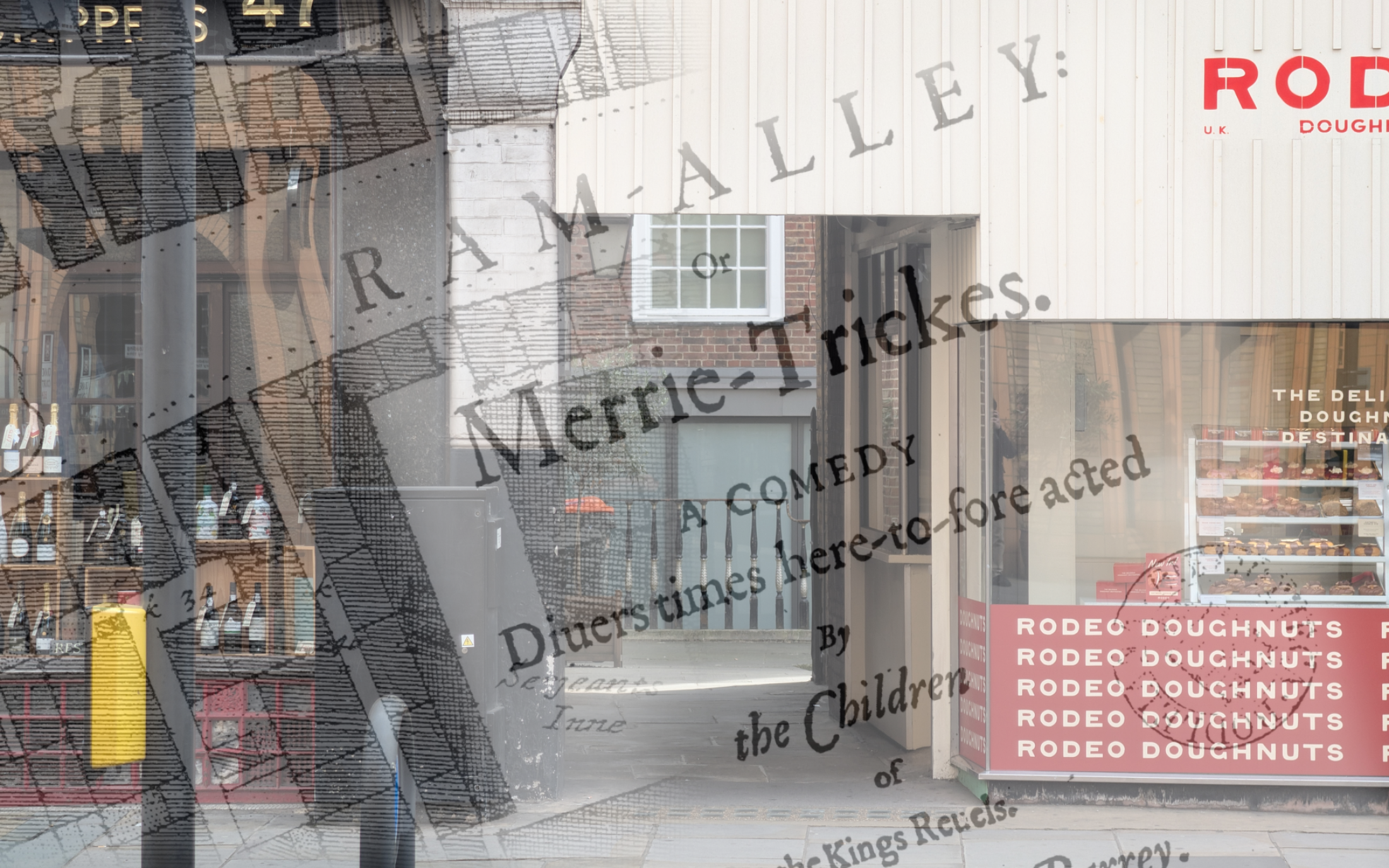
In fact, the theatrical world was often dominated by the interests of a less wealthy, uneducated demographic. At this point it’s worth noting that there was a stark gender divide at play. Women did not begin to act in plays until the late 17th century and even then it was a rare sight which shocked many audiences. Women did attend plays but often disguised their identities for fear of being assumed to be prostitutes and did not watch them in the same number as men. As for wealth, it was not uncommon for audience members who did not understand (or care for) dull moments in plays to hurl abuse at actors, physically and verbally. Many acting companies performed outside of London or in public houses rather than proper permanent theatres, which had only emerged following the creation of the short-lived Red Lion theatre’s construction in 1567, followed by the permanent The Theatre playhouse in 1576 (top-right, above). A succession of orders in 1683 documented in the court book of the Mayor of Norwich, John Lowe, give the actor John Coysh ‘and his company’ permission ‘to act plays at the Red Lion [pub] in St Stephen’s until this day sennight at night.’ These types of performances would have been specifically designed to please an audience of average people.
Even some of the more famous theatres had a reputation of appealing to lower class audiences. In particular, the Red Bull theatre—which continued to put on plays even after Parliament had closed theatres in 1642—was known for its unruly and supposedly unintelligent audiences, as well as less skilled actors. Rich people did attend it, notably Samuel Pepys in 1662, who noted that the performance he had seen was ‘poorly done, with […] much disorder’ and also that the actors in the dressing room were ‘but common fellows’.
John Webster’s play The White Devil was not received well at the Red Bull theatre in 1612. In the preface to his 1612 quarto of the play, Webster blames the fact that it was ‘acted, in so dull a time of Winter, presented in so open and blacke a Theater [and lacked] a full and understanding Auditory’. To clear up any confusion, Webster claims that ‘most of the people that come to that Play-house, resemble […] ignorant asses’. Webster attempts to spin this negative reception as a positive but the fact remains: His play was not accessible to the audience in front of which it was performed. The White Devil, and a fair amount of other contemporary plays, did suffer from issues regarding the education of audiences. Webster and Shakespeare, among others, made frequent allusions to Greek mythology. See Act 1 Scene 2 of Hamlet, where the titular character remarks of the relative reputations of his father and his mother’s new husband:
So excellent a king; that was, to this,
Hyperion to a satyr[…]

‘Hyperion’ refers to the Greek Titan who overthrew his father, Uranus, but was then toppled by the Olympians. A satyr is a goatish and lecherous creature in Greek mythology. Those familiar with the play will understand why the comparisons are apt but to understand the meaning requires a contextual knowledge which those in the audience who lacked a proper education would not have. Those watching who had attended universities or gone to grammar schools (Shakespeare, Jonson, and Kyd among them) would, however, have likely been familiar with the comparisons. Greek mythology was somewhat common among cheap broadside ballads, such as Humphrey Crouch’s popular ballad concerning the Trojan War which circulated in the early-to-mid 17th century and Thomas Heywood’s The Iron Age (1632) which relayed various Greek tales. Through sheer exposure, even the less educated members of an early modern audience might—as if by osmosis—have retained some knowledge on Greek mythology, but it is still likely that much of it went over many people’s heads.

The answer to the question of whether early modern English theatres were accessible is that there isn’t one. On a base level, it was only really women who were excluded from attending performances. On an intellectual level, the accessibility depended on the context of the play and although few plays would be completely inaccessible to even the most ordinary viewer, many classical allusions or subtle social, political, and religious commentary would have evaded the attention of a large part of the audience. This means that when considering the impact of the play we must look at where it was performed, in front of what kind of crowd, and whether the text itself would have excluded those who lacked a sufficient education to understand it.