There is a moment in William Baldwin’s Beware the Cat (1561) where Streamer, the novel’s main character, drinks a home-made potion in order to hear what the cats outside his window are mewing about. The potion works but it has a nasty side effect which causes his ears to become hypersensitive for a short period of time. In order to establish this comic moment, Baldwin describes what harsh sounds Streamer has accidentally exposed himself to and, unwittingly, provides us with one of the richest descriptions of London’s night-time soundscape.
Lord what a doo women made in their beds? some scolding, some laughing, some wéeping, some singing to their sucking children which made a woful noyse with their continuall crying, and one shrewd wife a great way of (I think at S. Albons) called her husband Cuckolde so lowd and shrilly: that I heard that plain, and would fain haue I heard the rest, but could not by means of barking of dogges, grunting of hoggs wauling of cats, rumbling of ratts, gagling of géese humming of bées, rousing of Bucks, gagling of ducks, singing of Swannes, ringing of pannes, crowing of Cocks sowing of socks, kacling of hens scrabling of pennes, péeping of mice, trulling of dice, corling of froges, and todes in the bogges, chirping of crickets, shuting of wickets, skriking of owles, flitring of fowles, rowting of knaues, snorting of slaues, farting of churls fisling of girles, with many things else, as ringing of belles, counting of coines, mounting of groines, whispering of loouers, springling of ploouers, groning and spuing, baking and bruing, scratching & rubbing, watching and shrugging, with such a sorte of commixed noyses as would deaf any body to haue heard
The description is humorous and exaggerated, but is useful nonetheless. But why should we care about how London sounded during the 16th and 17th centuries? Well, not only do histories of sound allow for a more complete understanding of the historical reality of London in the past, but audible histories are a particularly important—and underappreciated—tool for historians.
From a modern standpoint, sound-based histories allow for historical understanding to become more accessible to people who are partially sighted or entirely unable to see because they offer a form of history which does not hinge on visual descriptions that these people may be less able to relate to. Similarly, it helps us to understand the experiences blind people throughout history (whose experiences may have been nearly entirely auditory) and, although it may seem counter-intuitive, it offers insight into the lives of people who were deaf or hard of hearing, because it allows us to differentiate their experiences from those of people who could hear in a way simply not provided by visual history.
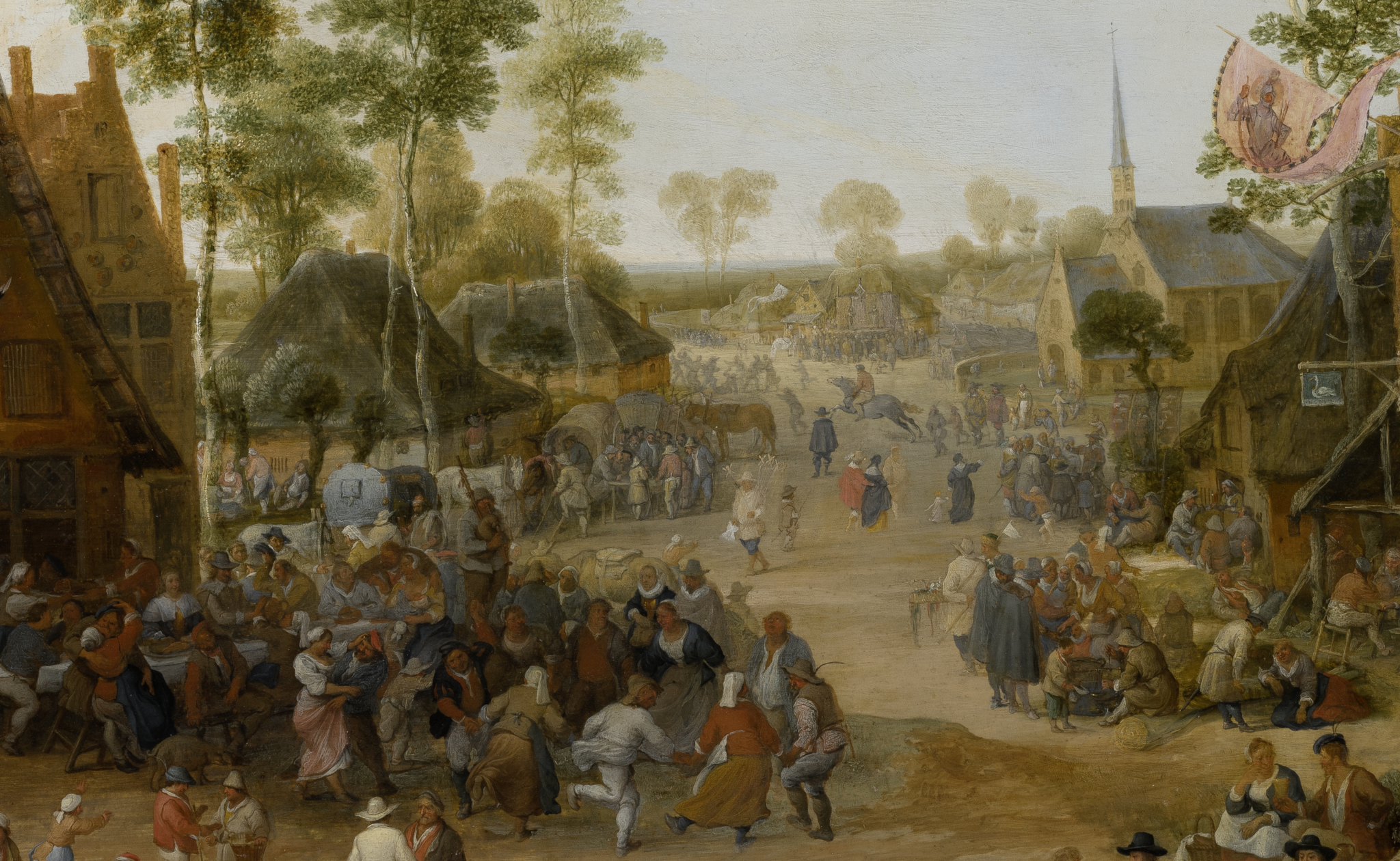
But where do you even start with this kind of thing? Well, sometimes the soundscape of a city, such as London, can be determined from visual sources. Paintings which depict early modern cities as crowded with people and/or horses necessarily imply noisiness, for example. Similarly, sources like popular broadside ballads (which were designed to be sung) tell us not only that 17th century London contained a fair amount of singing, but also what songs were being sung and, because ballads nearly always provided the reader with a pre-existing tune to sing them to, what general tunes were most common. Occasionally there are sources which directly inform the reader about certain sounds which can be heard, and it is these sources—primarily pamphlets—which I shall be using.
The reasons I’m focussing on London at night are varied:
- It’s necessary to specify what time of the day is being described because the sounds of a city vary greatly over the course of a single day.
- As night-time is the time of day which naturally obscures vision, it heightens the importance of sound.
- Existing soundscapes of London (of which there are few) tend to focus much more on the day-time.
Reason (1) is also why the titular question is almost impossible to answer comprehensively in its current form. The sounds of 1500 London would have greatly differed from those of 1700—not least due to changes in population size—but it’s not necessary to go that far anyway; The night-time sounds of 1600 London in January would differ from September. Even over the course of a single week, weather changes would cause the experiences on Tuesday to be different from that on Thursday. Of course, a geographical problem also emerges because the sounds in the middle of the city would have been different from those heard at its outskirts. Even in a single parish (or a single street), houses nearer to alehouses, playhouses, or marketplaces could cause experiences to differ.
So the explanation either needs to be one which is vague but generally true for a long period of time and for most of London, or one which is particular but only true for a specific time and place within London. The former is much easier and much more efficient, if the aim is to make the importance of sound clear. So, what did London sound like at night?

According to one 1641 pamphlet, entitled Canterburies Amazement, the Archbishop of Canterbury (William Laud) was visited by the ghost while he was imprisoned in the Tower of London. The visitation occurs at night and the scene is established as a peaceful one, Canterbury noting that ‘There is no noyse at all stirring in Citie or Countrie, not so much as the braking of dogges, or howling of wolves.’ This at first seems to suggest that London at night was quiet but in reality the tranquillity is a product of scene direction than a truthful description. Even in establishing a quiet scene, it points out the absence of barking dogs and howling wolves, which implies they were a common sound whose absence is noteworthy.
This interpretation is supported by other descriptions of London’s nightly soundscape. In Blurt, Master Constable (c. 1602), the author—probably Thomas Dekker—uses a short song full of onomatopoeias to describe Spain at night.
Midnights bell goes ting, ting, ting, ting, ting,
Then dogs doe howle, and not a bird does sing:
But the Nightingale, and she cries twit, twit, twit, twit:
Owles then on euerie bowe doe sit.
Rauens Croake on Chimnies toppes,
The Cricket in the Chamber hoppes:
And the Cats crye mew, mew, mew,
The nibling Mouse is not a sleepe
But he goes, peepe, peepe, peepe, peepe, peepe,
And the Cats cryes, mew, mew mew,
And still the Cats cryes mew, mew, mew
The reference to church bells ringing is one which can definitely also be applied to early modern London and the howling of dogs. The playwright is almost certainly projecting the nightly noises of London onto Spain when conjuring up this description, with the exception of crickets and nightingales which existed in England but were much more common in Spanish cities than in London. If the author is Thomas Dekker, then this assertion is even more likely to be true because of his strong affinity to London.
John Taylor’s A Brown Dozen of Drunkards (1648) makes a similar claim when the noise of drunken crowds are described as being so loud that ‘they so deafe the snortings of Beares, the howling of Irish Wolves, and the barkings of all the Towne-Doggs.’ The reference to bears and wolves is dubitable. Although wolves were present in Ireland at this time, their numbers were not particularly high and they can only be heard up to a few miles away. Again, there’s no reason to doubt that barking dogs were commonplace in London at night (letters and diary entries from the time included references to these sounds preventing sleep). Moreover, it is common to hear dogs barking at night nowadays, so of course this would also occur in 17th century London, which was full of them. Importantly, this account also makes it clear that it wasn’t only animals who were disturbing the peace after dark.

Taylor specifically reprimands loud drunkards for making it ‘not possible to steale a nap for them.’ This problem of noisy drunken mobs at night was a particularly pervasive one in early modern London. The issue persisted throughout the early modern period, leading to the authorities forcibly cracking down on late-night drinking and noise-making. A 1674 proclamation by the Mayor of London decried the ‘Disorders of late too too frequently committed in the Streets and Publick Passages of this City in the Night time’ and instructed night-watchmen to enforce strict rules which saw anyone who was found inside an alehouse past ten o’clock punished. But the people enforcing these curfews also made noise.
Thomas Dekker’s The Belman of London (1608) was a popular cony-catching pamphlet—’cony-catching’ was a term denoting crimes involving deceit, such as pickpockets, and pamphlets often targeted these criminals, claiming to ‘expose’ their tricks. It was so popular, in fact, that it preceded two more pamphlets from Dekker on the same subject and saw a revitalization of the genre which sparked renewed interest in other cony-catching pamphlets, such as Robert Greene’s (by which Dekker was significantly influenced). The woodcut on its title page shows a quintessential bellman (at this time a mix between a town-crier and a sort of night-watchman) carrying a staff, lantern and bell, while being accompanied by his dog. The woodcut encapsulates London’s night-time soundscape: One of the bellman’s tasks was to ensure no disorder was occurring late at night, he is followed by his dog which undoubtedly made some noise, and carries a bell which he would ring while crying out whatever news, instructions, or other declarations he was tasked with.

In the pamphlet, the narrator enters London at midnight and hears the ringing of a bell and a man’s voice even though he is not particularly near to its source. David Garrioch’s claim that ‘the bell of the nightwatchman […] echoed eerily through London’s empty streets’ is supported by Dekker’s account, which presents the noise as ‘doleful.’ We can actually have an insight into what exactly bellmen would be crying out, because some of it was written down and published. In 1639, a list of these ‘Common Calles, Cries, and Sounds of the Bel-man’ was printed and was subsequently attached to Samuel Rowland’s popular Time Well Improved in 1657. In the early hours of the morning, the bellman would wake people up by loudly crying out small speeches. ‘All you that in bed doe lye,’ begins one, ‘Harken well to what I cry.’ Another starts with ‘Arise from sin,/awake from Sleepe,/the earth doth mourne/The Heavens weepe.’ If the instruction to ‘wake up’ didn’t make it obvious that these sounds were loud, the publication concludes with a recognition that ‘Sicke men complaine they cannot sleepe,/The Bel-man such a noise doth keepe.’ The night would begin with the bellman signalling the start of curfews and end with a command for you to awake from your slumber.
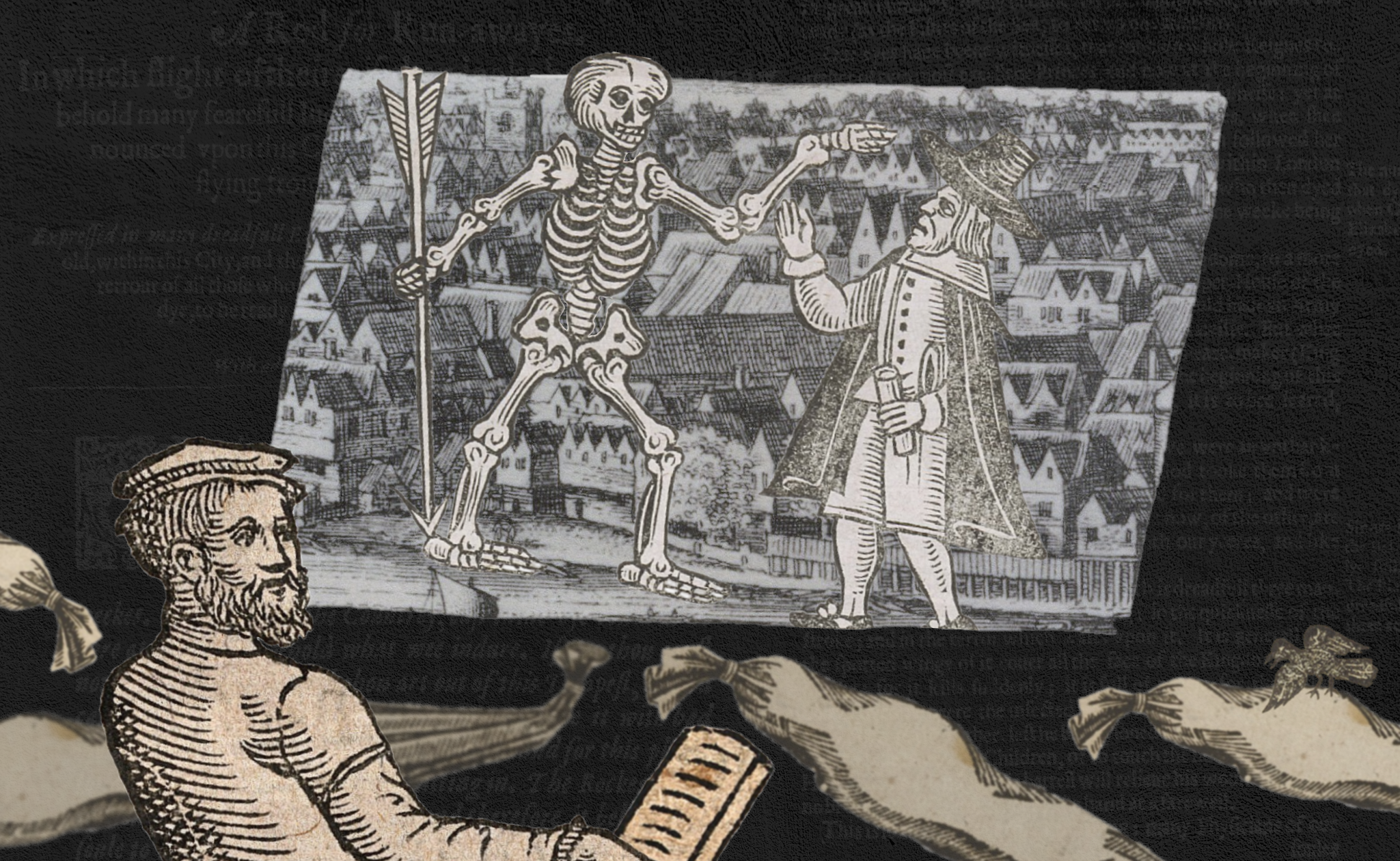
One of the reasons that night-time noises are particularly important is their psychological impact in the forms of inspiring dreams. In The Terrors of the night (1594), Thomas Nashe notes that ‘our dreames (the Ecchoes of the day) borrow of anie noyse we heare in the night.’ For example, ‘[if] there be any rumbling, knocking, or disturbaunce neere us, wee straight dreame of warres’ and ‘If a dogge howle, we suppose we are transported into hell.’ Nashe is correct and because dreams were often important sources of revelations or vehicles for superstitious beliefs, night-time sounds are also important. Changes in sound at night could cause people to have more (or fewer) dreams which included war or ghosts. Also, noises you hear when lying in bed can provoke superstition even if you are awake. Could there be a relationship between alleged ghost sightings and areas (or time periods) where certain noises were more or less likely to be heard?
What all of this shows is that London was far from quiet at night. A common theme seems to be dogs barking, which is unsurprising. There were so many dogs in London that when dogs were killed in 1665 because it was feared they could spread the plague, over 40,000 were put to death. Disorderly drunkards is another obvious source of late-night disturbance, as is the noise produced by bellmen and watchmen who often disturbed the peace in order to prevent the aforesaid disorder. The soundscape of early modern London was complex and dynamic, but its significance is undoubtable. It may not be as easy to conceive of an audible history as it is to picture a visual one, but it is in understanding what history sounded like that we can achieve a more comprehensive idea of what exactly early modern London was like.