In the small village of Colnbrook, Slough, there is a pub. Situated just across the road from the local primary school and a short distance from the village church, it has a past which is both ungodly and not appropriate for children. It goes by the name of ‘The Ostrich Inn’ and during the 12th century it was the site of dozens of fictional cold-blooded murders.
I first encountered The Ostrich Inn when I stumbled across a ‘historical true crime’ TikTok video which relayed the tragic murders enacted in the Inn during the 17th century. According to Berkshire Live, the pub saw ‘a string of murders by money-mad husband and wife’, totalling no fewer than sixty if the confessions of the landlord and his wife are to be believed. The article also incorrectly dated the murders to the 17th century. The pub also features on the BBC’s website as a part of Berkshire’s local history. The BBC article is no less credulous, however, reporting the murders as though they are settled history and—once again—situating the crimes in the 17th century. The number of total victims, sixty, is repeated but this time the number comes from the landlord’s final brags as he was about be hanged, rather than from a confession.
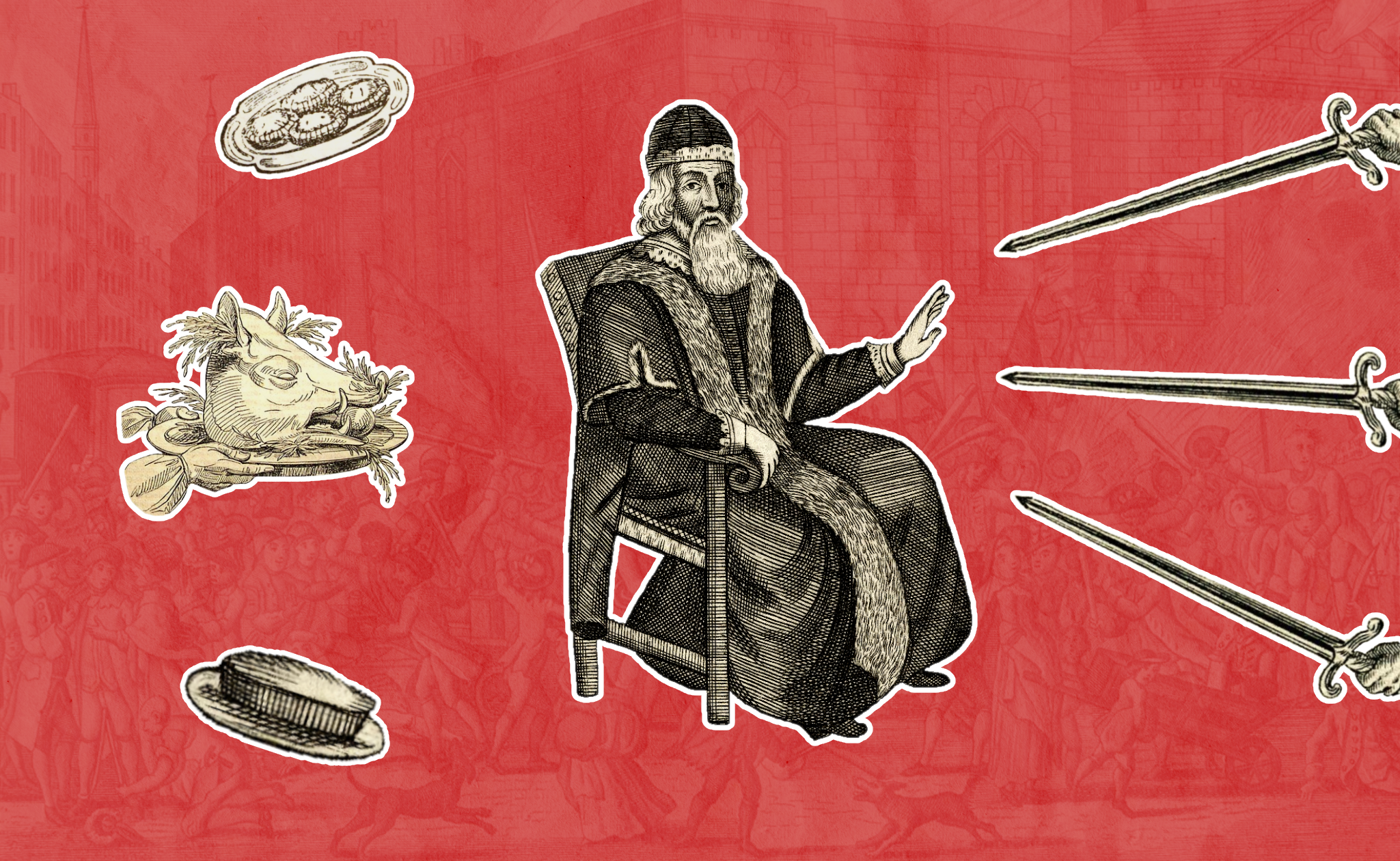
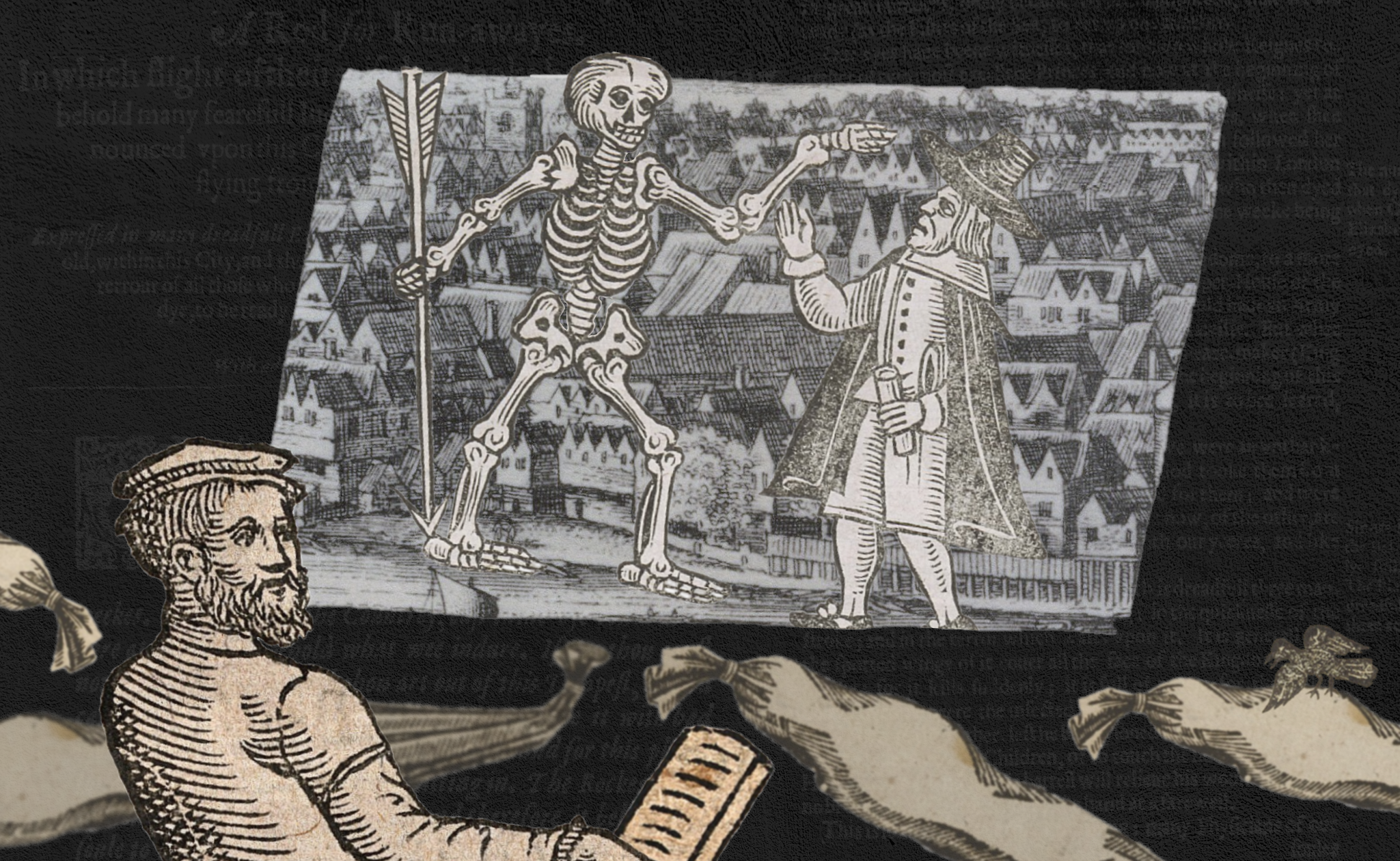
The story goes that the landlord, Mr Jarman, and his wife would spot rich visitors who came alone to their convenient inn and—giving the other a signal by remarking that ‘there is now a fat pig to be had’—would settle the visitor into their bedchamber. Unbeknownst to the traveller, however, was that the bed was part of a contraption which could, with the pull of a lever, flip the occupant into a cauldron of boiling water. Their murder spree came to an end after they decided to kill a prominent clothier called Thomas Cole (known as Thomas of Reading) whose horse was seen wandering aimlessly through the village and whose corpse was later found floating in the river.

A terrible tale, to be sure, but a rather tall one at that. There are some reasons to doubt the veracity of the story on its own merits; if the aim was to discreetly murder a wealthy patron, why go with the mechanically complex boiling water trap over a simple knife in the back or pillow to the face? Boiling water doesn’t instantly kill those submerged in it—if it did, it wouldn’t be such a cruel form of torture and execution. And how exactly did nobody notice that wealthy travellers kept going missing when travelling the route along which this pub lies? But even if we grant these implausible qualities, the tale quickly reveals itself to be a fiction.
There are no contemporary sources which show the pub to have been a site of any murders, nor any record of Mr or Mrs Jarman’s execution. The BBC provide a ‘contemporary account by Thomas Deloney’ but it is this detail which unravels the mystery altogether: Thomas Deloney was not a 12th-century witness, he was a 16th-century writer.
In a sense, the BBC isn’t entirely wrong. All of the information they provide, along with all the information which exists about Thomas of Reading, comes from Thomas Deloney’s novel Thomas of Reading. Deloney’s last book before his death in 1600, it was probably written some time around 1598. The first reference to it that I can find in the Stationers’ Register is from April 1602, when the copyright of ‘A booke called Thomas of Reading’ was transferred from Thomas Millington to Thomas Pavier. Given the book’s title, the date of entry, and the fact that Thomas Millington was a bookseller who also sold some ballads written by Deloney, we can safely assume this to be Deloney’s work. The earliest surviving copy of the book I can find on EEBO dates from 1612, where it is clearly titled as ‘the fourth time corrected’.
Deloney’s story does purport to relay historical fact so Thomas of Reading’s existence, and the veracity of the circumstances of his death, aren’t precluded simply by the novel’s existence. But the lack of corroborating contemporary accounts and the intentions behind Deloney’s work do make the story one which should be considered fictitious for all intents and purposes.
The story was intended to praise the cloth trade and created a pseudo-martyr for its cause. Thomas of Reading may have existed in some capacity (at the very least, it’s statistically probable that someone called Thomas from Reading was active in the cloth trade during the 12th century) but Deloney’s titular character is as good as fictional.
Deloney had previously written about John Winchcombe (known as Jack O’Newbury because of Deloney’s work). This biography was a mixture of fact and fiction but was about someone who had only been dead for around thirty years, not over four hundred. Both The Pleasant Historie of John Winchcombe (c.1590) and Thomas of Reading (c. 1598) were popular at the time. The latter was popular enough that not only was it in the stock of popular bookseller Jonah Deacon as late as the 1680s, but the publisher felt compelled to release a shortened version, full of lively woodcuts, to reach a more popular audience. This text was ‘humbly dedicated to the Worshipful Company of Cloathworkers’, so it’s clear what the purposes of the book were.

The fictitious nature of the story is uncontroversial. The text is often seen as a literary masterpiece and, according to Paul Devine, ‘presages the development of the English novel.’ Thomas of Reading is listed among Thomas Fuller’s ‘Worthies of England’ in his 1662 attempt at a dictionary of national biography. Fuller attributes Thomas of Reading’s fame to ‘tradition and an authorless pamphlet’. This is presumably a reference to Deloney’s work, although the work had been credited to a “T. D.” in all its editions. Fuller compares Deloney’s effort to present Thomas of Reading as a noble clothier murdered in cold blood to attempts at creating legendary religious figures:
The truth is this, Monkes began to Lard the lives of their Saints with lies, whence they proceeded in like manner to flourish out the facts of Famous Knights, (King Arthur, Guy of Warwick, &c.) in imitation whereof some meaner wits in the same sort made description of Mechanicks, powdering their lives with improbable passages, to the great prejudice of truth
Because the cloth trade does not have the archaic roots of English religion and mythology, Deloney is forced to pluck his hero from a time much more recent in cultural memory, though still long enough ago to ensure that his hero’s escapades and demise are easier to credulously believe than sceptically disprove.
Fuller puts it nicely: ‘I vehemently suspect very little of truth would remain in the midst of this story, if the grosse falshoods were pared from both sides thereof.’ But Fuller also notes that ‘omnis fabula fundatur in Historia’ (‘All tales are based on history’) and values Cole as an eminent character, even if he didn’t really exist. Perhaps it is this which is the crucial takeaway. The BBC and Berkshire Live may have misinterpreted a fictitious story, and the owners of the pub which claims to be on the site of the 12th-century inn undoubtedly value the story as a way of drumming up business, but that doesn’t make it meaningless.
The value of Deloney’s novel is not decreased by the fact that it does not contain much truth, rather it is increased. It is not a simple, factual account of a terrible string of murders, but an example of an attempt at a sort of hagiography, which sheds light on the desire of livery companies to ground themselves in English folklore through mystical figures who could then afford their practice an air of antiquity, legitimacy, and prestige.