The English Civil War is famous as a time of bloody battling between Royalists and Parliamentarians during which the country underwent significant political and religious upheaval, accompanied by ideas about the role of monarchy and order of society which could be so radical that some historians speak of an “English Revolution” between 1639 and 1651. As if life during this tumultuous period wasn’t interesting enough, ghosts allegedly roamed the streets at night.
Some of these spectral apparitions were the restless souls of ordinary people, while others were mysterious spirits with unclear purposes. A printed report from 1645, for example, claims a spectre terrorised a silk-weaver living in East London by throwing around stones and books, “breaking his windowes”, and “cutting his worke in peeces”.
At other times it was politicians, courtiers, and writers who returned as ghosts to issue warnings or implore action. But the most magisterial phantoms of all were deceased royalty — among them the long-dead King Henry VIII.
This was because rising literacy rates, increasing interest in the supernatural, and widespread political instability had coalesced to produce a new literary genre: the “ghostly playlet”.

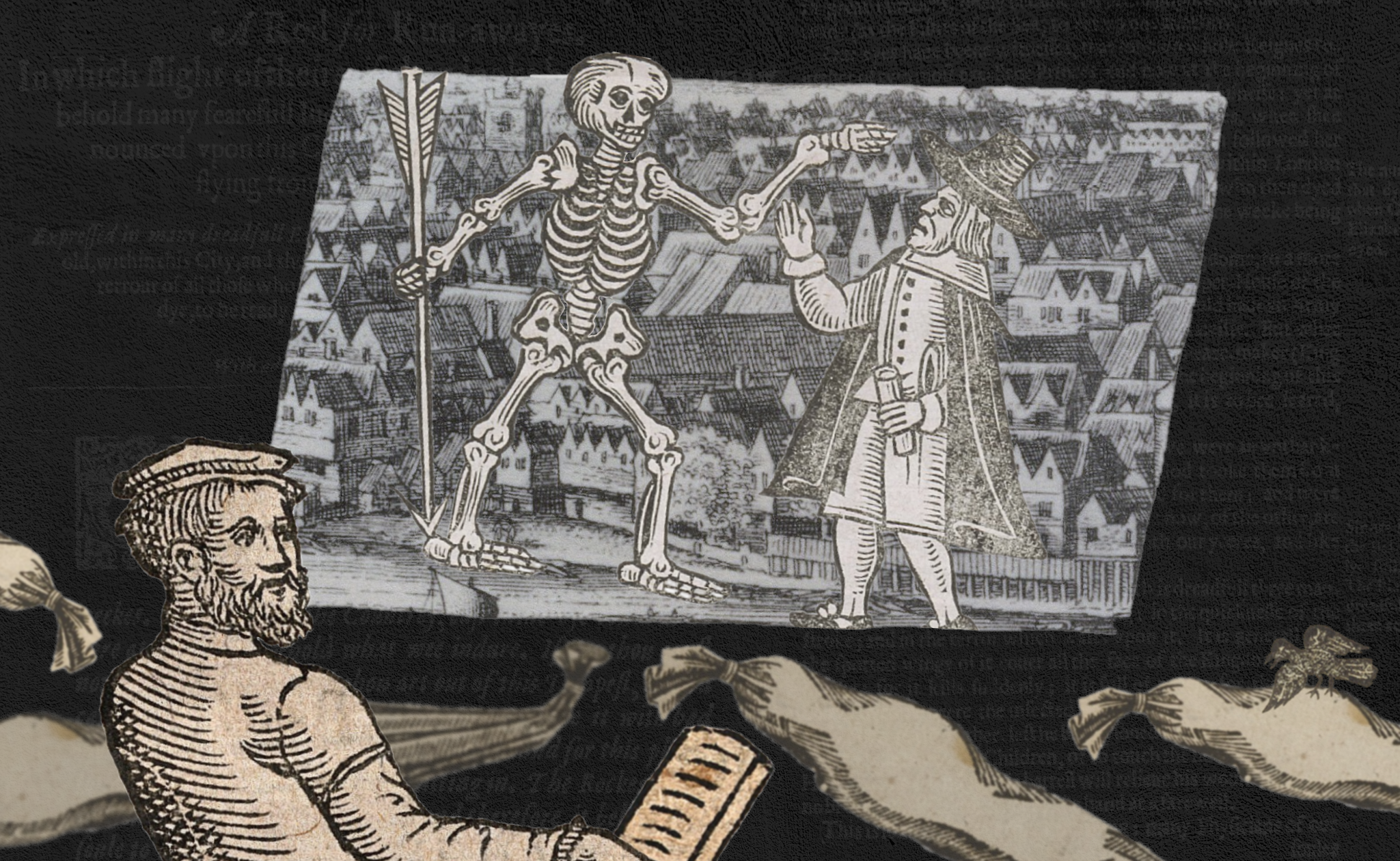
These short pamphlets were sold cheaply in London’s bookshops during the 1640s and 1650s, featuring dramatic dialogues between ghostly apparitions and their unfortunate targets — usually with a view to making some political point. The Puritan Long Parliament had closed the city’s theatres in 1642, meaning these printed mini-plays were a popular “paper stage” on which writers could simultaneously frighten, entertain, and attempt to persuade readers.
Most of these ghosts appeared in their “winding sheet”, or burial shroud, and carried a flaming torch. Apparitions typically occurred at night and were sometimes accompanied by lightning and thunder. Writers worked hard to create immersive, frightening atmospheres which primed the reader for a supernatural experience.
Henry VIII’s ghost haunts Windsor Castle in 1649
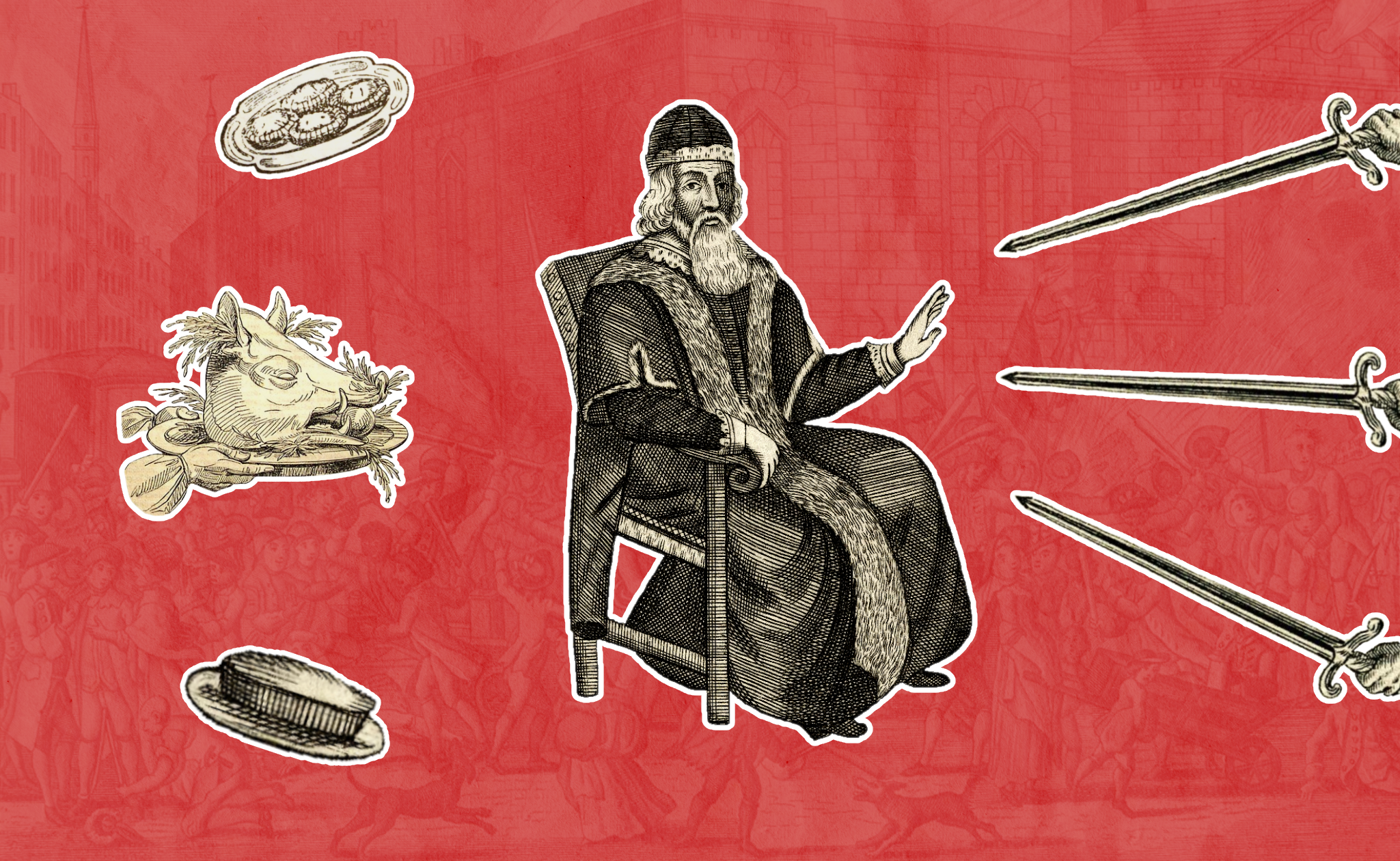
As Charles I’s body was being buried in the crypt of St George’s Chapel, Windsor, in February 1649, the people present were startled by a “horrid sound” from the decapitated monarch’s tomb. It was the voice of King Henry VIII, buried there more than a hundred years earlier, whose ghost was “complaining with a loud and horridly frightfull Vocification”.
“Ho!,” the dead Tudor sovereign bellowed, “Who is this (with sacraligious impietie) that dares vex the so long quiet ashes of a King so many years since deceased?”
The person who responded, in an “extreamly dolefull” tone, was none other than Charles I, whose execution had taken place a week earlier.
These details and the ensuing conversation are reported in a pamphlet which was printed in France in 1657, before making its way to England. The anonymous author explained that its journey to the printing press had been delayed by a conspiracy of suppression by the authorities. Those who had intended to inform others of this supernatural marvel were imprisoned and the soldiers who had been present as witnesses were bribed into silence.

This implausible explanation aside, the reported dialogue between Henry VIII and Charles I would undoubtedly have shocked readers. Henry VIII says he has come from hell and that all of England’s current woes — civil war, political turmoil, and religious instability — were divine punishment for transgressions committed by him and his Tudor heirs. Henry VIII admits he indulged in lust, rejected the pope, and executed innocent people in an attempt to gain control of the Church.
He goes on to explain that his daughter, Elizabeth I, was “begot in incest” and is also languishing in hell for her “unparalleled cruelty”, which included imprisoning and executing Charles I’s grandmother: Mary, Queen of Scots.
The pamphlet’s author was clearly a staunch Catholic. It was printed in Paris on Rue Saint-Jacques, a street at the centre of France’s print trade which gave the work access to an audience of European Catholics and avoided the risk associated with printing it in England.
A visit from Cardinal Thomas Wolsey’s ghost
King Henry VIII was not the only prominent Tudor to haunt 17th-century England. Just after midnight on 14 May 1641, the Archbishop of Canterbury, William Laud, was woken from his slumber in the Tower of London, where he was imprisoned on charges of treason. Standing by his bedside, decked out in full cardinal attire and carrying a crosier, was none other than Thomas Wolsey.
Wolsey’s ghost had appeared to draw comparisons between his own downfall and Laud’s current predicament. The cardinal was reviled as a Catholic and abusive, corrupt prelate — accusations Laud was also facing. The pamphlet relaying this supernatural affair was titled Canterburies Dreame and included a woodcut purportedly showing Wolsey’s ghost haunting the disgraced Archbishop.

“My Lord,” said the spectral Wolsey, “the newes of your greatnesse, and the noyse of the falling Episcopacie, hath rouz’d me from the sloath of death, to understand what new ambition could prompt again the Miter to aspire unto a parity with the Crowne.”
Wolsey claimed both he and Laud had sought to “nourish ambitious thoughts” and became deeply unpopular with England’s population. Laud’s crimes included pursuing too fervently the “beauty of holiness” and abandoning religion along the way. Wolsey’s were levying harsh taxes — like the Amicable Grant of 1525 — and the cruel treatment of others, including bitter grudges and personal vendettas.
The conclusion, as uttered by Wolsey, was that “the ruine of us both was indeed in both our times the joy and voice of the people” — the victim endorsing his own downfall. Before Laud has a chance to respond, the crowing of a cock signifies the coming of daylight and forces Wolsey to vanish back into the underworld.
John Milton was suggested as the author of this text in Francis Peck’s 1740 study of the famed poet, who lambasted both episcopacy (bishops governing the Church) and Laud himself in a series of five pamphlets between 1641 and 1642.
A swarm of ghosts in Cromwellian London
Most of the literary phantoms who haunted England had not been dead for as long as Henry VIII or Cardinal Wolsey. Some were so recently deceased that we can surmise their ghostly dialogues must have been conjured up by writers in advance of their deaths.
The newly-dead Thomas Bensted, a 16-year-old apprentice executed for treason in 1640 for his part in the anti-Laudian attack on Lambeth Palace, was scarcely allowed to rest before the printing presses resurrected him.
The young apprentice was among a 500-strong mob that had vandalised the estate, which was the London residence of the Archbishop of Canterbury, and was subsequently hanged, drawn and quartered. His limbs were publicly displayed on London Bridge as a warning to others.
Canterburies Amazement (1641) tells of the teenager’s nocturnal visit to Archbishop Laud in the Tower of London and includes on its title-page a dramatic woodcut of the confrontation.

Using Bensted’s voice, the anonymous author argued that the teenager’s trial had been unlawful, his charges trumped-up, and his punishment excessive.
“You might have censured me to have lost my eares, or have branded me in the forehead and cheeks, and so have banished me,” the boy’s ghost lamented. “But to take my life, and thus to mangle me, and let my blood spilt upon the thirsty ground […] this is inhumanity.”
It is not hard to see why even a reader with considerable sympathy for the Archbishop might have pitied Bensted. But we are abruptly reminded of the pamphleteer’s real intentions when the apprentice proceeds to list out a set of grievances against Laud, among them “bestowing Benefices on non Residents, that would preach once a moneth” and “your book which tolerated Sundayes Pastimes”.
Having Laud then accept these criticisms as legitimate (“I believe thou knowest all my faults”) is the triumphant final act of this political character assassination — and it is Bensted’s authority as a ghost that allows this to be achieved.

Laud was particularly plagued by ghosts — also haunted by a physician, a scrivener, and even his political ally, the Earl of Strafford — but he was far from alone. Oliver Cromwell haunted various political opponents after his death in 1658; the spectre of Tudor merchant Sir Thomas Gresham briefly roamed London in 1647; and in 1642, the ghosts of King James I and the Scottish noble James Hamilton joined forces to accuse the Duke of Buckingham’s ghost of poisoning them.
The Civil War period and its aftermath created a perfect storm in England for these printed reports of hauntings to arise. Some 200,000 people would die during the conflict across the British Isles and a string of high-profile executions (not least that of the King) meant death was on everybody’s mind. As the very foundations of England’s national identity were being called into question, the legacies of deceased monarchs and statesmen, like Henry VIII and Cardinal Wolsey, could be fruitfully exploited.
Ghosts were also the perfect voices of authority — frightful apparitions who had nothing to gain by lying, nor lose by telling the truth. As the ghost of the playwright Thomas Nashe bluntly put it in 1642: “I am a Ghost, and Ghosts do feare no Lawes;/Nor doe they care for popular Applause.”
The resurrected spirits of departed people may never have visited the world of the living, but the printing press engaged in necromancy on a regular basis.