A traveller passing through the parish of Wells, Somerset, one day in June 1607 might have thought it the most pious place in all of Christendom, so eagerly was the population of that famously tiny city descending on its church. Such verve would ordinarily testify to the superb oratory skills of their vicar, but here it was the product of something altogether more peculiar.
Strange, the visitor might suppose, that service was being held so late in the evening. Stranger still, though he could not possibly have known, that among the few recusants were some of the community’s most stringent Puritans. Studied more closely, this stream of parishioners flooding the churchyard was flowing not into St Cuthbert’s Church, but through the doors of a smaller neighbouring building. In their hands were not commonplace books, for scribbling down pertinent points of theology, but bread and meat. Waiting for them inside was not the wine of Holy Communion but a copious amount of beer.
Across five consecutive days the ever-swelling crowd flocked to the makeshift banquet hall, the smallness of which crammed hundreds upon hundreds of feasters together, with others spilling out into the churchyard. Among those in attendance were the churchwardens who had organised the affair, representatives of the city’s craft guilds, and a broad cross-section of the community’s rank and file, including its most needy. There were famous faces, too. The mayor, Alexander Towse, was present, alongside the Dean of Wells Cathedral, Dr Benjamin Heydon, who was also the county’s Justice of the Peace and the local schoolmaster.
A cacophony of tipsy chatter, punctuated by regular singing, laughter, music, and the clunking of tankards, not to mention the malty stench of cheap alcohol wafting through the nearby streets, would surely have both thoroughly depressed and hardened the godly resolve of those local Puritans who had so vociferously opposed this boozy bash.

These self-righteous moralists utterly despised the jolly “church ale”, a festive social gathering held in the “church house” which reflects the church’s role as a precarious force of community cohesion. It was uncouth at the best of times for people of all ranks to gluttonously feast, drink, play sports, and dance. To do so in the name of, and right next to, the church itself was unforgivable blasphemy.
The secular authorities were growing concerned too, troubled by the criminal acts frequently born out of these festivities, most alarmingly a number of murders and manslaughters. In 1602, the Cornish antiquary Richard Carew spoke of the church ale as the epicentre of a “multitude of abuses, to wit, idleness, drunkennesse, lasciviousness, vaine disports of minstrelsie, dauncing, and disorderly night-watchings”.
Puritans had, for most of the Tudor period, begrudgingly conceded that these celebrations at least served some good purpose, for they provided critical funds for the upkeep of the parish church, charity for the poor, and maintenance of local bridges and roads. They could also be timed strategically to entice parishioners to attend worship on special feast days, which they were by law obliged to observe.
But the development in Elizabeth I’s reign of rating systems for parish funding and strengthened poor relief laws made these fiscal defences vulnerable. A series of local orders in the 1590s and subsequent national religious canons in 1603 were successful in cracking down on “plays, feasts, banquets, suppers, [and] church-ales” carried out without “good cause”. From the early seventeenth century onwards, these activities were in terminal decline and largely restricted to the West Country and parts of the South East. They were often only held on Whitsunday, if at all. The week-long drinking marathon in Somerset was truly exceptional.
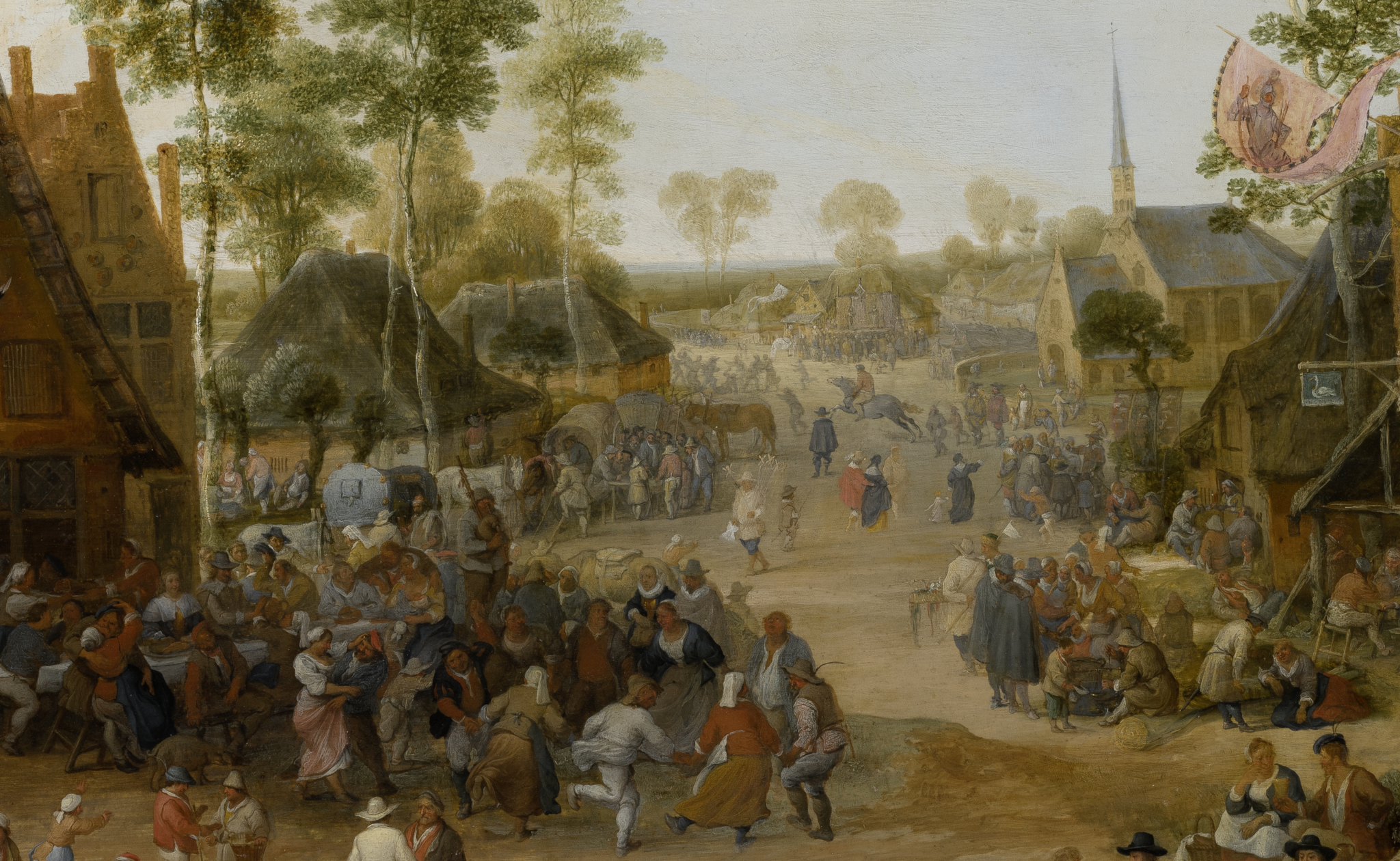
Entertainment included singing, morris dancing, and sometimes “the king play”, a game which — like the church ale itself — was rooted in the late medieval period and involved a low-ranking parishioner acting as a mock monarch presiding over events, in an inversion of social norms. “Robin Hood plays” were put on, with attendees re-enacting the legendary outlaw’s heroic deeds. Festivities might be rounded out with colourful, costumed pageants where people dressed up as such characters as St George, the Sultan of Egypt, and giants. Occasionally there were small firework displays, or parishioners took part in “mystery plays” wherein Bible stories were dramatised.
The food could be plentiful, varied, and mouth-watering. Baked meats, fresh roast veal, fruit, and spices were put on offer at a 1561 Whitsun ale in Bedfordshire, which was collectively organised by ten parishes. Some 30 years later in Kilkhampton, Cornwall, the churchwardens shelled out 22 shillings on such victuals as saffron, fish, apples, butter, and bacon. More food would be contributed by the attendees themselves.
Drinking was a major part of the merriment, of course, and specially brewed ale was sold at deliberately inflated prices to generate as much revenue as possible for the parish. Perhaps motivated more by inebriated intemperance than godly zeal, attendees spent plentifully; one Robert Smyth in Somerset was reportedly drunk for three consecutive days during the church ales of 1607, and could be heard to “whoop and hallooe”.

It may also have been Dutch courage which spurred many of the Wells crowd to mock local Puritan naysayers in street parades which followed the suppers. Performing a kind of charivari, locals took it upon themselves to shame members of the community who had transgressed social norms — in this case, being intolerably miserable. The chief critic, local constable and artisan John Hole, was ridiculed as effeminate by one young man who, cross-dressing while on horseback, portrayed the wealthy clothier as a spinster. His close friend Hugh Mead, a pewterer, was so outraged by a subsequent rider suggesting he was incompetent at his trade that he tried to pull the man off his horse.
In another skit, Hole was accused of having an affair with the wife of a fellow Puritan, as one young rabble-rouser invented and played the “Holing Game” — crowds jeering around him as he rolled a ball towards a wooden plank with holes carved in it, which bore crude paintings of Hole, Mead, and the alleged adulteress Anne Yard. The same rapscallion devised a libellous verse about the supposed affair, which quickly spread throughout the city alongside another slanderous poem.
The reputationally-wounded Hole responded with a lawsuit alleging both that he had been defamed and that the churchwardens had violated legislation banning church ales, which began at the local Somerset Assizes in August 1607 and ultimately progressed to the Court of Star Chamber in Westminster. The two libellers were made to stand in the pillory in both London and Wells, and ordered to pay £100 in damages. A carefully-worded letter from a local nobleman, the Earl of Hertford, to the Lord Chancellor presiding over the case meant Wells’ civic elite were spared punishment for their part in the disorder.

The church ales had coincided with the annual May Games in Wells, a long-standing tradition whose core elements — a maypole dance, drum playing, and sports — seem unobjectionable enough. But the historian David Underdown, whose research into Somerset’s 1607 celebrations has unearthed a community squabble which got grossly out of hand, notes that the authorities were anxious nonetheless. Excessive merrymaking could come across as popish or pagan, stoking “fears that the whole fabric of the ordered society ordained by God was in danger of collapsing”.
In suppressing church ales, the Puritans had, by all accounts, scored a significant victory in the heated culture wars. There were pockets of resistance, of course; a group of young men from Wiltshire were charged with holding their own unauthorised Whitsun ale in 1624, and in 1633 a fresh controversy broke out in Somerset after church ales were held there. A year later, the poet William Fennor angrily took aim at the “peevish Puritan”, “capricious constables” and “over-wise church-warden” who had ruined the happy days “of honest neighbourhood, where all the parish did in one combine”.
Fennor’s spectacles were a tad rose-coloured. It was not only Puritans and priggish sticklers who looked askance at church ales, but a fair few ordinary Protestants who quite understandably preferred merrymaking which didn’t revolve around the guzzling down of alcohol. The Bishop of Wells had opposed the church ales in 1607, backed up by the magistrate of a neighbouring county who had flip-flopped on the matter before coming down on the side of the opposition.
And could they really be blamed? After one church ale in 1611, a woman in Gloucestershire accused a man of groping and kissing her before proclaiming her “his whore”. Two church ales in Devon in July 1614 had ended in manslaughter. For all their merriment, Wells’ church ales of 1607 had seen a large part of the community shun their neighbours; constable Hole had been slandered as an adulterer; his friends had been mocked for their crafts in lampoonings which, however targeted, surely irked others in the same trade; two young men had been pilloried as a consequence of the bitter lawsuit which followed. Church ales could bring communities together. They could tear them apart, too.