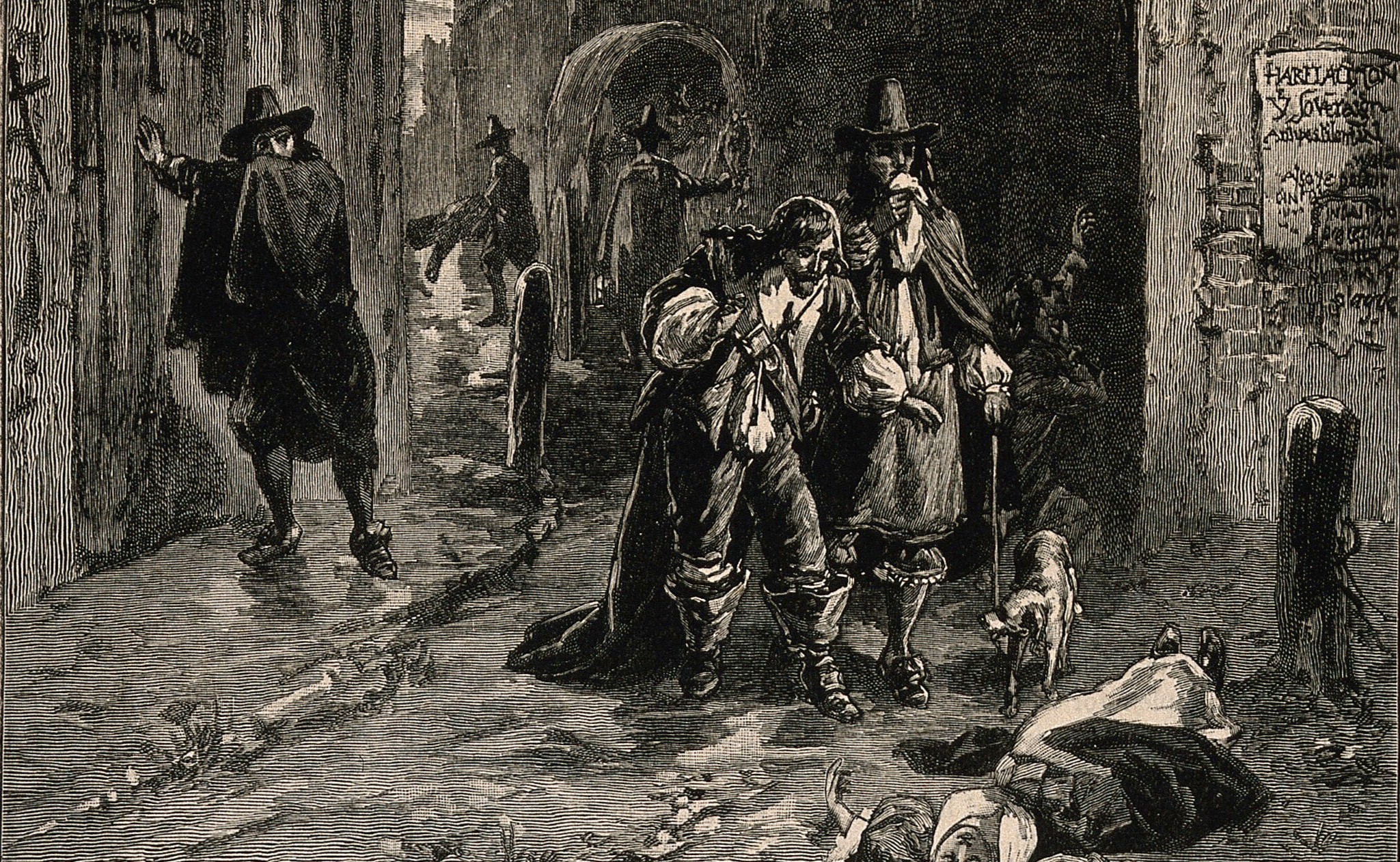
The ongoing Coronavirus pandemic has been relentlessly compared to the Great Plague of London in 1665. The comparison is apt in many ways, from the prohibiting of large public events to quarantining the infected. One similarity between the two which has been neglected, however, is the class tensions present during both outbreaks.
All epidemics are inevitably affected by the class system of a country, particularly if there is high wealth disparity between large swathes of the population. In a report released in May last year, the Office for National Statistics concluded that ‘People living in more deprived areas have experienced COVID-19 mortality rates more than double those living in less deprived areas. General mortality rates are normally higher in more deprived areas, but so far COVID-19 appears to be taking them higher still.’
A much more obvious and public example of this class divide was the scandal surrounding political strategist Dominic Cummings’ decision to make a 260-mile journey from London to Durham and—famously—a 60-mile round trip from Durham to Barnard Castle which saw the senior adviser face calls to resign from both sides of the political aisle.

There was a similar class-based tension when the plague struck London in 1665, killing an estimated 100,000. Fundamental to understanding that this was the case is considering the social model of epidemics.
The late historian Justin Champion makes this clear by arguing that the reason poor Londoners were much more likely to both contract and succumb to the Great Plague lies not in the fact that poor Londoners lived in filthier areas or were generally less hygienic, but rather that they were anchored to the city.
Both poor and rich parishes of London suffered from the plague and this is unsurprising: People often travelled between parishes, many parishes shared nearby water sources which could become infected, and even wealthier parishes were not ‘clean’ by today’s standards. However, the hygiene of a Londoner’s parish was rendered irrelevant if they could simply leave for the countryside and this is precisely what many of London’s richest inhabitants did.
Poor Londoners, who did not have the financial stability to travel, lacked property outside of London in which to live, and could not afford to lose their job (if they were employed), were essentially left to fend for themselves, although the remaining authorities of the City of London did have some limited success in aiding them.
A 1665 ballad lamenting the Great Plague described it as ‘the Rich-mans terrour [which] makes him flye,/And bear away his baggs, as loath to die’ and asks what exactly the poor are supposed to do to survive.
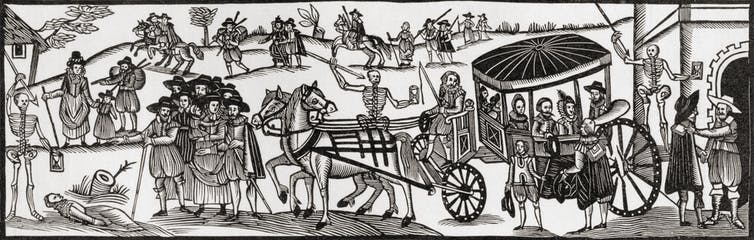
In fact, the flight of the rich did have a direct negative impact on the lives of those remaining. The rich were often employers and had large quantities of food and supplies which many took with them. This undoubtedly contributed to the large death toll of the plague, which should also consider deaths which were not from the disease itself but brought about by its consequences.
Contemporary intellectuals, most notably demographer John Graunt in his Natural and Political Observations Made upon the Bills of Mortality (1662), claimed that plague deaths were often underreported (deliberately, as it could lead to quarantining, or by mistake, as many of those charged with handling the dead were not qualified to determine cause of death) and therefore any spikes in other causes of death could largely be identified as misattributed plague deaths.
What this neglects, however, is that incidents of plague nearly always corresponded with the arrival of other diseases, so an increased death toll for non-plague illnesses is to be expected, but also that inhabitants in plague-stricken cities would be much more likely to die from conditions associated with malnutrition. By fleeing from London, the wealthy had saved themselves (although many were in fact carriers of the plague) but condemned the poor to a bleak existence.

Although those fleeing may have done so in the hopes of saving themselves and their families, there was never any implication by civil or religious authorities that fleeing could actually save you from the plague, since it was viewed as an act of God which could not simply be evaded.
Writing a few decades before the Great Plague, physician Francis Herring warned, ‘Let not Gentlemen and rich Citizens by flying […] thinke to escape Scotfree’. In his popular 1666 pamphlet Vox Civitatis, Benjamin Spenser decries the mass exodus of medical professionals, which undoubtedly led to deaths from both the plague and other endemic diseases.
What this shows us is that the similarities between the Great Plague of 1665-6 and the current Coronavirus pandemic go far beyond the superficial. Yes, both are outbreaks of disease resulting in quarantining, government-enforced restrictions on public gatherings, and economic slowdown, but they also share much deeper qualities. Both reveal a stark class divide, the rich not afraid to flee to the countryside, causing the impact of both to be influenced by social class and inequality just as much as hygiene and public health.


