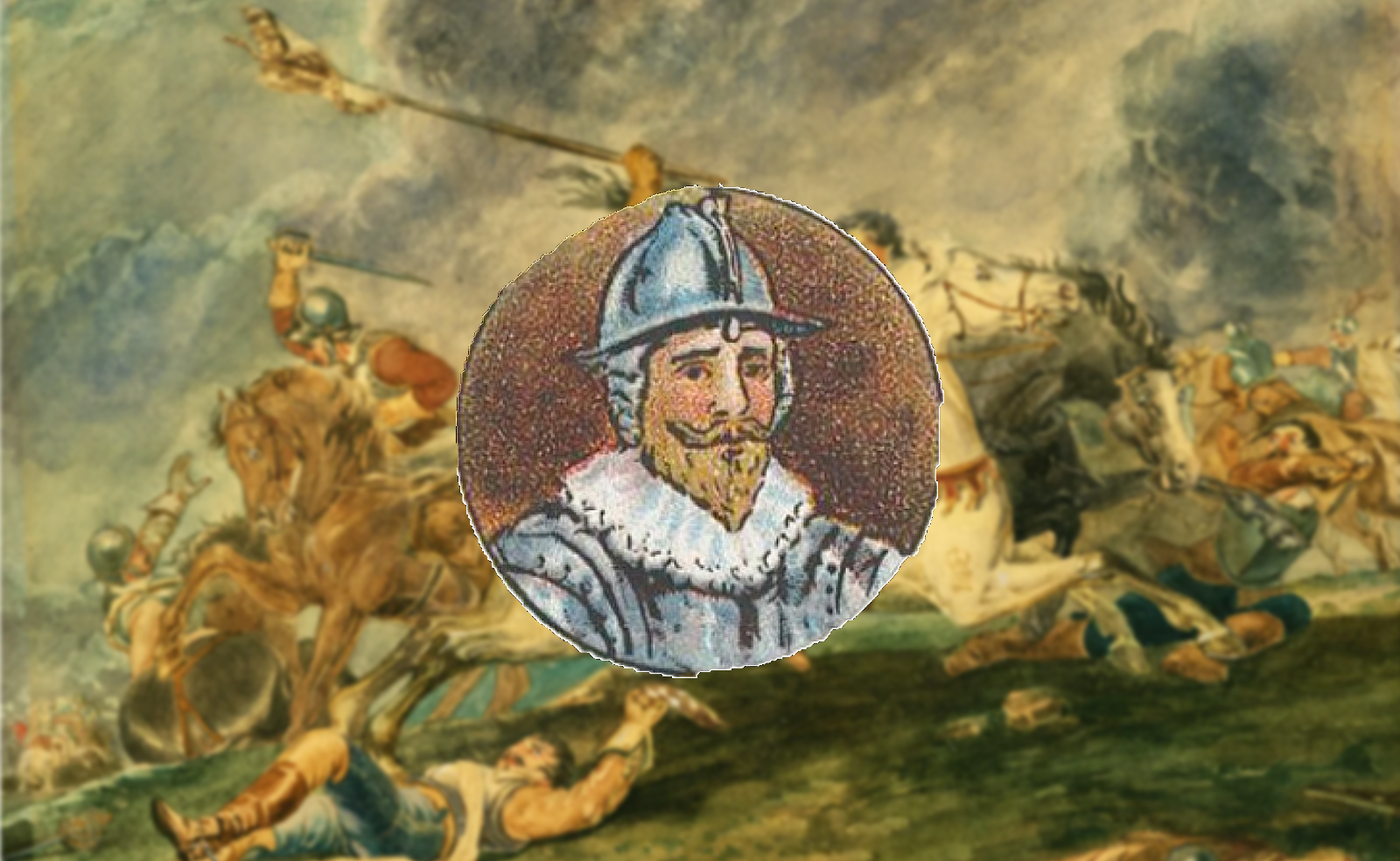
Of the great many ignominious deaths throughout history, that of the otherwise forgotten Sir Arthur Aston, a royalist army officer supposedly bludgeoned to death with his own prosthetic leg, is among the more curious. But it could not have happened, as we shall see, to a more deserving man.
Born in 1590, Aston, the son of a soldier who died in battle, followed in his father’s footsteps and took up the military profession in his early twenties. He undertook a kind of Grand Tour fighting foreign conflicts — in Russia against the Poles; in Eastern Europe against the Ottoman Empire, this time serving under the Polish crown; in the Baltic states against the invading Swedes; and then for the Swedish king Gustavus Adolphus in Germany against the Holy Roman Empire.
Aston was in his very late forties when he returned to England in 1639 — drawn homeward not by homesickness but rather the outbreak of conflict between King Charles I and an army of Scottish religious rebels. And soon there would be an even juicier conflict for him to get stuck into: the English Civil War.
Aston quickly rose up the royalist ranks, overseeing the defence of Reading when it was besieged in April 1643 — though he was kept out of action for a few weeks after a falling tile struck him on the head, rendering him speechless. A rumour abounded that Aston, who was later released by prisoner exchange, had feigned the injury so as to escape the humiliating responsibility of surrendering the town.
He already had a reputation as a strict leader, who had hanged several of his garrison in Reading for disobedience. When made governor of Oxford in August, however, his warlike proclivities, unsated by actual conflict, came to light in even uglier outbursts. In 1644 he was reportedly put under house arrest for assaulting the mayor of the city, which was the most important royalist stronghold.
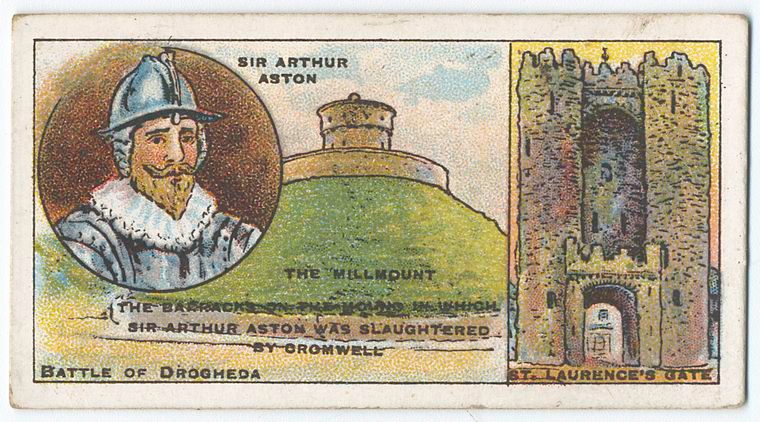
In October of that year, Aston’s enemies heard happy news that he had suffered a serious injury. “As he was prancing through the street in Oxford, in the height and rough of his pride and insolency,” one writer giddily reported, “his horse on a sudden stumbled and fell with him, and in the fall broke the governor’s leg, which afterward did so gangrene and fester, that of necessity it must be and was cut off over the knee.”
The antiquarian Anthony Wood, then a schoolboy in Oxford, wrote in his diary that Aston had been “kervetting on horseback in Bullington green before certain ladies [when] his horse flung him and broke his legge”. From then on Aston could be identified by his wooden prosthetic limb.
Eventually Aston’s close friend William Legge became governor of Oxford. Wood writes that the city garrison, eager to ridicule the “testy, froward, imperious and tyrannicall” former governor, quickly seized on this serendipitous surname:
Soone after the country people comming to the market would be ever and anon asking the sentinell ‘who was governor of Oxon?’ They answered ‘one Legge’. Then replied they: ‘A pox upon him! Is he governour still?’
The Life and Times of Anthony Wood (1891)
Fortunately Aston, though incapacitated, had friends in high places and so he was appointed governor of Drogheda in Ireland in 1649. The port town was a vital stronghold for Irish Catholics and their Royalist allies, who hoped to use Ireland as a base from which to continue fighting their cause, even after the execution of Charles I in January that year.
On 3 September 1649, Cromwell laid siege to Drogheda, commanding some 12,000 men against a defending garrison of about 2,500 under Aston’s command. A week later, Aston received a letter from the Lord Protector demanding that he surrender the town, “to the end that the effusion of blood may be prevented”. The governor, hoping in vain that the nearby Earl of Ormond would come with an army to relieve him, refused.
The next day Cromwell’s forces took the town by force. The invading soldiers slaughtered not just the defending garrison but also hundreds of unarmed civilians — including clergymen, women and children. This infamous massacre was only the beginning of Cromwell’s campaign of cruelty in Ireland: between 1649 and 1653, the country’s population fell by as much as 25%. Winston Churchill wrote of the “curse of Cromwell” that has since blighted the Irish perception of England.
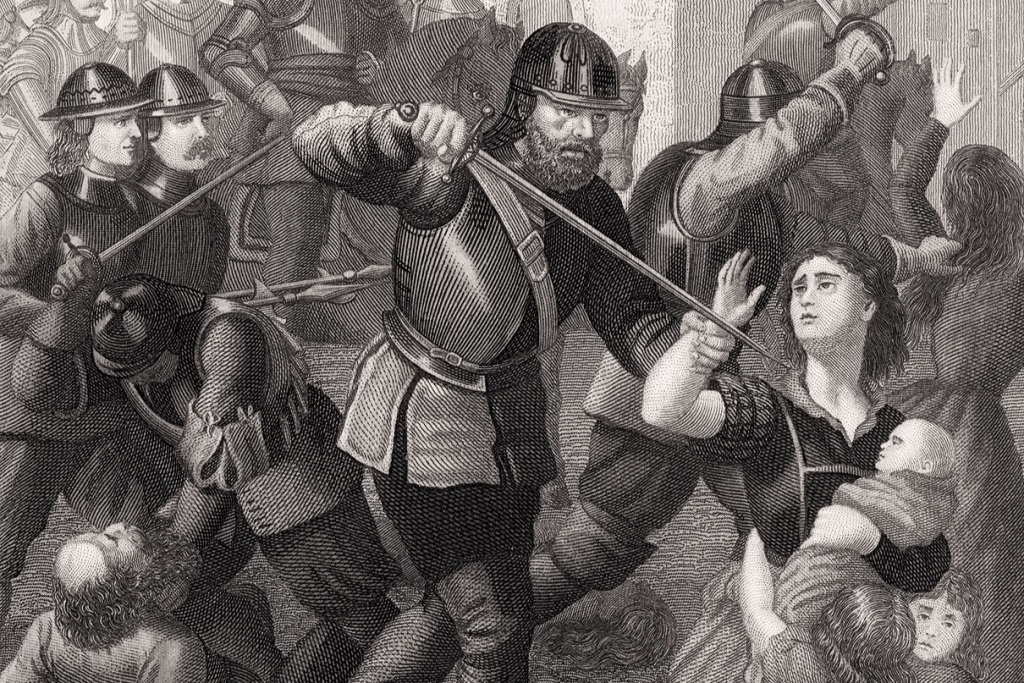
Sir Arthur Aston was killed in the fighting at Drogheda, too. Wood records that he “had his braines beat out, and his body hack’d and chop’d to pieces”.
But this grisly account has given way to a popular rumour, which seems to have emerged shortly after Aston’s death, that the governor was beaten to death with his own wooden leg — by a mob of parliamentarian soldiers who believed the artificial limb contained gold coins.
Perhaps Aston’s reputation for vanity really had convinced these Roundheads that he had stashed a trove of riches in the very appendage of his which should have served as a reminder of humility. It is not clear, in any case, whether the suggestion is that the soldiers bludgeoned him in a futile attempt to break the leg open and access its inner treasures, or out of frustration that there was no such compartment at all.
In reality, the question is probably moot. The earliest reference to the leg-beating is from the memoirs of English parliamentarian Edmund Ludlow, written during his exile between 1660 and 1689. Ludlow recounts that there was an argument “amongst the soldiers for [Aston’s] artificial leg, which was reported to be of gold, but it proved to be of wood”. Though it’s certainly possible the whole event is the invention of unfounded gossip, its inclusion in Ludlow’s memoirs lends the rumour more than a little credence.
So the hope was probably that the narcissistic Aston was frolicking about with a fancy fake leg made of gold — which could be sold for a great profit if acquired — rather than that his wooden leg had gold coins hidden within it. On that count the avaricious soldiers needn’t have worried anyway: Ludlow tells us that “two hundred pieces of gold” were found sewn into his girdle.


