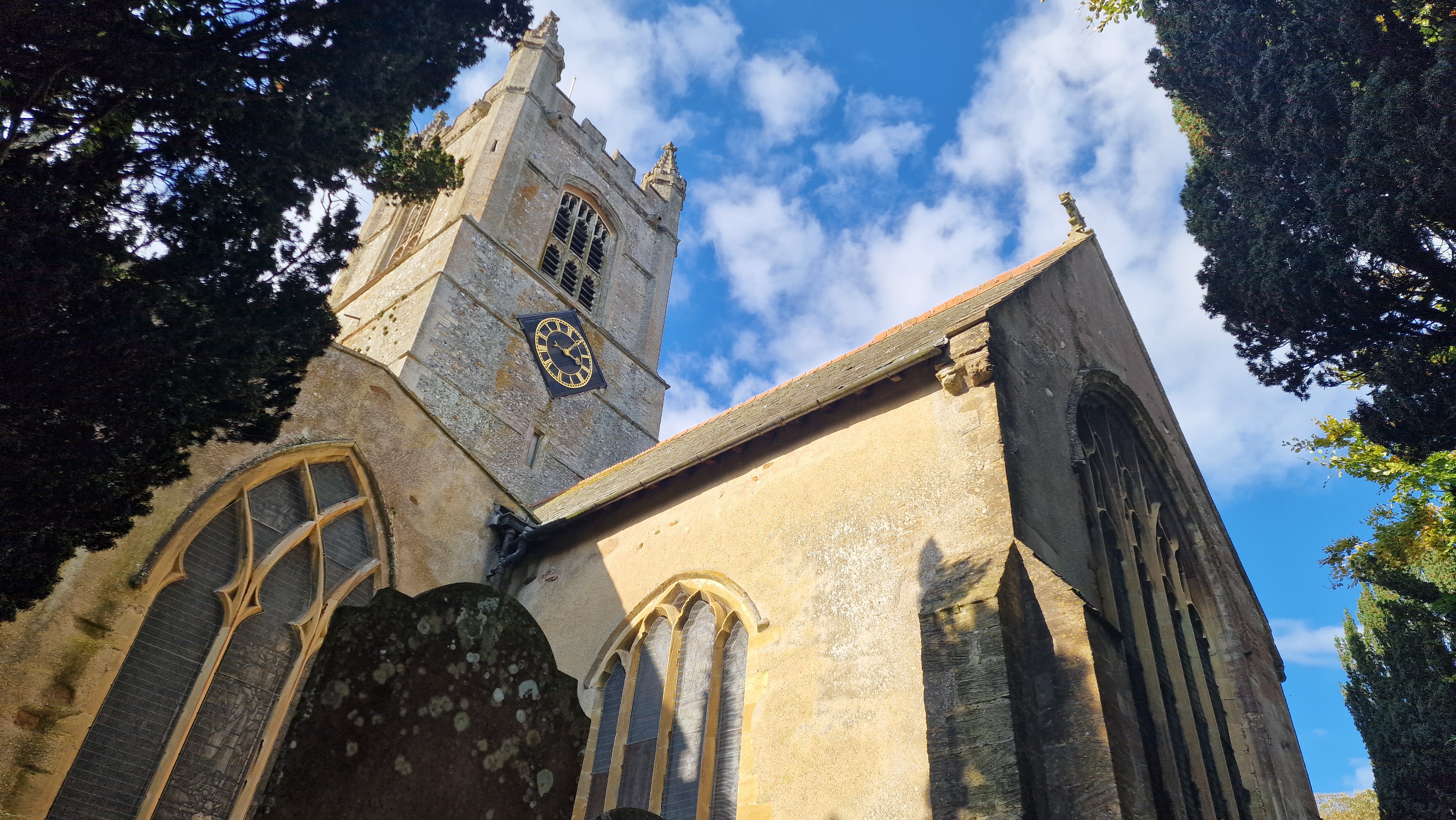
On 20 July 1607, thousands of people crowded around the church of a small village in England to witness something impossible. They gasped and gawked, they marvelled and wondered. Resting on the ground before them was a small ship, vibrantly decorated with colourful flags, rigged with sails, equipped with six cannons on each side, and attached — through iron rings on either side — to two cable ropes which spanned from a pair of trees in the churchyard to the very top of the church tower. Some spectators had never seen such a vessel (called a pinnace) before and those who had knew its inventor’s promise was unthinkable: it was going to fly.
This was to be achieved through an elaborate system of ropes, winches, windlasses and mechanical devices and so cannot truthfully be termed aviation, but nonetheless constituted a feat of engineering which would probably impress professionals today. So it is unsurprising that it utterly confounded and amazed the villagers of Lambourn in Berkshire on that not-so-ordinary Monday afternoon.
Slowly and laboriously, the boat was hoisted upwards, above the throng of onlookers, until it reached a height of some hundred feet and could rise no further. It was then lowered and left to hang at an altitude of 20 feet. At this point, the fireworks aboard were remotely set off and its dozen cannons fired.


This spectacle was the brainchild and invention of William Bush who had received assistance with funding and the procurement of resources from a local gentleman, William Essex, and two families belonging to the Oxfordshire gentry. It was their coats of arms, alongside his own and England’s flag, which colourfully adorned his vessel.
How Bush successfully pulled off this stunt is a little mysterious because the contraptions which enabled it appear to have surpassed quite comfortably the understanding of his adventure’s sole chronicler: Anthony Nixon.
This early news writer and sometime versifier, who also tried his hand at satire and theology, was university-educated but far from an engineer. The pamphlet he wrote up, which was printed the following year, omits most of the mechanical specifics. It was in part ‘other strange, and unheard-of devises’ that enabled the pinnace to climb towards the top of the church tower, we are told, and no satisfying explanation is given for how Bush was able to remotely detonate its fireworks and cannons. Nixon may have been present to witness the church-climbing ship himself or may have procured, or been given, written information from observers.
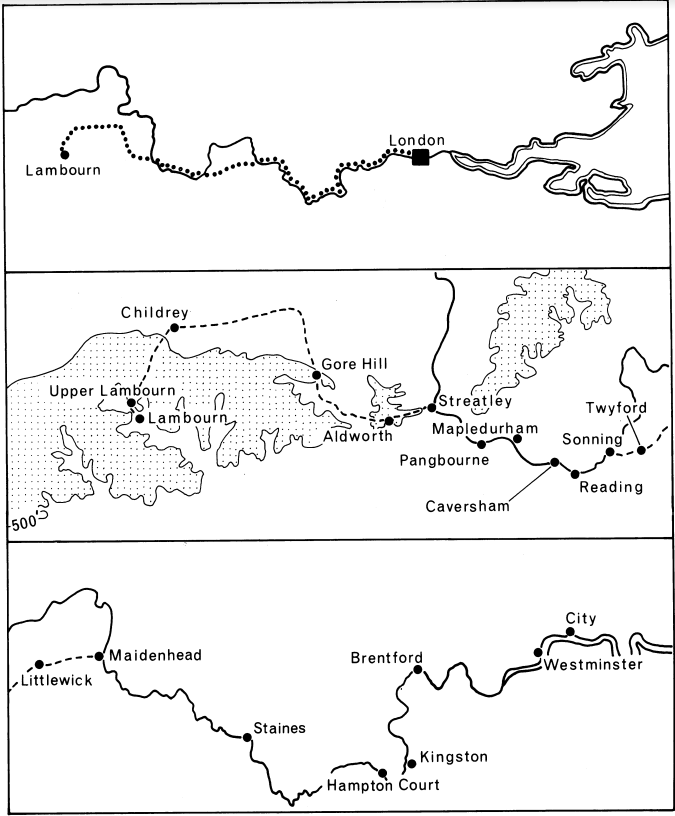
The display in Lambourn was only the beginning of Bush’s eccentric voyage, in which he intended to travel in his vessel ‘by Ayre, Land and Water’ from the Berkshire village to London — a combined distance of 26 miles by land and 100 miles by river according to Nixon.
Nathaniel Butter, who published Nixon’s account, was a pioneering bookseller who would go on to introduce the earliest proto-newspapers into England. It was clearly obvious to him that the image of a ship ascending towards the heavens would attract London book-buyers just as it had astonished Lambourn onlookers, for he had the printer Thomas Purfoot produce a remarkable title-page woodcut illustration which shows the inventor aboard his vessel as it defied gravity.
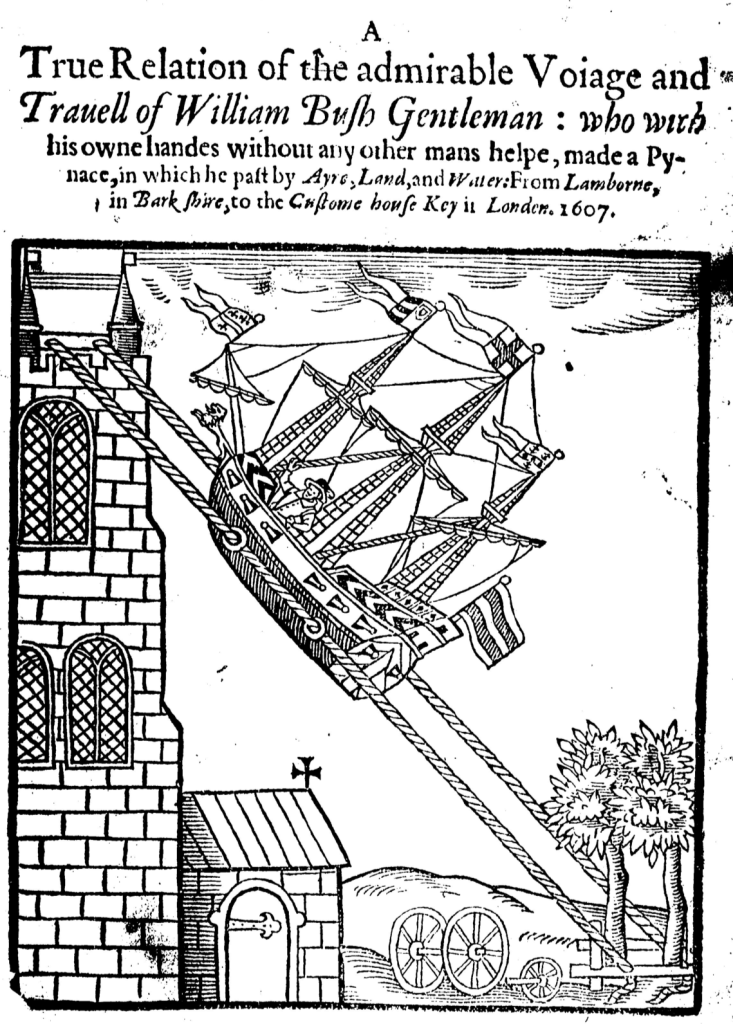
Bush’s plan was to complete the ‘air’ requirement of his journey in Lambourn before steering his ship across the Berkshire Downs as if it were a massive tricycle — propelled by two larger wheels at the front and a smaller one under its stern. This, Nixon tells us with splendid vagueness, also involved the use of a fourth wheel which performed some unspecified task inside the ship alongside ‘divers other Engyns’ — probably requiring pedals and cranks.
At Streatley, a village not far from Reading, he would then enter the water for the first time and sail down the River Thames for most of the remaining journey towards the quay outside the Custom House in London, where his odyssey would terminate.
The popularity of Bush’s exploits, which had spread far and wide by word of mouth, was more of a hindrance than a help. On the first day of his adventure he had been pressured by the gawking mob in Lambourn to enter his vessel as it ascended and descended the church tower — something he had only planned to do the following day — as he feared the unsatisfied crowd might damage his invention if he refused.
The next day, 21 July 1607, saw his mission get off to a botched start, according to Nixon. As the ship dangled some 40 feet from the ground, with Bush inside ready to commence his voyage, an even larger crowd packed the churchyard and its tower. Some spectators leaned, hung, and sat upon the ropes. Others mounted the pinnacles atop the church to which the ropes were fastened, hoping for a better view. This caused two, with ‘men upon them’, to fall down into the tower, which was packed with people, when the ship made its first movement. Fortunately, no one was reportedly hurt and ‘the people all wondered at so strange a miracle’.
Bush could not escape the crowds even after the wheels were attached to his pinnace and he began to travel by land. A ‘multitude of people’, numbering roughly 500, followed him across the countryside as he laboured up hills and rolled more easily down valleys. Nixon tells us that only a week into his expedition, Bush was mobbed by an ‘infinite company of people, which greedelie followed after him in such great troupes, being two miles from any Towne, or Village, that he was almost stifled, and pestered for want of ayre’.
Another obstacle was ‘tempestuous weather’, including rain and lightning, but we are told that Bush persevered, ‘for neither feares, misfortunes, nor bad weather, or tempests could disanimate or deterre him from his further proceedings’.
Grit and determination were less useful when his ship’s internal mechanisms broke down on two occasions, forcing Bush to delay himself a day or two for repairs. He relied on the hospitality of others, including wealthy local families, for lodging and food. Bush’s travels were especially tiring because although he was joined by two others for company, he commanded the vessel alone.
It took nearly two weeks for Bush to arrive at Streatley, where he prepared to put his pinnace into the Thames. But before he could sail merrily away, a group of ‘rude’ bargemen confronted him and his companions. With ‘great violence’, they rocked the ship — as if trying to sink it — and insulted the inventor, before assaulting him and his companions with hooked pikes and other ‘weapons’. They then went into the pinnace and ransacked it, creating holes in the hull in an attempt to immobilise it and render it unable to sail.

This wasted two days as Bush’s friends recovered from their injuries and repair work was undertaken. After this, Bush paid for a separate boat to accompany his vessel — carrying performers playing music — when it was travelling by water, in an attempt to improve morale. He finally entered the water on 3 August, powering himself down the final stretch of his journey using oars and his pinnace’s sails.
As he approached Caversham Lock in Reading the following day, Bush was met by ‘a whole army of people’ who had gathered on a nearby bridge and also the river’s banks. This crowd, exceeding 2,000 in number according to Nixon, followed the ship as some spectators bore drums and other musical instruments. They returned the following day to play the pinnace off as it headed towards London.
The journey was more straightforward by water, although Bush had to travel briefly by wheel when he encountered obstacles or locks. There were also a few places where the river was so windy and indirect that it made more sense to take a shorter distance on land. Bush’s next greatest challenge was taking his ship through Maidenhead, where a build-up of filth had caused such a ‘deepnesse of the myre in the streete’ that it was a strenuous task to make progress.
From here, Bush travelled to Windsor and then Kingston, where he disembarked and was hosted by Sir Charles Manners at Hampton Court. Nixon claims local watermen watched the pinnace sailing down the Thames with ‘admiration’, some thinking ‘it might be done by art and cunning; and sometimes again, judging it a thing impossible’.
Between midnight and 1am on Thursday, 13 August 1607, Bush arrived at the Custom House, accompanied by a single companion to act as a witness of his feat. He was greeted by four officials and other witnesses, having deliberately acted covertly to avoid the crowds and river traffic which risked spoiling the final part of his mission. It had taken him just over three weeks.
On the morning of 19 August 1607, Bush and his pinnace made their grand public arrival at the building amid a swarm of spectators. The inventor was granted a certificate confirming the completion of his outlandish endeavour, afterwards feasting at the Custom House.
The certificate is now lost and any records in the Custom House which might attest to Bush’s extraordinary feat were destroyed in the Great Fire of London. Without Nixon’s laudatory account it would largely be lost to history, save for a passing reference in another 1608 pamphlet where a Londoner remarks that a countryman’s tall tales are ‘more strange than the rowing ouer steeples by lande in a wherry’.
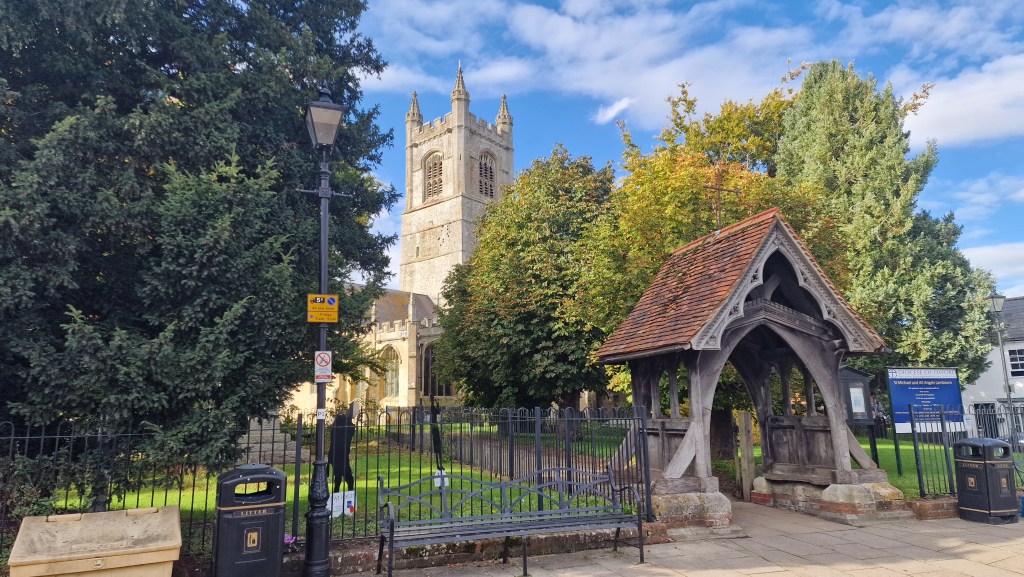
The church in Lambourn may have borne the scars of Bush’s stunt for quite some time, however. In Tales of Old Berkshire (1977), Cecilia Millson says the pinnacles of St Michael and All Angels were mended in the 17th century but further repair work in the 1890s revealed further damage.
‘A crack nearly three and a half inches wide ran through the whole thickness of the north wall, no doubt due to the strain imposed upon it at the commencement of that incredible journey,’ Millson writes.
The curious story of Mr Bush and his ‘flying’ boat is etched into the history of Lambourn’s church. A section of John Footman’s History of the Parish Church of Saint Michael and All Angels (1894) dedicated to the stunt serves as one of the final inclusions in a guidebook available inside the building, praising the inventor’s ‘considerable ingenuity’.
Anthony Nixon’s printed report of the journey is also of note as an early example of sensational journalism. The account does not read like any report we would expect nowadays, interrupted by tangential philosophical musings, peppered with the author’s (often brash) opinions, and very flowery in its language throughout. But it was nonetheless a fairly novel type of news report, including detailed coverage, an eye-catching woodcut, and structured by Nixon to exploit the most wondrous aspects of the affair. Both men, then, were responsible for inventions in the early years of the 1600s — though Bush’s was perhaps the more impressive.