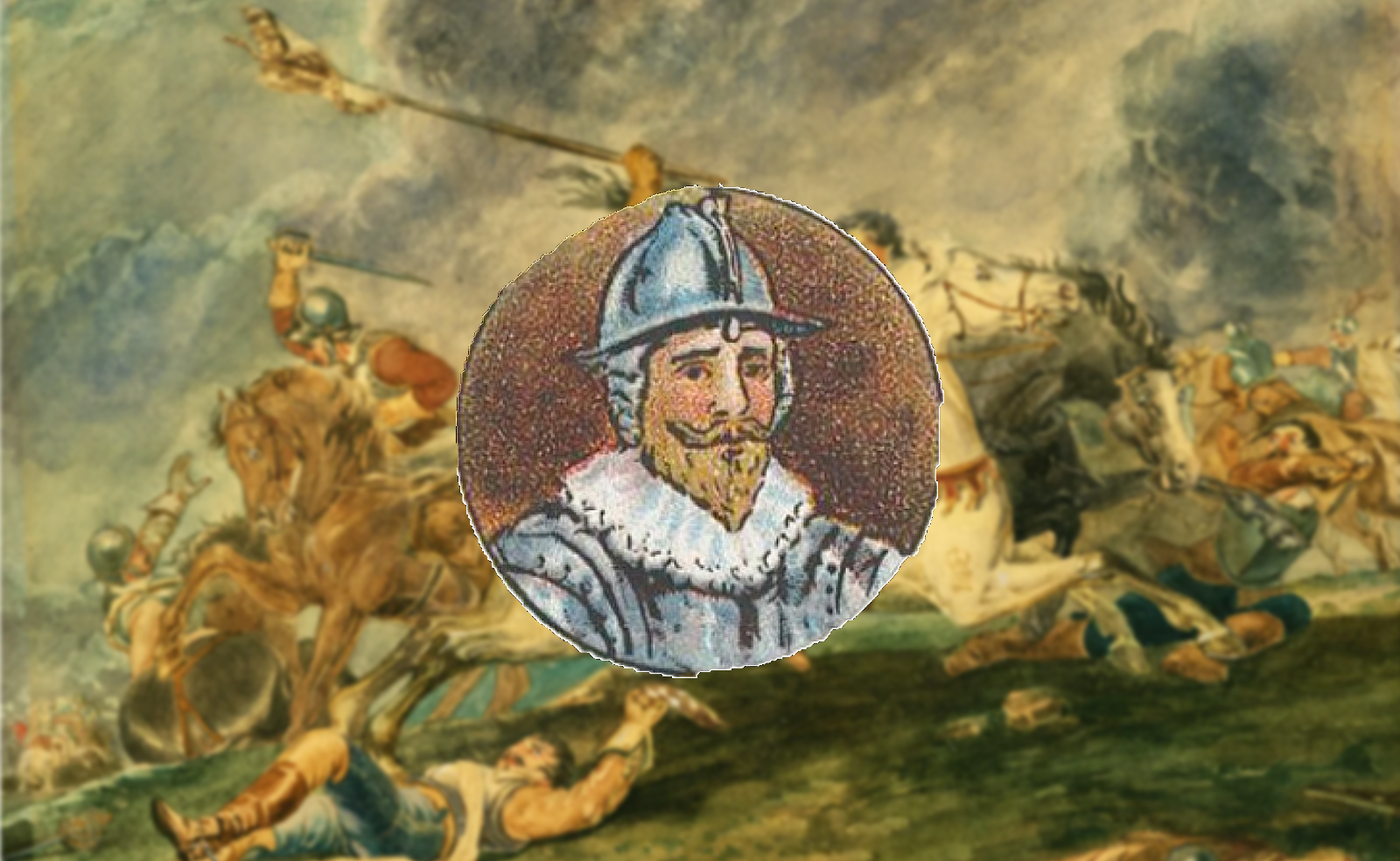
2023 marked 400 years since a small group of actors and publishers produced Shakespeare’s “First Folio”, a collection of 36 plays. Without it, 18 may have been lost forever.
Every collection which holds a copy jumped at the opportunity to exhibit it, academic conferences were called, and the BBC (not to be outdone) announced “Shakespeare Season” — including a three-part series about the “Rise of a Genius”, featuring a star-studded cast of actors and academics.
It was further evidence, if any were needed, that William Shakespeare dwarfs his contemporaries in terms of popular attention.
Shakespeare’s Wikipedia page garnered an average of 13,000 daily views in 2023; Christopher Marlowe, his best-known contemporary, boasts just shy of 1,500; Thomas Dekker, popular in his own time, achieved 60 — resigned to double digits.
Shakespeare’s name can no sooner be read aloud in a classroom than a knowing collective sigh follows; the uttering of a contemporary’s is more likely to prompt a puzzled, “who?”
And whereas his face is plastered across the world of theatre, many of his contemporaries never had their portrait drawn. Some don’t have known dates of birth or death — they simply disappear from the historical record.
Meet (some of) the supporting cast
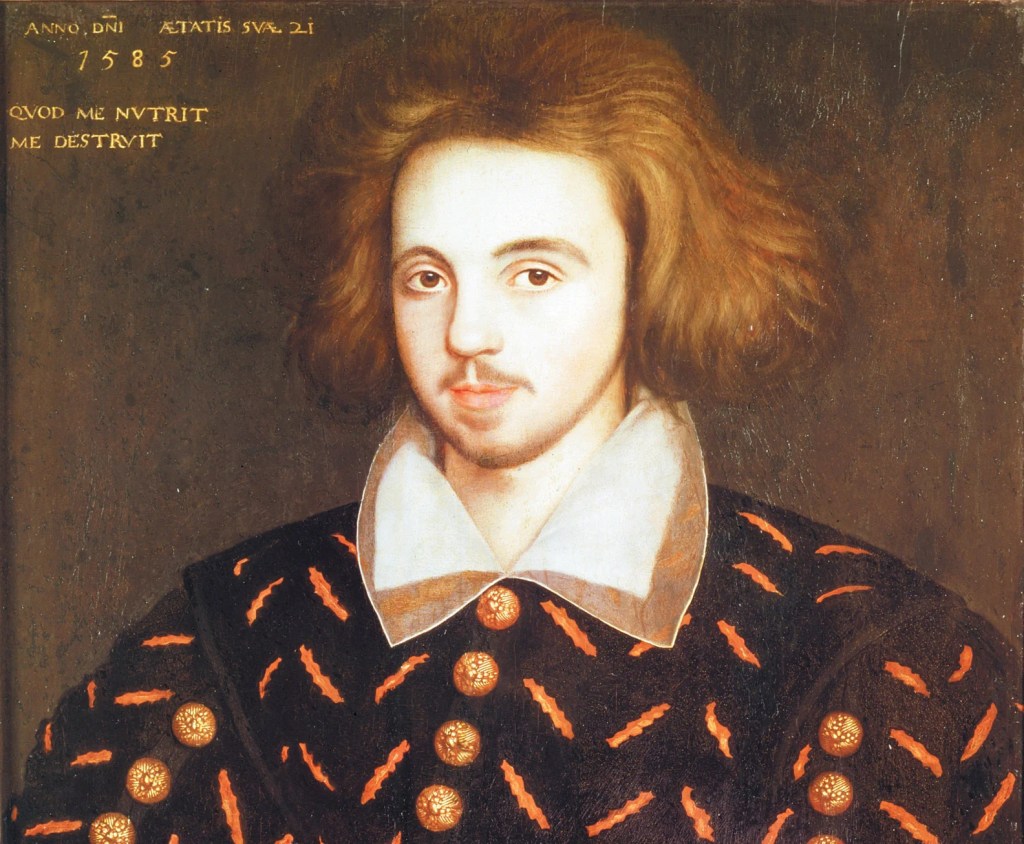
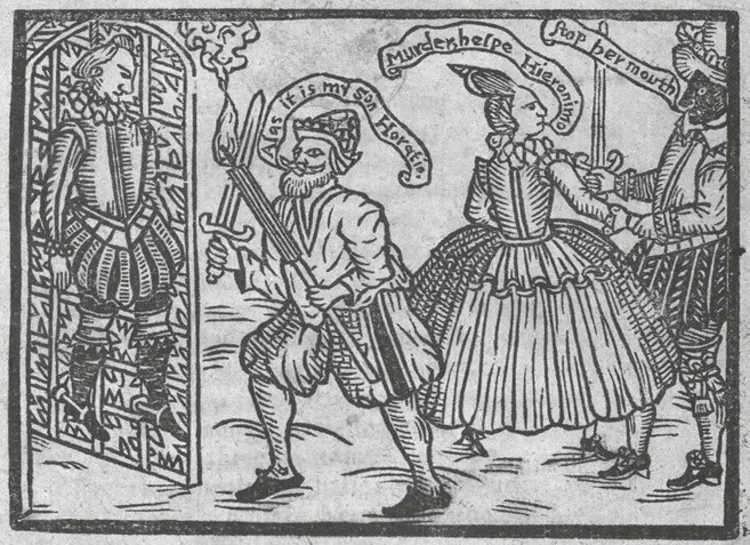

So who were these mysterious figures, hovering behind the literary scenes of Elizabethan and Jacobean England? According to Emma Smith, Professor of Shakespeare Studies at the University of Oxford, these men were dramatic innovators and no less creative than the Bard himself.
Theatre was very much in its infancy when Shakespeare arrived in London around the early 1590s. Playwrights who had already established themselves in London, most notably Robert Greene and Christopher Marlowe, had the opportunity — and challenge — to mould a brand new form of entertainment.
“People are writing drama for this immensely lively and dynamic new literary form,” Smith told me, “so I think there’s a huge amount of experimentation and energy and excitement in the theatre of this period.”
In Southwark, the first public theatre was built in 1587. The success of early venues in London encouraged other playhouses to be built. One of these was Shakespeare’s Globe.
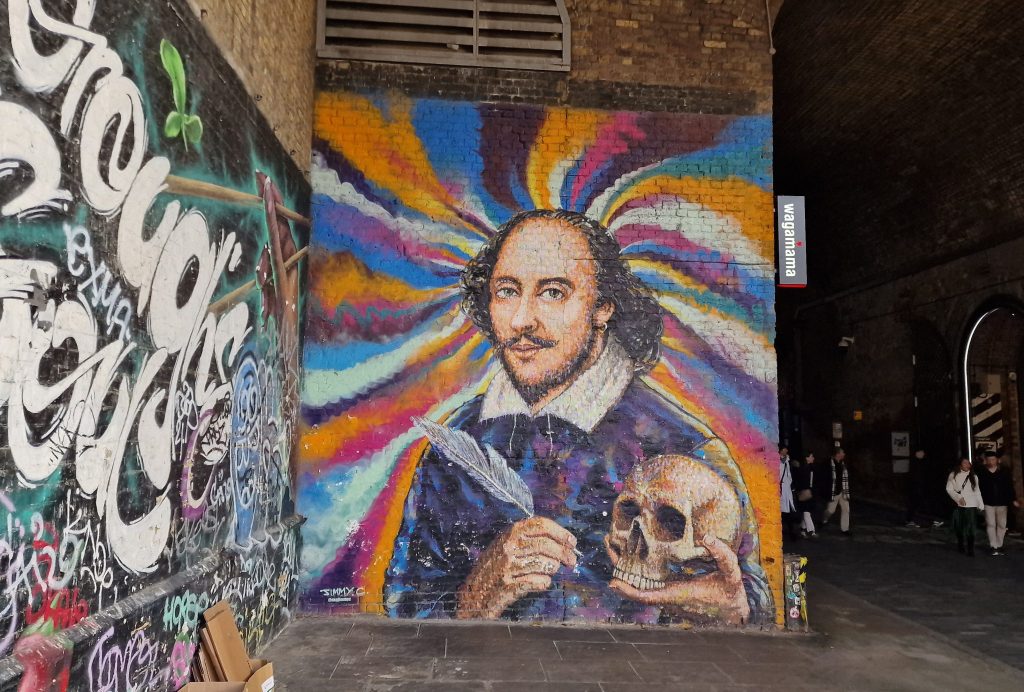
Shakespeare’s Hamlet may be the most iconic revenge tragedy, but it was Thomas Kyd’s The Spanish Tragedy (c. 1587) which introduced the genre. Greene’s The Comicall Historie of Alphonsus, King of Aragon, first staged in 1592, features a fire-spewing “brazen head”; his earlier collaboration with Thomas Lodge, A Looking Glass for London, sees a character struck by lightning — both would have required pyrotechnical effects and astonished early modern theatregoers.
Shakespeare — at that time a young and inexperienced writer — was influenced by these trends and by individual playwrights.
“It helps to think about him in a network of writers rather than as a solo,” explains Smith. “He was not somebody who was so far ahead of everybody else that there was almost no point in anybody else getting out of bed.”
Fans of Prince Hamlet’s complex tragic character, or of Shakespeare’s epic depiction of Henry V, owe some thanks to Christopher Marlowe, she says. Thomas Middleton, with whom Shakespeare most likely co-authored Timon of Athens around 1606, helped him hone his endings. John Fletcher, who co-authored the Bard’s final work just a few years before his death, guided Shakespeare into the realm of tragi-comedy.

Their influence is built into the very structure and foundations of Shakespearian texts. Darren Freebury-Jones, Lecturer in Shakespeare Studies at the Shakespeare Birthplace Trust, views contemporary influence as visible to the very last syllable.
“A lot of the university-educated playwrights like Robert Greene and Christopher Marlowe stick to the 10 syllable line, whereas Thomas Kyd introduces the so-called ‘feminine endings’, or 11 syllable line,” he says. “And Shakespeare very much follows in Kyd’s footsteps with that.”
What makes Shakespeare’s contemporaries special?
Acknowledgments of external influence go some way to suggest that Shakespeare was not the singularly talented trail-blazer that popular culture might have you believe, but still confine his contemporaries to a supporting and secondary role. There must be something which distinguishes their work from his and makes it worth staging today.
For a start, whereas the Bard never set a play in contemporary London, others were not afraid to stage the drama so close to home.
“You might argue that Shakespeare’s contemporaries can transport us into the past and teach us more about particular social, or historical processes,” explains Freebury-Jones. “Shakespeare might hold a mirror up to contemporary society, but it’s often a distorted mirror. Oftentimes because he sets his plays in faraway locations.”
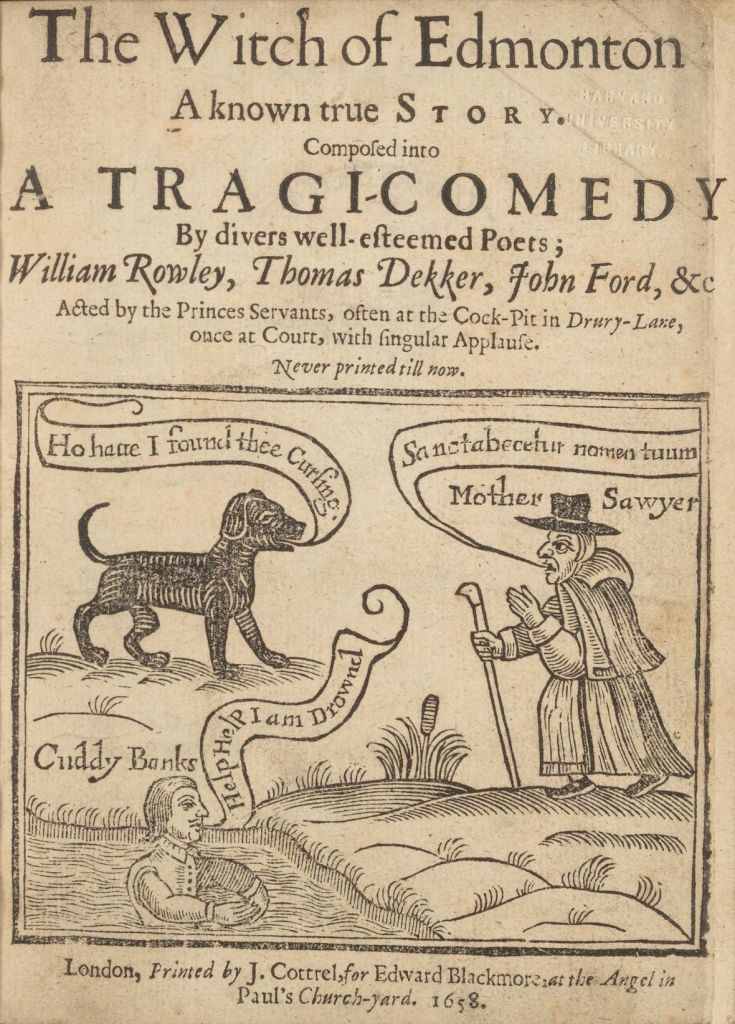
Robert Crighton, Artistic Director of the Beyond Shakespeare Company, agrees: “They’re talking about their own society directly [and are] very interested in the actual times they live in — the satire of London, of commerce, of the hustle and bustle of the city.” If you can overcome the archaic, now-obsolete references and in-jokes, Crighton thinks there are some really interesting stories to be told.
Beyond Shakespeare was born out of a 10-year-old project of Crighton’s. Its participants meet, usually online, to explore and recite exclusively non-Shakespearean works. They have now covered over 600.
While plays set in the very year they were first performed may not have possessed the longevity that Shakespeare’s did — “not of an age, but for all time!” as Ben Jonson famously exclaimed — they had an important short-term advantage: popularity.
By 1595, Shakespeare was a house playwright for a company, supported comfortably by patronage. He wanted his plays to be popular, of course, but could afford to take risks. Other playwrights were not so privileged.
The life of an Elizabethan playwright was not always glamorous
Thomas Dekker was not uncommonly in debtor’s prison; Robert Greene died in poverty in September 1592; Thomas Lodge qualified as a medical practitioner in 1602, seeking financial security; Thomas Kyd’s estate was so debt-ridden that his mother renounced its administration upon his death.
The Catholic playwright William Alabaster was imprisoned in the infamous Clink Prison, just a few hundred metres away from the Southbank playhouses, between 1597 and 1598.
Many Elizabethan and Jacobean dramatists were men for whom a successful play did not so much mean a legacy in the annals of history as a hot meal the next day. But exploiting the zeitgeist required a great deal of skill.
“Thomas Dekker very much had his finger on the popular pulse,” says Freebury-Jones. “If you want insights into what life was like in London 400 years ago, it would probably be preferable to go and see a Dekker play, like The Shoemaker’s Holiday, than go and see one of Shakespeare’s works.”
Dekker regularly wrote plays that capitalised on recent scandals and fascinations to attract an audience. The Witch of Edmonton was performed first at the Cockpit Theatre in 1621, only a matter of months after the real-life “witch” Elizabeth Sawyer had been executed for her crimes.

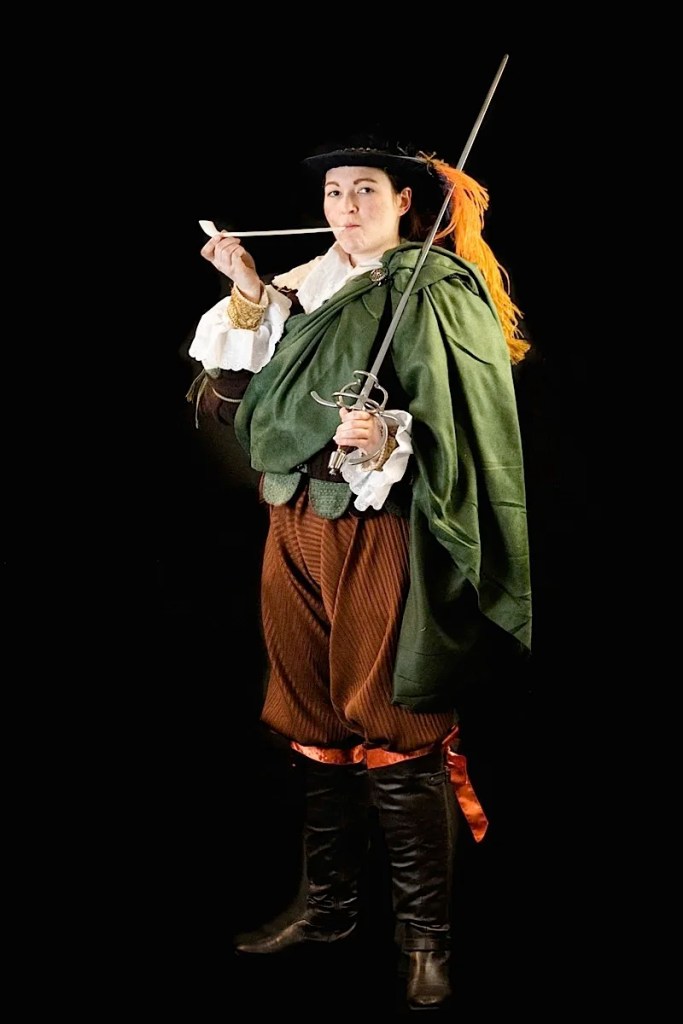
Left: Illustration of Moll Cutpurse from a 1611 printed version of Dekker and Middleton’s play
Right: Meredith Kind as Moll Cutpurse in Classical Actors Ensemble’s 2018 production of The Roaring Girl. (Reproduced with permission of Classical Actors Ensemble. Photograph by Lou Bedor III.)
The Roaring Girl (c. 1608) was staged at the Fortune Theatre when its titular character, the eccentric pickpocket and cross-dresser Mary Frith, was at the height of her popularity — historians think she may have even made an appearance on stage.
Joseph Papke is the artistic director of Classical Actors Ensemble, which he founded in 2009. His company staged The Roaring Girl at the Gremlin Theatre, Minnesota, in 2018. It’s the only performance they’ve done in period dress, but the modern relevance of this gender-bending, defiant woman shines through.
“Moll doesn’t conform to societal norms,” Papke says. “We’re shown some negative effects of that, but moreso we see an engaging, strong individual who makes herself the hero of her story and a hero to others.”
The down-to-earth setting — not some distant court but contemporary London — meant Moll could flexibly move between a historical figure and a relatable character. The original music included in the play was replaced by Joan Jett’s rock song “Bad Reputation”.
“The feedback from audiences has been overwhelmingly positive,” Papke says.
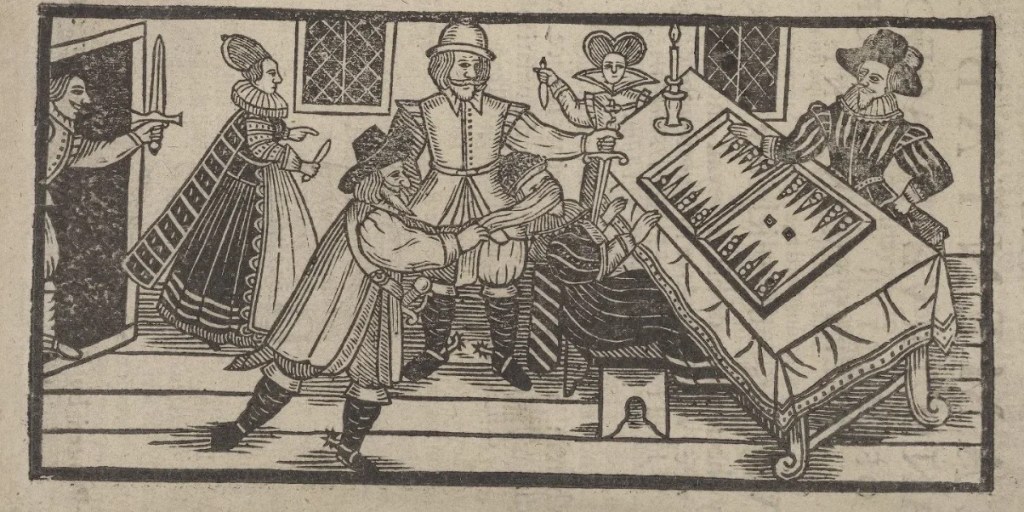
Not all plays are so well received. We know what we do about the now-lost 1624 collaboration between Dekker, John Ford, William Rowley, and John Webster titled Late Murder in Whitechapel because a character in its comical sub-plot was based on a woman who was very much alive and felt her reputation had been “scandalized” by its performance at the Red Bull theatre.

“The Red Bull is often associated with quite sort of jingoistic or rowdy kinds of drama,” observes Smith, who points out that Shakespeare’s works often targeted a slightly more elite audience, though attempted not to alienate the masses.
“It may be that as the period continues into the 17th century, we see the theatres sort of differentiating themselves more than they previously had done [and] that also means that some of those playwrights who are freelancers become very adept at targeting plays to particular audiences in particular places.”
The Bard’s contemporaries didn’t only write plays
Shakespeare’s contemporaries did not always limit their embrace of popular spectacle to the stage — many wrote for print. Robert Greene authored pamphlets exposing the latest tricks employed by thieves and con artists, and Dekker supplemented his measly income by authoring pamphlets, including reports of plague-ridden London.
While this was “another way of making money”, according to Freebury-Jones, it was also a way of engaging with popular anxieties and fascinations — and it was, like theatre, a rapidly emerging mode of entertainment.
Smith says: “I said that theatre is the great crucible of creative innovation in this period, but you could also say, ‘so is print’, and one of the ways Dekker might be interesting in ways Shakespeare is not, is that he’s got a foot in both of those spheres of invention.”
For Crighton, early modern performance should not be rigidly categorised by theatre, print, or pageant: “It’s all part of a jigsaw.”
What does the internet have to say about the contemporaries?
The Reddit forum r/Shakespeare has 50,000 subscribers. There isn’t a subreddit dedicated to the contemporaries.
But r/Shakespeare regularly sees posts and discussions about the Bard’s influences and colleagues. I asked them what they thought about his contemporaries.
Marlowe was, unsurprisingly, a fan favourite. Multiple commentors made reference to the quality of his plays and their modern relevance, particularly with regard to LGBT issues.
One Redditor has been trying to read every surviving early modern play. She thinks Dekker has his strengths, but can sometimes be problematic.
Comment
byu/PiersMucklejohn from discussion
inshakespeare
Another user wasn't a fan of Dekker or Greene, but gave high praise to John Webster's Duchess of Malfi (c. 1613).
The 1550 murder of Thomas Arden by his wife, Alice, and her lover was turned into a play in c. 1592. It was called Arden of Faversham.
It was initially thought to be by Shakespeare. Some scholars still believe it to be his work. Others think it was by Marlowe, possibly in collaboration with Shakespeare or another writer. Freebury-Jones argues Thomas Kyd was its sole author.
A gruesome, sensationalist true crime play, one Reddit user said it "is the Coen Bros centuries before they were born".
Overall, people seemed to agree that the contemporaries produced some outstanding and interesting work, but lacked the consistent brilliance of the Bard.
Stepping out of Shakespeare's shadow
The impression that emerges of Shakespeare’s contemporaries is not of background characters in a Bard-centric world. It is of a group of writers and dramatists experimenting with a new art form, tweaking and testing the boundaries of language, competing to capture popular attention, and often moving between different markets.
Will these literary amphibians ever get the credit they deserve? Crighton isn’t confident he’ll live to see it — and recognises it’s an uphill battle.
“I am sort of trying to change the world,” he says, half-jokingly. “I don’t realistically believe I will change the world, or certainly not in my lifetime. But hopefully, I can nudge it a bit.”
Crighton, Freebury-Jones, Papke, and Smith all agree that commercial incentives are also at play. Modern theatres and broadcasters recognise what enterprising publishers of the 17th-century were quick to appreciate: Shakespeare’s name sells.
“I think we are in a very conservative programming period for theatres at the moment in post-Covid times,” says Smith. “This is not a time when theatres want to take risks.”
Papke says: "Name recognition is definitely a challenge. To help overcome that we started staging repertories of a Shakespeare play with an Early Modern non-Shakespeare title with common or counterpoint themes. We figured if we impressed an audience member with one (usually the Shakespeare) they'd return for the other. This was mostly the case, but the Shakespeares did usually sell a little better."
400 years later...
So, what — if anything — is being done?
Freebury-Jones released a book last year titled Shakespeare's Borrowed Feathers, which explores the debts the Bard owed to members of his dramatic community. He has already authored books on Shakespeare's "tutor" and his "rival" — Thomas Kyd and Robert Greene, respectively.
As I spoke to Crighton, I could see pinned to his wall a poster concerning Beyond Shakespeare's "Winter Revels", a live event featuring a varied cast of early modern dramatists (with one exception, of course).
Smith has previously given educational lectures in a series called "Not Shakespeare", all of which can be found for free online.
Classical Actors Ensemble continue to perform plays, some by the Bard but others by his contemporaries.
And they aren't alone. In February 2024, the Sam Wanamaker Playhouse celebrated its tenth anniversary by staging the same play it opened with, John Webster's The Duchess of Malfi.
In terms of entertainment, all four agree that various contemporary works have the potential to succeed in the present day — and where they’ve been performed, many have — so while the crusade to give the Bard’s contemporaries a voice is sure to be long and arduous, there is a dim light at the end of the tunnel. Perhaps, one day, just for a moment, the stage directions of this four-hundred-year saga will finally read:
Exit William Shakespeare
Enter Everybody Else
This article is a revised and updated version of a piece initially published in January 2024.