
The preachers of Tudor and Stuart England did not much like the direction the country seemed to be heading. From their pulpits they railed with godly zeal against spiritual woes, projecting their voices to fill every inch of the church’s nave and gesticulating, often wildly, throughout their sermons. They were battling for their listeners’ souls.
Listening was important. Many clergymen thought deafness was the most spiritually debilitating of conditions. A well-delivered speech could, after all, be truly rousing. While the scourge of “church-sleeping” plagued the more monotonous preachers, those with oratorical finesse captivated huge crowds.
Many sermons concerned the most grievous of sins, the particulars of proper Christian worship, and the acceptance of Christ. These were all matters over which the destination of one’s soul might be decided. But there were also more quotidian topics: women’s makeup, hairstyles, perfume, and excessive attire; theatres and actors; playing dice and card games.
A cynical listener might wonder whether preachers really needed to stoop to such mundane depths in their denunciations of vanity and idleness. When these sermons appeared as pamphlets in London’s bookshops, printed in their hundreds, readers might query just how much it could really matter to hear, and not read, these teachings.
Then again, the Elizabethan celebrity preacher Henry Smith had once decried “the careless prelate for murdering so many thousand souls” by failing to engage his flock. To abstain from publishing his godly lessons would surely slaughter thousands more.
As the popularity of cheap pamphlets written in English exploded towards the end of the 16th century, the impassioned lectures of churchmen began to share shelves with less erudite books stuffed with sensational polemic. When their targets aligned, as often they did, preachers and hacks fought side by side in the culture war.
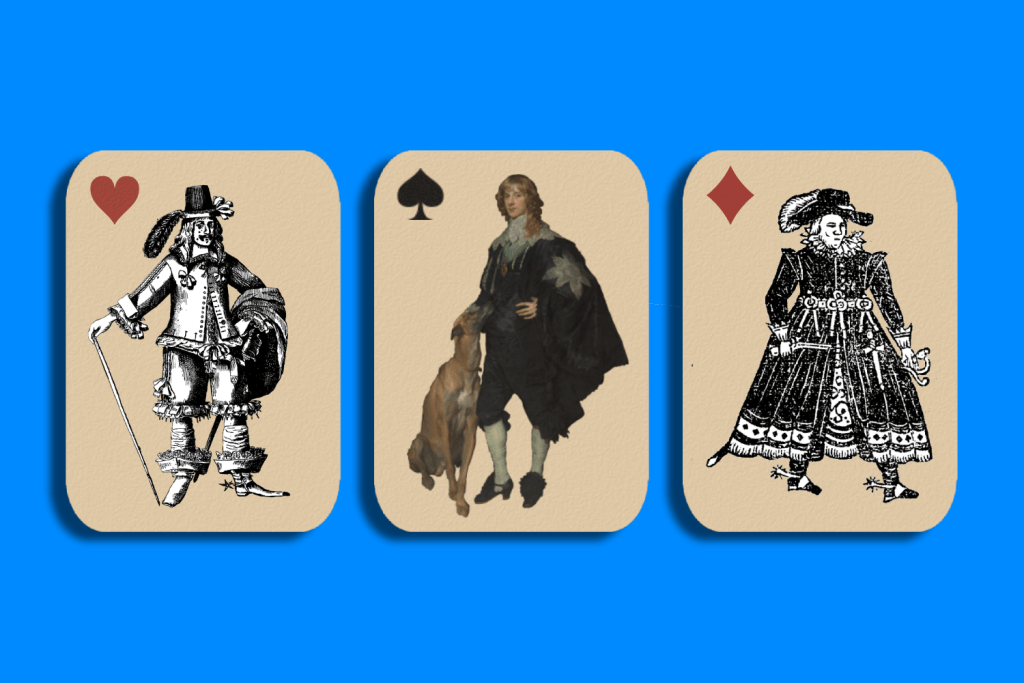
Clothing was an object of particular frustration. Even today, when we are generally free to wear what we choose, there are those who disdain sartorial transgression and bemoan newfangled fashion trends. Things were worse back then. Laws restricted which styles or colours of clothing you could wear depending on your social rank. These regulations, long bent and stretched to their limits or outright disobeyed, died with the Tudor dynasty.
That which was legally permitted was not necessarily desirable. In one sermon, “silver-tongued” Henry Smith had observed, quite unobjectionably, that “superfluitie in apparel” and “excesse in spangling their fantasticall feathers” meant London’s elite had less money to donate as alms to the poor. Perhaps he was less fair in lambasting the better-dressed of the lower classes as “the monsters of apparel”.
The swaggering Englishman, decorated with materials he could scarce afford to replace, was a choice target. He over-starched his collar, wore a suggestive ribbon above his codpiece, attached a feather to his towering hat, and marched about with jangling spurs at his heels. Some of a wealthier disposition sported a dangling strand of hair as a token of romantic affection, known as a “love lock”.
A Londoner walking the streets might pass by a few of these eccentrics only to come face to face with another moments later — this time proudly posing within the confines of a printed broadsheet. The Picture of an English Antick, printed in 1646, exhibited such a specimen, and listed his “ridiculous habits”, such as his “unbuttoned sleeves” and “breeches unhooked, ready to drop off”. Such criticisms are routinely directed at youths today.
At least you could be relatively sure these were flamboyant men. William Harrison, a priest and chronicler of Tudor London, had written in 1577 that he could not always tell men and women apart. “It is now come to pass, that women are become men, and men transformed into monsters,” he complained.
Cross-dressing was a mainstay of the Tudor and Stuart culture wars. In 1614, the impeccably named preacher William Worship warned: “Hic mulier, ere long, will be good Latin.” The punchline of this knee-slapper, which presumed a basic knowledge of that classical language, was that “hic” is the masculine form of the demonstrative pronoun “this”. The expression “hic mulier” really means “this woman, who is a man”.
In 1620, apparently a year of intense gender anxiety in England, two fiery pamphlets sparred on the matter: Hic Mulier; Or, The Man-Woman and Haec Vir: Or, The Womanish-Man. The former complained of the phenomenon of cross-dressing and female boldness. The latter responded with flashes of radical gender equality, asserting that “Custome is an idiot” and claiming it was “slavery” to treat any woman as “a fixed Starre, that shee shall not so much as move or twinkle in her owne sphere”.
But this feisty exchange shows that culture wars were not always natural. Both pamphlets were born days apart from the same printing press and sold by the same bookseller: John Trundle, a notoriously unscrupulous publisher. The conflict had, it seems, been staged because Trundle knew just how well these printed squabbles could sell.
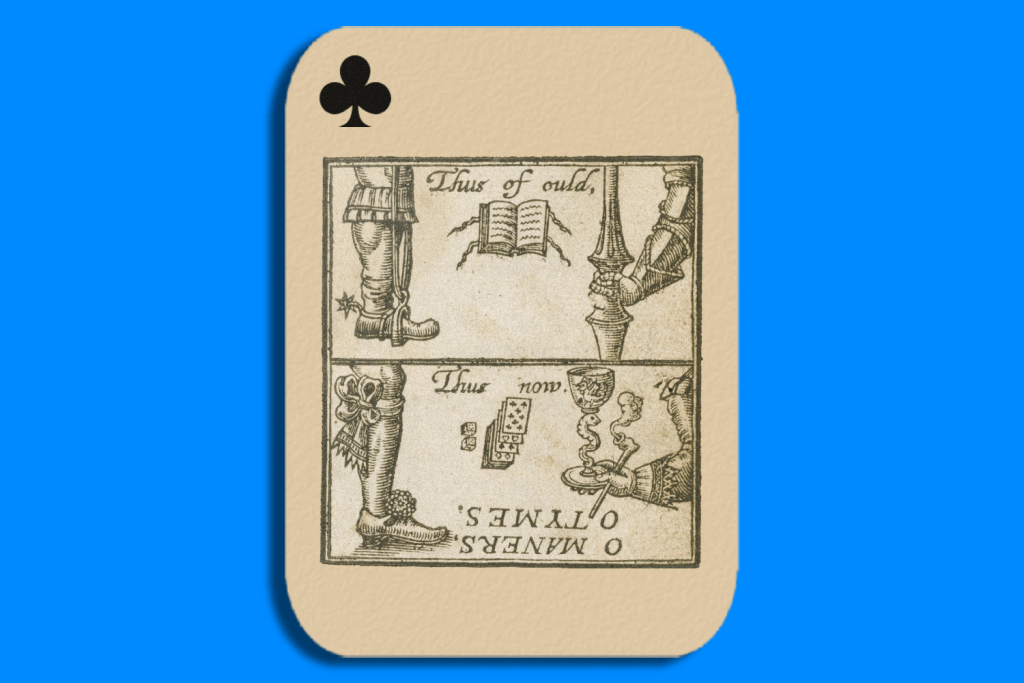
The bookshop was an ideologically incoherent place where the only consistent doctrine was that of money-making. But the cultural conflicts of the 17th century spread far beyond its walls. London’s busy streets and markets were a cacophony of outrages, from women hawking pamphlets that waxed nostalgic about the Englishmen of bygone years to alehouses in which inebriated patrons roared the lyrics of scandalous ballads.
Alehouses were themselves a contentious subject across the realm’s cities and provinces. Today there is a cultural crusade to “save our pubs” from closures caused by falling revenue, the decline of drinking culture, and, to extents that are hotly debated, government policy. These establishments, which numbered about 30,000 in 1630, were in the crosshairs of moralists 400 years ago.
Paranoid Puritans suggested alehouses were devilish dens of wickedness. In addition to the expected boozing, these were places where criminals plotted, unruly youths gathered to gamble on dice and cards, and parishioners skipped weekly church services.
Edmund Gurnay, the Rector of Harpley, Norfolk, led a gallant, if ultimately fruitless, campaign against alehouses in his town. In three petitions between 1621 and 1622 he demanded that “these licentious houses so harmful unto our town and no way profitable unto the country” be shut down.
Theatres and actors were denounced too. Yes, the spectacular, soul-expanding works of Shakespeare were on offer. But a visit to the playhouses of Southwark was a boisterous, unedifying affair and often meant encountering local sex workers advertising their wares.
Sometimes plays offered dramatic ripostes to popular misogyny, such as The Roaring Girl, first acted in 1611. Moll Cutpurse, the titular cross-dressing pickpocket, may well have appeared on stage for some of these performances, playing herself at a time when it was unheard of for women to take to the stage.
Stephen Gosson and Philip Stubbes launched early attacks on the stage during Elizabeth I’s reign. They were supported, years later, by the prolific Puritan pamphleteer William Prynne, whose Histriomastix (1632) branded such frivolous entertainment an abomination. Between 1642 and 1660, the Puritan authorities closed London’s theatres altogether.
The culture wars raged on as Puritanism fell out of favour, monarchs came and went, and the country lurched towards the Industrial Revolution. Those battles are still being fought today. Their conservative combatants invoke the same centuries-old wistfulness for a better past, extolling values — of “sensible” liberalism and “common sense” politics — that would have been seen by those preachers and Puritans of Tudor and Stuart England as unbearably, radically modern.


