What is the best way to determine whether somebody is lying or telling the truth? One much-repeated, if completely unsubstantiated, claim is that the minutiae of a person’s eye movements can betray even the most convincing of fabrications. It would likewise be reassuring if an unwitting muscle twitch or slight wavering of the voice were enough to confirm the guilt of a stone-faced liar.
But no body language analysis is properly reliable and the legendary polygraph machine is infamously fallible if its subject masters, or messes with, their own physiological indicators — like blood pressure, heart rate, and respiration.
Maybe it’s time to go back to the basics and follow the lead of one 17th-century criminal investigator who employed a rather eccentric lie detection technique when a murder case needed solving: dressing up as the Devil himself — complete with horns and a frightening mask — to terrify a young girl into truthfulness.
Murder, kidnapping, and mutilation in Tudor England
This odd anecdote is unfortunately embedded within a tragic historical crime which is preserved in two printed news reports published by the London bookseller William Firebrand in 1606.
In 1602, two children were abducted from a small village in Essex by a group of robbers. This gang had robbed their wealthy family home while their servants were enjoying time off at a nearby fair. The boy and girl, both no older than about seven or eight, were restrained while their parents were tied up with rope and the criminals plundered any valuables they could find.
Concerned about being hunted down by the authorities, the group quickly resolved to murder the father and his pregnant wife. According to the later pamphlet report, the female leader of this gang replied to the mother’s pleas for mercy with mockery, before “making herself a tragicall midwife” by cutting open her womb.
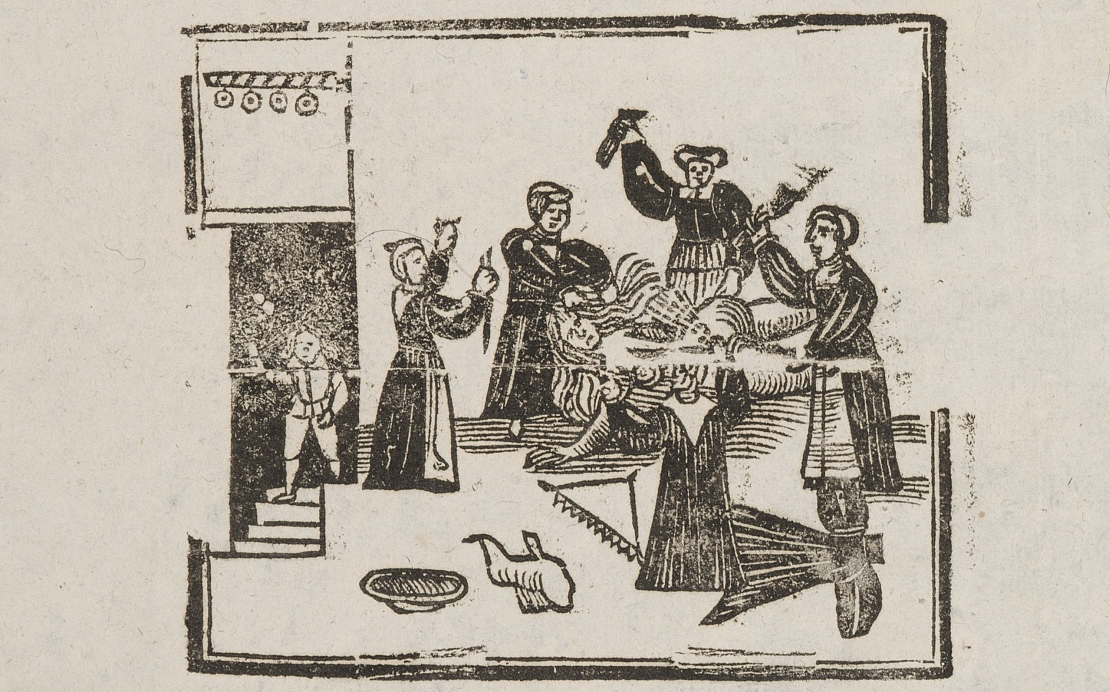
This terrible deed apparently prompted some introspection among the group, for they could not bring themselves to slaughter the children. Their fate was left up to the innkeeper Agnes Dell and her adult son George, to whose house in Hatfield, Hertfordshire, they were subsequently brought. This duo had no compunctions in determining that the children — called Anthony and Elizabeth James — should be killed.
George slit the boy’s throat, killing him instantly, before cutting out the young girl’s tongue. She was then left for dead inside a “hollow tree”, but managed to escape.
The boy’s body was found a few days later, floating in a pond where it had been unsuccessfully hidden. A witness identified the child as having previously been in the Dells’ company and so the local Justice of the Peace, Sir Henry Butler, issued a warrant for their arrest — but the pair claimed the children had only been with them briefly before leaving. They were ordered to appear at the periodic courts of assize for the next four years, though there was never enough evidence to convict them.
An unconventional forerunner of the lie detector in 1606
But in 1606 the orphaned girl — who had resorted to begging — chanced to return to Hatfield and eventually managed to communicate to the locals what had happened. The author of Firebrand’s news report tells us she later regained her speech “by miracle” when playing with a group of other children.
The question now was how to ensure the girl was telling the truth. After all, the polygraph would not be invented for 300-odd years and the equally pseudo-scientific theories about body language as a form of lie detection had also not yet emerged.
Sir Henry Butler had assumed the role of chief investigator. It was one of his men who devised a genius plan: he was going to dress up as Satan and terrify the young witness into truthfulness.
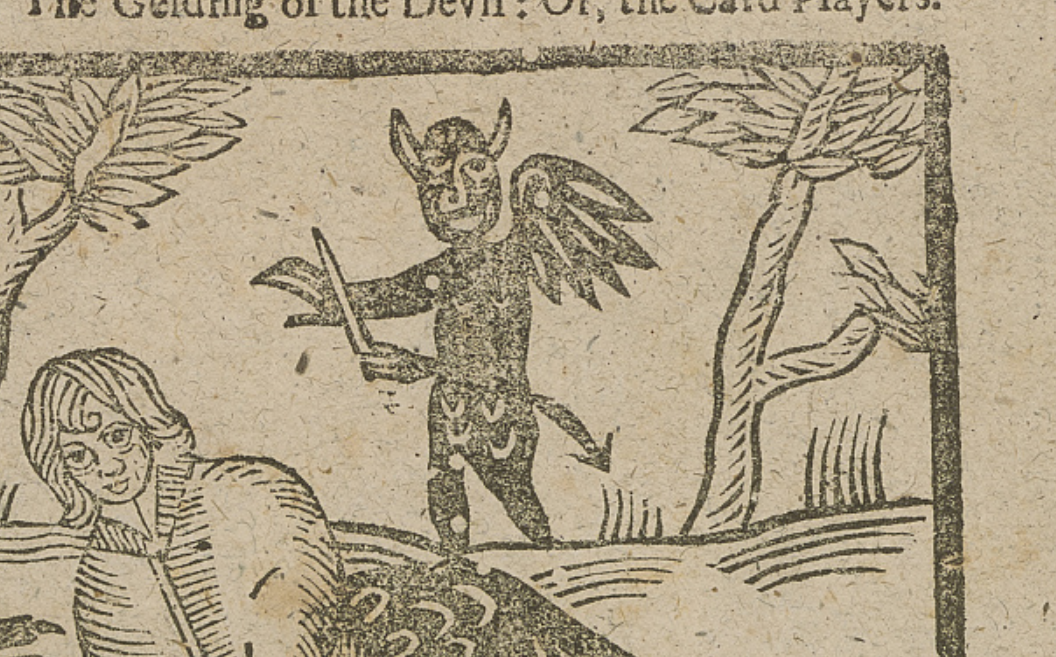
The young girl was sitting in a little park when the costumed man burst out from the bushes and threatened to “tear her in pieces” if she was lying about the guilt of the two people she had accused. She replied, “Good Gaffer Divell, doe not hurte me, I speake nothing but truth.”
The man had covered his face with a vizard. This was a black velvet mask used by performers in court masques, and upper class women who wished to shield their faces from sunlight in order to maintain a pale complexion. The pamphleteer Philip Stubbs had written in 1583 that encountering a woman wearing one could make a man “think hee met a monster or a devil, for face hee can see none, but two broade holes against her eyes”.
To this he had attached two horns, the most common hallmark of a devil, and although the anonymous writer goes no further in his description of the man’s disguise, it is tempting to think that he may have worn dark clothing, put on a frightening voice, and carefully planned his movements in order to best perform his role.
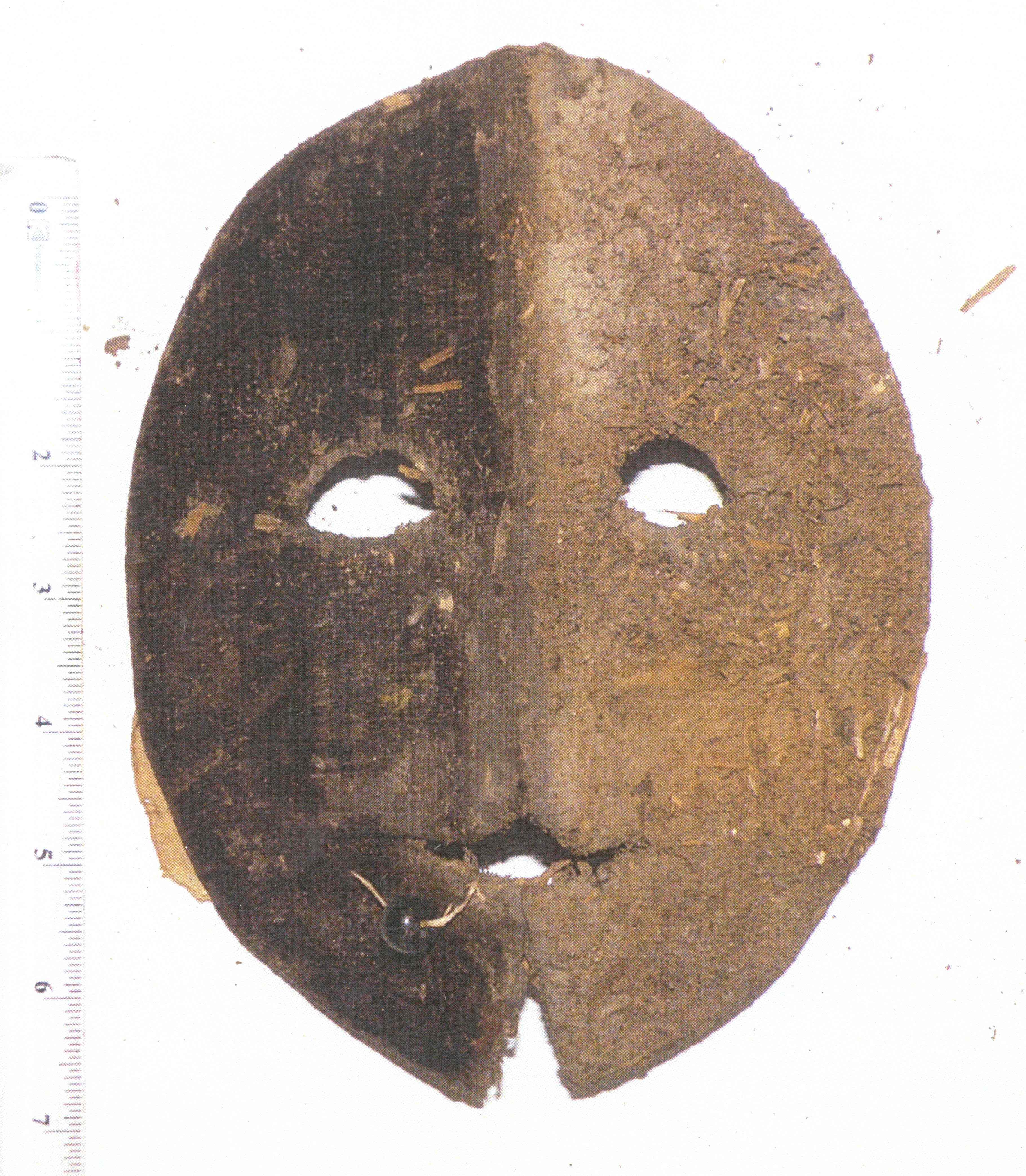

A surviving vizard (Source: Northamptonshire Country Council/CC BY-SA 4.0) and an illustration of a Frenchman riding a horse with his wife, who can be seen wearing a vizard, from 1581.
To a young girl who had grown up surrounded by religious warnings of Hell and descriptions of Lucifer, this dark horned figure may well have been utterly convincing.
And it seemed quite logical to the investigating authorities, who were godly Protestants, that if her testimony did not waver even when confronted by Satan, then she must be telling the truth.
The reasoning here is identical to that which inspired Helene Adelaide Shelby in 1927 to file a patent for an “apparatus for obtaining criminal confessions and photographically recording them” which relied on a mechanically-operated life-sized skeleton with glowing eyes and a hidden camera.
Sure enough, the young girl would be the key witness in the prosecution of Agnes and George Dell, who were finally executed on 4 August 1606. There is no indication in either of Firebrand’s news pamphlets that the murderous robbers who had killed the girl’s parents had been identified or captured.
But Elizabeth James’ unwavering testimony, even in the face of the Devil himself, had at least secured a modicum of justice for the brother and parents she had lost at such a devastatingly young age.