If you look at a journalist’s notebook today, you may find that some of the pages are covered in odd symbols. Some of these look like random squiggles, while others resemble hieroglyphics more than ordinary English. But what you’re looking at is not some alien correspondence, or even a different language at all: it’s shorthand.
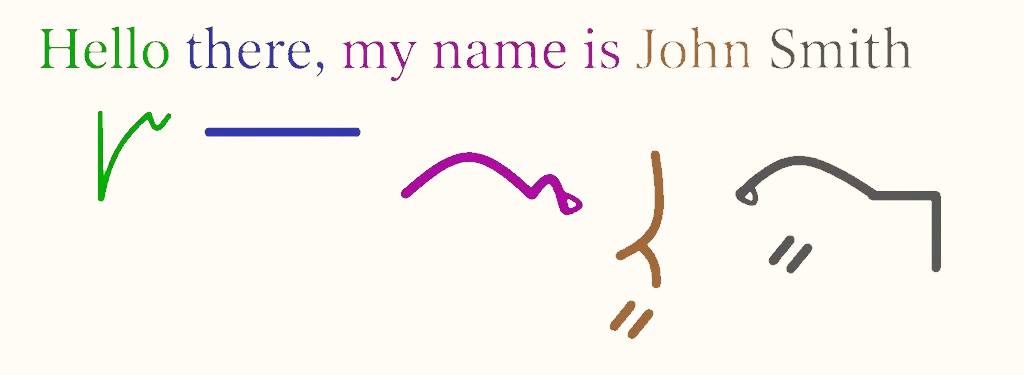
And if you’re in the UK, it’s almost certainly Teeline shorthand, which replaces full characters with simpler lines, dashes, and curves. Instead of writing every letter in a word, you break it down into a kind of phonetic husk, getting rid of internal vowels. So “endeavour” becomes endvr, and “gnome” becomes nm. Of course, that means “name” and “numb” also become nm — but usually the context of a sentence makes it obvious which word is correct.
Fifty years ago you’d find shorthand being used by secretaries and police officers as well, all of whom had to learn plenty of rules and conventions to make their writing as efficient and swift as possible while not obscuring meaning. The popularisation of dictaphones, laptops, and mobile phones made written shorthand less necessary. But in some situations — like courts, where audio recording has to be permitted by a judge — the skill is still useful.
Who invented shorthand writing?
Although no one is sure when exactly the first shorthand system was invented, the strongest candidates come from Ancient Greece and the Roman Empire. The earliest known example of shorthand writing is a marble slab, found in the Athenian Acropolis in 1884 but likely dating back to the 4th century BC, into which a number of abbreviations had been inscribed.
By 63 BC, a shorthand writing system of 4,000 Latin abbreviations known as Tironian notes had emerged. This was said to have been invented by Marcus Tullius Tiro, a slave-turned-secretary of Roman statesman Cicero, and was used that year to record the trial of three insurrectionists.
Tironian notes were not very popular in classical antiquity, but were revived in the Early Middle Ages. Monastic scribes taking notes in Latin were eager to save on paper, and expanded the system’s vocabulary to 13,000 signs. The Tironian et (⁊) survives to this day as a Unicode character, and can be seen on some Irish road signs and postboxes in place of an ampersand (&).

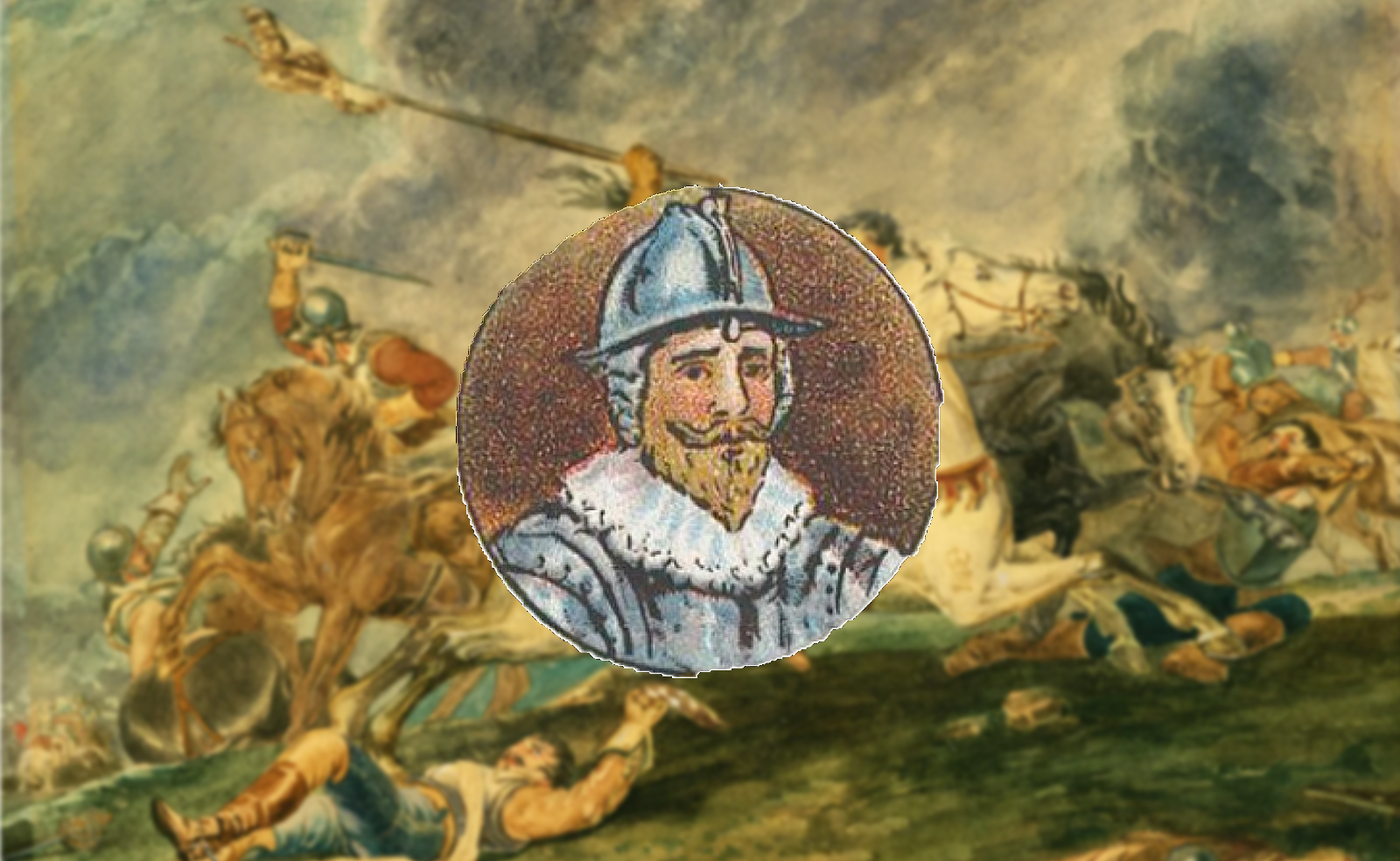
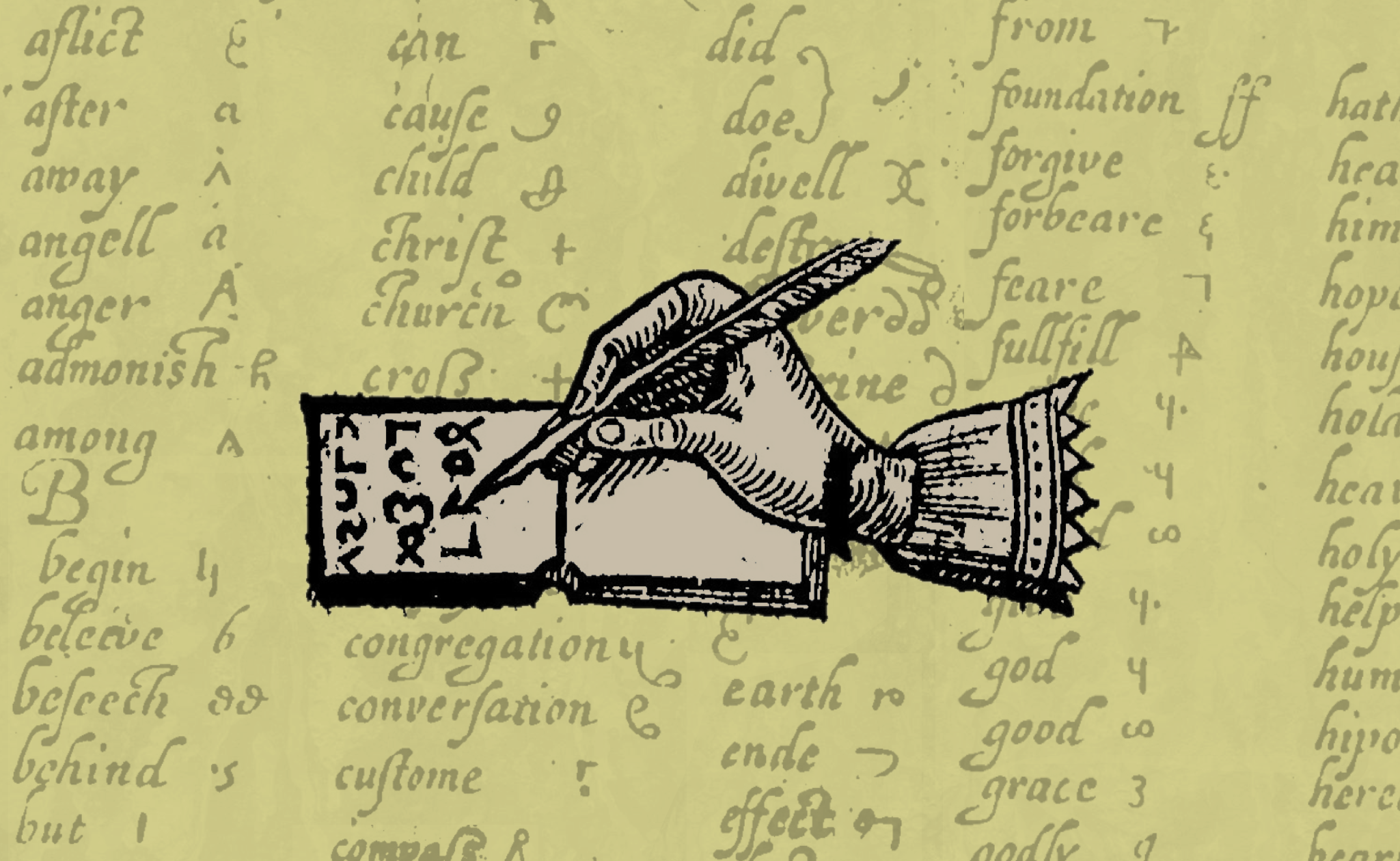
The first modern shorthand system was invented by the London physician Timothy Bright in 1588. He published a manual, titled Characterie, which set out hundreds of symbols used to represent common English words. In the back of the book was a list of synonyms which the earlier words could replace — so while there was no symbol for “coat” or “gloves”, there was a generic abbreviation for “garment” which could be used instead.
This meant Bright’s shorthand system lacked precision, but it was still the first time that a widespread method of rapid writing was available to ordinary people. Other systems almost immediately sprung up in response, most notably Peter Bales’ Brachygraphy (1590) and John Willis’ Stenographie (1602).
In 1626, Thomas Shelton pioneered a system he called “Tachygraphy”, which was used by Samuel Pepys in his diary. In 1650, Shelton updated his shorthand method to a new system called “Zeiglographia”, which the mathematician Isaac Newton used in his notebooks.
Bright’s “characterie” had been logographical, meaning each symbol represented a word and so his system required a great deal of memorisation. In Shelton’s system, on the other hand, each consonant was represented by a symbol, so words which a note-taker had not come across before could be quickly abbreviated in the moment.
What was shorthand used for?
In some ways, shorthand was used for the same tasks in early modern England as it is today. Manuscript and printed accounts of parliamentary proceedings benefitted from note-takers who could quickly record what was being said. Likewise, 17th-century news publishers were always eager to get the scoop on recent crimes, and shorthand made an early version of court reporting possible for the first time.
But, initially, its most popular usage was in church. The same bookseller who had published Bright’s groundbreaking shorthand manual, John Windet, was soon stocking his shelves with printed sermons — “taken as it was uttered by characterie”. It had been possible to print sermons before by working with the preachers who had delivered them, but now any listener could jot one down and sell it to a publisher. For more devout Protestants, shorthand permitted keeping an accurate record of a rousing sermon to which you could later return and attempt to improve your spiritual condition, or that of your family.
The writer John Phillips observed in 1655 that parish congregations tended to feature at least one worshipper who “writes short-hand with a pen of brass”, using a stylus to take notes in a specially-plastered book which could be wiped clean and re-used. “Oh how he’s wonder’d at by many an asse”, Phillips continued, “That see him shake so fast his warry fist,/As if he’d write the Sermon ‘fore the Priest/Has spoke it.”

Shorthand was hard. Keeping up with an impassioned preacher could be quite the challenge. The Puritan preacher Stephen Egerton felt compelled in 1603 to issue a corrected version of a sermon of his which Windet had published in 1589. The note-taker had made a valiant attempt, Egerton thought, but “the swiftest hand commeth often short of the slowest tongue”.
Shorthand was to be found at the playhouse, too. As the literary critic Leah Price notes, theatregoers “used it the way some filmgoers use a handicam” — to capture a slightly corrupted, inferior version of the real thing. Some enterprising, if unscrupulous, publishers sent men to attend public performances at The Globe and other theatres so that they could sell “pirated” versions of popular plays, much to the chagrin of their creators.
The dramatist Thomas Heywood was terribly irked that his works were being shoddily recorded and then published in “corrupt and mangled” forms. In 1608 he felt forced, in self-defence, to give his newest tragedy’s manuscript to a publisher and have it officially printed, even though he protested he was “ever faithfull” to the stage, rather than the printing press.
How did shorthand impact Shakespeare’s plays?
Historians have long debated whether Shakespeare fell victim to shorthand piracy as well. Many of his plays made it into readers’ hands quite without his consent, perhaps most infamously the “bad quarto” of Hamlet published in 1603. This version of the Bard’s famous tragedy is shorter than the one we know today, features a few changes to its plot, and seems less developed. Perhaps hurried shorthand note-taking can help to explain this.
In the late 19th century, some scholars giddily hypothesised that idiosyncrasies and nonsensical passages in the first quarto of King Lear, printed in 1608, could be explained by shorthand. The hypothesis had the appeal of a spy thriller: had a publisher sent in a team of shorthand specialists to surreptitiously scribble down all they could during a performance, before patching the notes together and selling an exclusive version of the play?
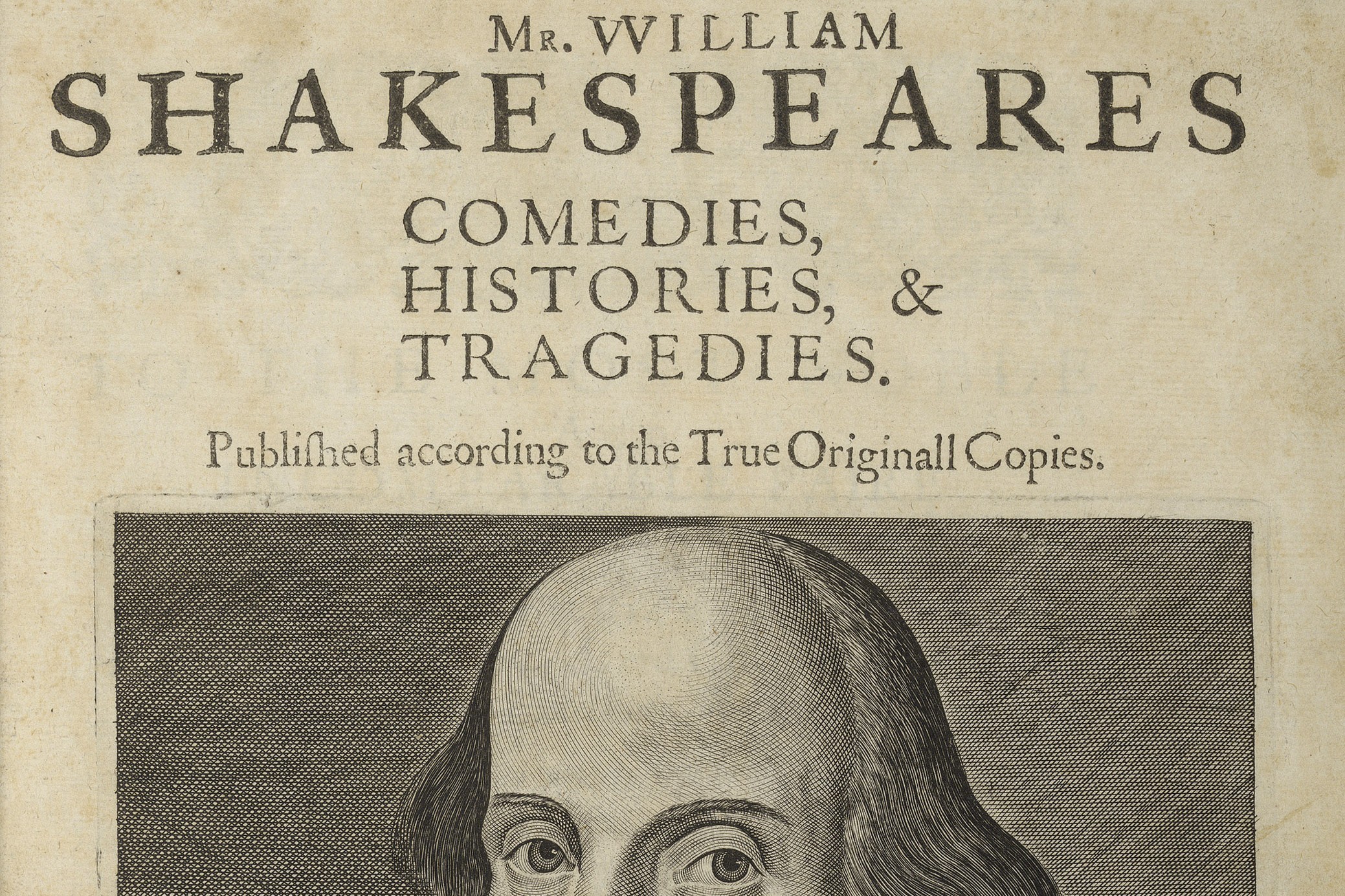
This was a popular theory until 1949, when a rigorous empirical study showed that neither Bright’s, Bales’, nor Willis’ shorthand systems could reproduce the text. But in the 1990s Adele Davidson put forward three essays arguing that Willis’ Stenographie could in fact have been used. When Shakespeare’s colleagues John Heminges and Henry Condell were preparing the First Folio, they relied in part on quarto versions of his plays. The final 1623 collection may therefore have been shaped, in a small way, by shorthand.
Shorthand’s importance in journalism
The most enduring use of shorthand writing was to be journalism. For reporters, being able to accurately note down what a person was saying at length was — and still is — incredibly important. That could mean interviewing witnesses to a crime, reporting testimony given in court, or jotting down a politician’s speech.
As a young man, Charles Dickens taught himself Thomas Gurney’s 18th-century shorthand system Brachygraphy, which he employed to great effect in transcribing speeches in Parliament. Dickens modified and developed Gurney’s method to create his own unique system which he called a “savage stenographic mystery”. It was only successfully decoded in 2022.
In 1837, an English teacher in Gloucestershire called Isaac Pitman invented a method of shorthand writing which used symbols to represent sounds rather than words or letters. Pitman shorthand was soon widely adopted in both the UK and the USA, where journalists were particularly keen to learn the skill.
Pitman’s system was updated and improved over the years. In 1888, Gregg shorthand was published by the American educator John Robert Gregg, whose method soon became the most popular across the Atlantic — though Pitman still reigned supreme in the UK.

That changed in 1968, when a teacher named James Hill developed the system of Teeline shorthand. Teeline is the accepted version of shorthand used by the National Council for the Training of Journalists (NCTJ) which certifies a large number of the UK’s journalism training courses.
Teeline shorthand has an alphabet of symbols which often resemble their corresponding letters. There are various conventions which allow you to make helpful shortcuts, but generally a word is formed in Teeline by joining together its consonants and any vowels at the beginning or end. This method is not as fast as some of the others, but it is easier to learn.
How fast does shorthand allow you to write?
Though Pitman and Gregg shorthand can both exceed speeds of 250 words per minute (wpm), and speedier Teeline writers can exceed 150 wpm, most users aim for a pace of about 100 wpm. That may sound fast, but the average person speaks at around 160 wpm, so shorthand note-taking is most useful for getting down short segments of speech.
In 1922, Nathan Behrin, a New York court stenographer, set the world record for Pitman shorthand speed at 350 wpm. Behrin made only two “insignificant” errors, according to The New York Times, while getting down a judge’s two-minute address, complete with legal jargon, to beat the previous record — his own, in fact, of 277 wpm.
What’s the point of shorthand writing today?
Since the popularisation of audio recording devices towards the end of the last century, shorthand has fallen a little out of fashion. Why commit months, or years, to learning a literary technology when a small dictaphone does the job easily enough?
Up until a few years ago, shorthand still had the incredible advantage of being easily searchable. If you have interviewed a person and want to find out when or whether they mentioned a particular topic, you need only skim over your shorthand notes and keep an eye out for the correct symbol. Those who had recorded the conversation, on the other hand, would have to listen to it back in its entirety to find the right moment. But today, with automatic transcription services, that is no longer the case.
Still, there are environments, like courtrooms, where audio recording might not be permitted — or situations when quickly tapping away at a keyboard might be distracting or inappropriate. Shorthand is also innately private, since someone who has not learnt it can hardly peep at your notes. And whereas text editors allow you to delete, insert, and re-arrange notes, handwritten shorthand might offer a stronger defence against accusations of libel or misrepresentation, since a note-taker can show that their shorthand has not been edited.
If nothing else, of course, the ability to write shorthand shows that its user has the dedication and diligence to commit themselves, perhaps for many months, to the learning of what — on paper — looks almost like an alien language.