
Late in the evening of 21 April 1614, Edward Hall was murdered. The weapon of choice was a pickaxe, the method multiple blows to the sleeping man’s head, and the perpetrators three servants in his employ.
The crime lay undiscovered for a week, until two of the culprits confessed their involvement to a local Justice of the Peace and were imprisoned, awaiting an undoubtedly swift trial for which the punishment would be no less than death.
News of this foul deed, which occurred only a very short distance from London, must have taken a duration of time to reach the ears of the capital’s public better expressed in hours than days — and the booksellers of St. Paul’s Churchyard (which was England’s literary hub) and its surroundings were among them.
Edward Hall was a successful miller whose killing at the hands of three unruly servants must have provoked a particular angst in the minds of those who heard about it, on account of the subversion of social order it constituted and also the unusual choice of weapon.
Only six days later, the prolific news publisher Henry Gosson travelled to Stationers’ Hall and registered a pamphlet relaying the details of the event, alongside a ballad on the same matter — which has not survived. Gosson was clearly confident that he was sitting on a best-seller which would appeal to London’s readers and alehouse patrons (the target audience of news ballads) alike.
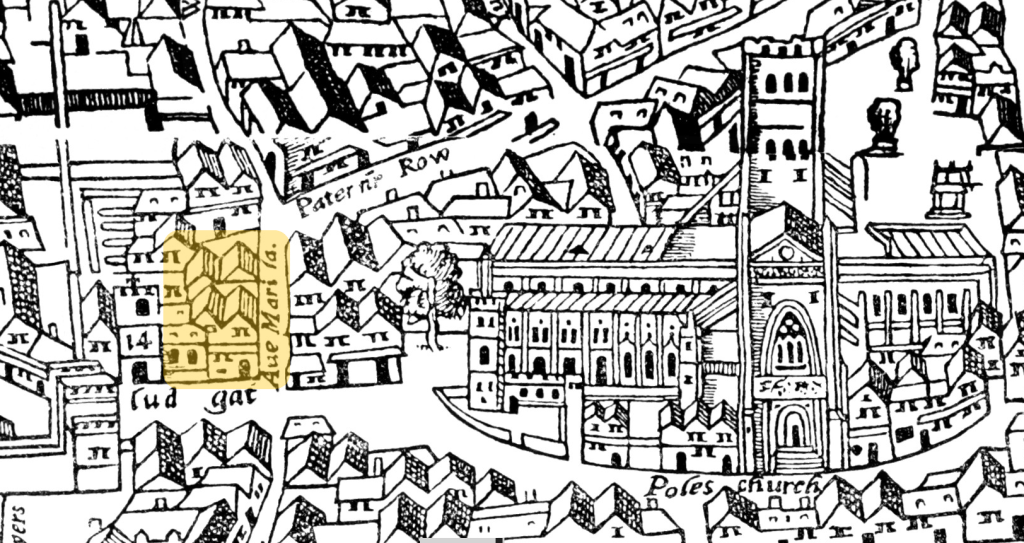
Entering a work into the Register meant a bookseller could secure an exclusive right to its publication which barred others from producing material which was “hurtful or prejudicial” to it. In the context of news, this prohibited any competing reports formed of substantially similar information.
By the standards of today’s news media, such a delay between a violent crime and its coverage would be considered extraordinary. But 400 years ago it represented a serious hurry to assemble the basic parts of a report and present them in manuscript form for perusal by a warden of the Stationers’ Company, which was responsible for regulating printing in London.
Gosson also made the decision not to sell the book himself, from his shop on London Bridge, but rather to collaborate with John Wright, who operated a bookstall closer to St. Paul’s Churchyard.
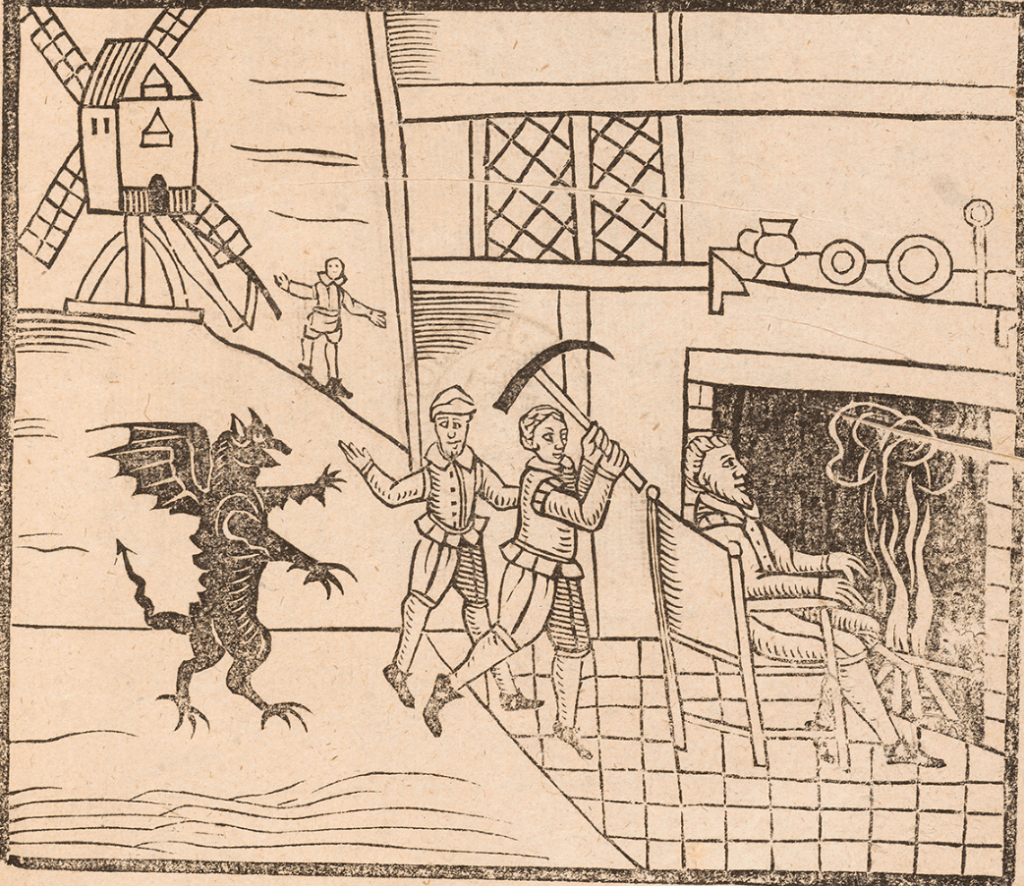
The chosen printer was George Eld, who quickly set to work producing an eye-grabbing title-page woodcut which depicted the unsuspecting miller flanked by his soon-to-be murderers in the moments before his death by pickaxe.
Gosson was no stranger to publishing murder pamphlets and ballads, just as London’s reading public was very familiar with them by this point. They typically comprised tidy narratives in which the innocent were unfairly killed by morally corrupt murderers spurred on by the Devil.
But, in this instance, the cheap pamphlet which emerged — titled A Horrible Creuel and bloudy Murther — told a much more complicated story in which the collapse of Hall’s authority seemed entirely self-inflicted and the motives for his murder, even if indefensible, were not hard to understand.
Why did Edward Hall’s servants murder him?
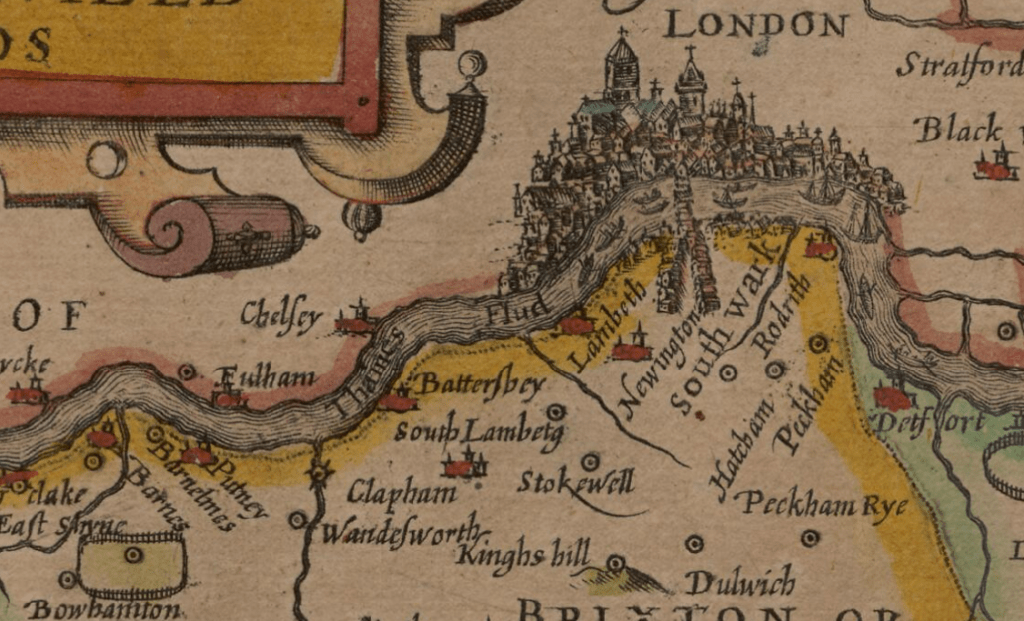
Edward Hall, the pamphlet’s anonymous author tells us, was a miller who lived in Putney, a parish within Surrey which lay just shy of six miles from London. He was, moreover, “a man of good reputation, having substance of money and moveables [possessions] sufficient”.
But if Hall’s public image was flattering, the one held by those acquainted with him personally could not have been further removed. This was on account of the fact that his “naturall inclination was to be sparing, and in a manner miserable in his house-keeping”.
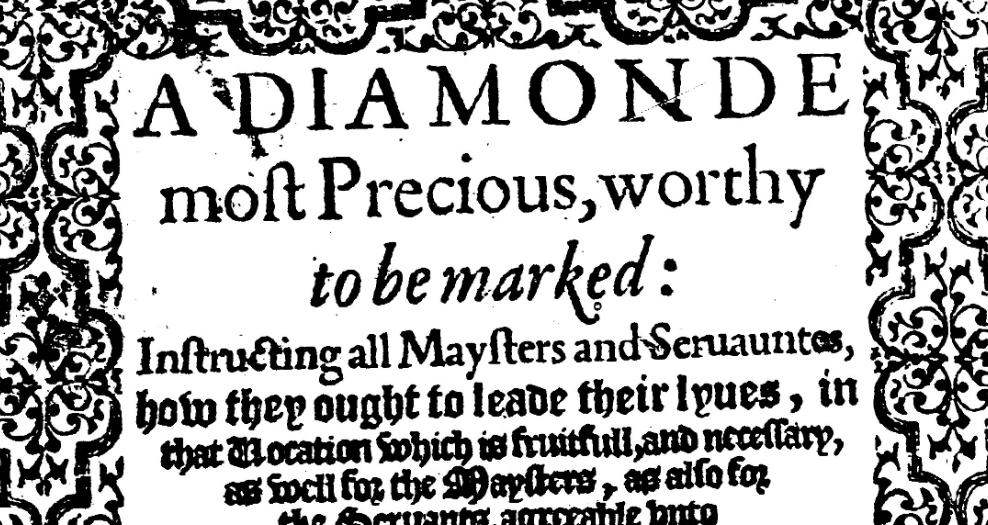
Tudor and Stuart homilies instructed servants, children, women, and others who occupied inferior household positions to treat their parents and masters with reverence and respect, but there was (at least in theory) a degree of reciprocity expected in this relationship.
Hall’s harsh treatment of his pregnant wife was in particularly brazen defiance of the kind of loving husbandly behaviour extolled in spiritual conduct books of the time. He had sent his wife away to her mother in the countryside the moment he suspected childbirth was near in a bid to avoid the costs it would entail, such as fees to midwives.
This was the final straw for Hall’s disgruntled servants — the climax of a string of selfish behaviour which “was a great motive to his owne destruction”. He had to die.
A pickaxe murder plot in Stuart Surrey
At about 10pm on Thursday, 21 April 1614, two of Hall’s servants approached the miller from behind as he slept in a chair beside the fireplace. Peter Pett was wielding a pickaxe provided by John Selling, who encouraged him to strike their unsuspecting master.
Lifting the weapon high above his head, and “strengthened by the inspiration of the Devil”, Pett brought it crashing down on Hall’s back, causing him to collapse with a “great groane”.
Grabbing the pickaxe from his co-conspirator, Selling dealt a second blow to the injured miller’s skull and “beate out his braines”. At this point, a third servant named Edward Streater — who had also been privy to the murderous plot — was called to stop grinding corn and delivered a final strike on Hall, who was lying “imbued in his own gore” on the floor and most likely already dead.

Pett, Selling, and Streater then buried his body in the stable and set loose his horse in a nearby wood, planning to spin a tale that Hall had ventured into the countryside for business and gone missing, perhaps after being assaulted by thieves. The final part of their revenge was to steal some £30 or £40 from their miserly master’s home, a haul worth between £4,000-5,000 today.
But the cracks in their plan had been forming from the moment the murder was complete. Apparently untrusting of one another, they had vowed that “whosoever should reveale this their damnable deede, should have his braines beaten out”. Moreover, Hall was a prominent member of the local community whose disappearance sparked an investigation.
The writer employed by Gosson never tells us why Edward Streater confessed to the murder during an examination by “the officers and chiefe men of the Parish of Putney” just one week later — only that he did. Perhaps incriminating evidence had come to light or his guilty conscience had finally gotten to him.
Sir Thomas Gardner, the local Justice of the Peace, was subsequently charged with interrogating the three servants, though only two were available for questioning, as Selling had fled to his mistress in the countryside.
After confessing, and giving their motive as Hall’s selfishness and miserly nature, Streater and Pett were locked up in the White Lion jail in Southwark, awaiting trial at the upcoming quarter sessions.
Gosson’s 1614 report never expresses any explicit sympathy for the murderers, accompanied in the pamphlet’s woodcut by Satan himself. On the contrary, they are described as “brutish beasts” who had committed a “damnable deede” for “a little cursed coyne”.
But it is not by mistake that our alliteration-loving author (who writes poetically throughout the pamphlet) includes Hall’s narcissistic misdeeds and describes them — quite boldly — as “a great motive to his owne destruction”.
It was, after all, these shortcomings which are twice mentioned as the murderers’ motive and had quite clearly corrupted the idealised domestic hierarchy of Hall’s household, thereby undermining his authority. The ultimate irony was that Hall’s selfish sending away of his wife had permitted the perfect conditions for his killing, she no longer being a potential witness.
How journalism worked in 17th century England
That Henry Gosson was eager to get the scoop on this act of petty treason (the offence under common law of killing a social superior) is evident from the fact that he published the pamphlet before the accused had appeared in court.
The Register entry Gosson made on 4 May 1614 to secure his publishing rights suggests that he was scrambling to gather the emergent facts as quickly as possible — it is riddled with minor factual inaccuracies and refers to “the execution” of the servants, who had not yet even been put on trial.
Clearly this enterprising bookseller was trying to guarantee unrivalled coverage of their crime, trial, and subsequent execution in advance but, it would appear, rushed his printed report out early. Perhaps the crime was so greatly talked about in London that Gosson thought it necessary to exploit the attention while it lasted. Alternatively, there may have been delays related to John Selling’s escape which meant the servants would not appear in court for a while.
So where did Gosson and the writer he employed to speedily write up a report get their information from?
The most common source was correspondence, typically a letter sent to the publisher by some contact in the area. Hearing of a murder, they would send a relation of it to London, employing a form of news communication which had long preceded the printing press. Many individual booksellers and printers developed and maintained informational networks across the country, some so successfully that they became “manuscript scouts” who sold information to others.
But in this instance there is good reason to conjecture that Gosson may have taken an even more proactive approach. Putney was, after all, only a short horse ride from London and Gosson had carved out a profitable niche for himself in the domain of “murder pamphlets”.
These were a popular sub-genre of the cheap crime literature which packed the bookshops of early modern London and, for the price of only a penny or two, offered news which could be wildly sensational and graphic. Comparing Gosson to a successful colleague, the scholar Matthias Shaaber writes:
While Henry Gosson and Thomas Pavier lived, a murder was hardly complete without a ballad or two published by one or the other of these men; their murder pieces outnumber those of all the other members of the trade combined.
Some Forerunners of the Newspaper in England, 1476-1622 (1929), p. 283
So perhaps our anonymous author, initialled “J. T.”, was dispatched to Surrey to speak to locals. Oral culture and the tides of rumour were still the primary means by which most people encountered news, though its truth would have undoubtedly diluted as it wafted towards London.
There is some reason to think Gosson’s man may have had access to more privileged information, however. The details of the servants’ questioning and apprehension are vague, but we are given the name of their inquisitor, Sir Thomas Gardner, and a rough summary of the reasons they gave for murdering their master.
Perhaps a writer sent to Putney by Gosson, or a contact in the area, had been provided this information by a local law enforcement official or Sir Thomas himself. It was not unheard of for judicial authorities to leak information to the press — a 1616 news report concerning the killing of a lawyer included a detailed transcription of the murderer’s interrogation by no less illustrious a personage than Francis Bacon.
Advertising depositions which resulted in confessions meant justice was, as the aphorism goes, “seen to be done” and would have been a nice little bit of publicity for a local gentleman like Sir Thomas eager to secure further preferment in public office.

And so A Horrible Creuel and bloudy Murther (1614) was born. The narrative of a traitorous murder of a master by his own servants makes up the bulk of its sixteen pages, with the author fluffing up the piece’s introduction and conclusion with the expected religious rhetoric.
Interestingly, alongside biblical and classical allusions, he also included a fairly lengthy reference to Shakespeare’s Antony and Cleopatra (1607), including almost-verbatim quotes, because one scene sees a character refuse to murder his enemies in spite of the personal benefits at play.
The pamphlet’s woodcut illustration is one of the most interesting to emerge from London’s print workshops at that time — and establishes a simple narrative: the treacherous servants, encouraged by Satan, cowardly attack their sleeping master from behind.
But the text that follows, although never explicitly sympathetic towards their cause, would leave the reader in no doubt that social and economic factors had provoked the servants to the point of murder.


