One of the great things about cheap print literature from 16th and 17th century England is that there’s just so much of it. The sheer volume of pamphlets and ballads available to peruse on platforms like Early English Books Online means that I often encounter really interesting anecdotes, stories, arguments, and ideas which it seems a shame to leave untouched but which do not readily fit into any articles I am writing.
For that reason, I am starting a weekly newsletter. It will include these little historical titbits and be the new home of the “featured woodcut” section, which I had been updating (so sporadically as to almost be at random) for as long as Early Modern Scribbling has been around. Some of these historical morsels may feature in future posts, or have been referenced in previous articles — and a few may sit outside of the normal early modern boundaries of this site.
A new newsletter will be posted every Monday — please subscribe to receive it directly in your email inbox!
Featured woodcut
This dramatic illustration from A vvonderfull vvonder (1635) is undoubtedly one of the most gory to have been printed for public consumption during the 17th century. For a modern audience familiar with photographs of violence and disaster, its visual contents surely prove less shocking than the grisly crime they signify, but a Stuart reader would have been quite viscerally appalled.
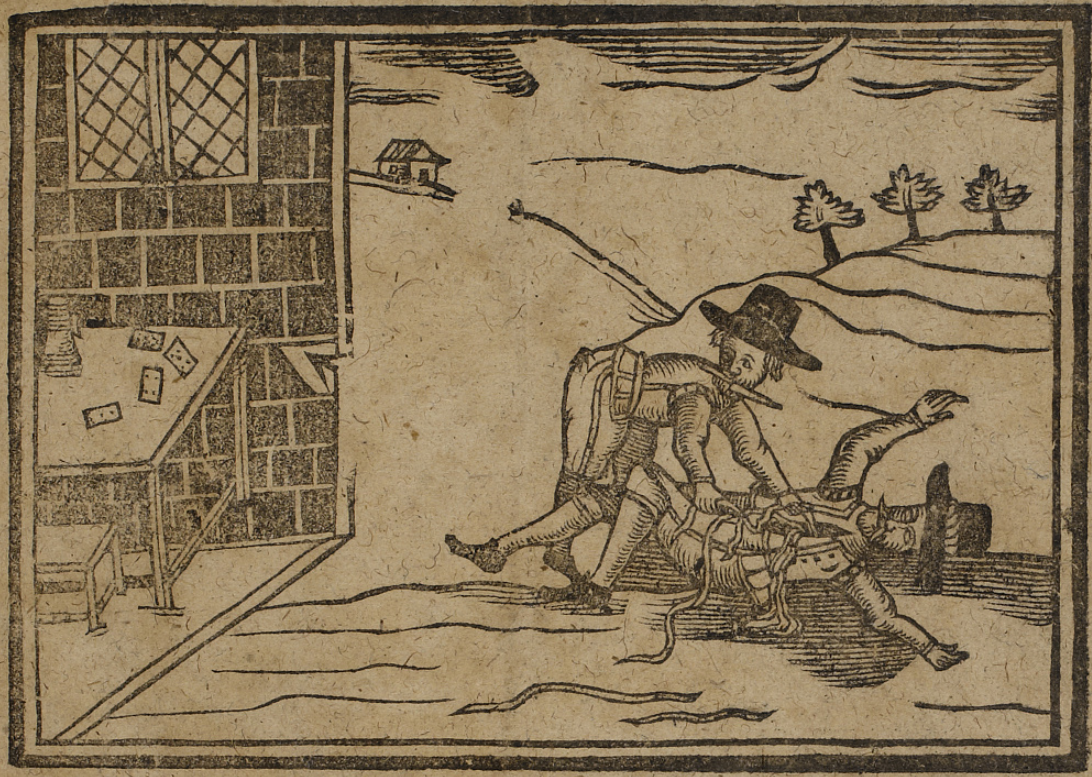
This image comes, in fact, from a ballad written by the prolific balladeer Laurence Price and so it really makes more sense to think about the “viewers” who may have encountered this broadside’s illustration pasted to an alehouse wall or otherwise publicly displayed.
I wrote last year about how the meaning of a ballad’s image could be renegotiated quite significantly depending on the words which surrounded it. I reference this woodcut because it ostensibly depicts a surgeon performing an autopsy on a man who had choked to death after taunting God.
But this is obviously not the narrative for which this image had been commissioned. There is a dead body, but the man rummaging through its exposed entrails is doing so somewhat haphazardly — standing precariously over the corpse and looking in quite the wrong direction for a clean post-mortem. The presence in the house (on the left) of a table topped with cards and a flagon of drink means we can conclude, without needing to resort to Sherlockian levels of deduction, that this is in fact the scene of a murder brought on by a drunken card game which has gotten out of hand.
An unconventional forerunner of the lie detector in 1606
This little anecdote from a murder pamphlet published by the impeccably-named William Firebrand in 1606 is so intriguing that I think I’ll inevitably include it in a proper article at some point.
That being said, its historical context is really very sad. In July 1602 two children were abducted (possibly after their parents had been murdered) in Hertfordshire — each was about three or four years old. The boy was killed and his sister had her tongue cut out. The girl was then left inside a “hollow tree” to die, but managed to escape.
The boy’s body was found after a few days. But it was not until about four years later that the murderous kidnappers were apprehended after the young girl, through a series of coincidental and remarkably unlikely events, managed to communicate to the locals what had happened. She subsequently regained her speech “by miracle”.
One of the men employed by the local Justice of the Peace devised a genius plan to ensure she wasn’t lying: he was going to dress up as the Devil — complete with horns and a frightening mask — and terrify the girl into truthfulness.
The young girl was sitting in a little park when the costumed man burst out from the bushes and threatened to “tear her in pieces” if she was lying about the guilt of the two people she had previously accused of murdering her brother and mutilating her. She replied, “Good Gaffer Divell, doe not hurte me, I speake nothing but truth.” The logic was that, if she was lying, the girl would admit as much when faced by who she believed to be Satan himself.
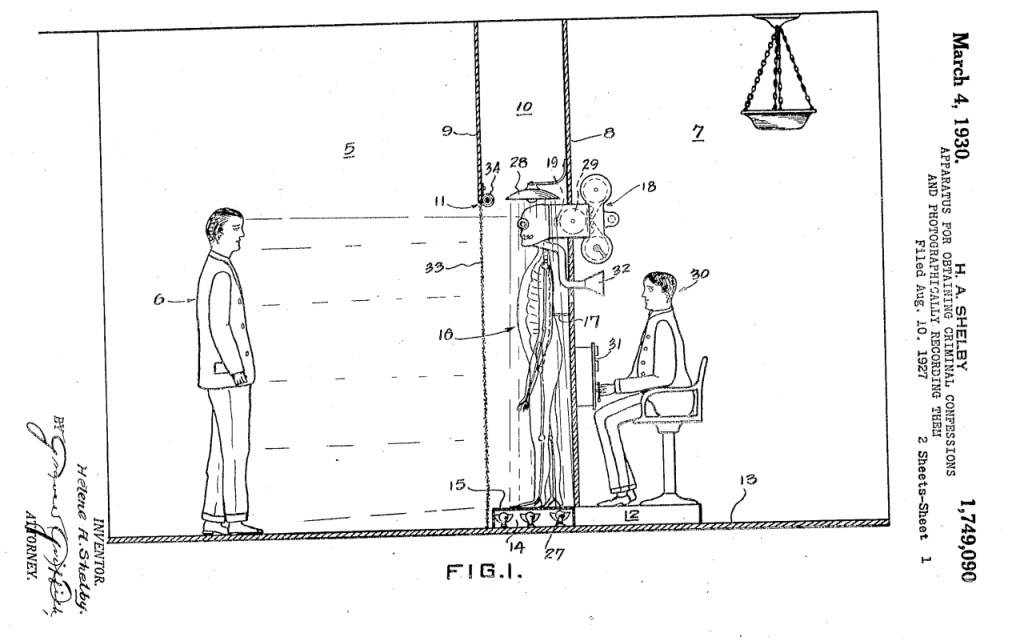
The reasoning here is identical to that which inspired Helene Adelaide Shelby in 1927 to file a patent for an “apparatus for obtaining criminal confessions and photographically recording them” which relied on a mechanically-operated life-sized skeleton with glowing eyes and a hidden camera.
The 1606 lie detection strategy is also remarkably similar to a part of historical medieval RPG Kingdom Come: Deliverance II‘s newest DLC, where you dress up as the “Lord of Hell” — including attaching horns to your helmet — in order to frighten a troublesome competitor into leaving your artist friend alone.
Text mining, book history, and the importance of a word
I began this newsletter with some praise of the abundance of source material that studying early modern cheap print offers. Another is that, with only a few exceptions, there’s no need to trek down to an archive in order to view pamphlets and ballads — since they tend to have been digitized.
I think this has, to an extent, led some people to think that literary/book history studies are a lazy alternative to “proper” primary source investigations built on the arduous sifting through of archival collections and many hours of palaeography. Of course navigating Early English Books Online can itself be quite tedious, and to most profitably analyse the accessible texts which can be found there, one needs still to engage with a great detail of historiography, literary theory, and relevant historical context.
Probably a less unfair criticism is that platforms like EEBO lend themselves towards a kind of biased text mining whereby almost any hypothesis can be supported if its proponent tailors their searches accordingly. Writers maintained a vast array of disparate, and often contradictory, opinions which can either be brought to light or consigned to the shadows depending on how a search is structured.
And, not that this really needs saying, but a single word can have an immense significance. Here’s an example from a 1614 pamphlet about the pickaxe murder of a wealthy miller by his three servants (which I wrote about in January):
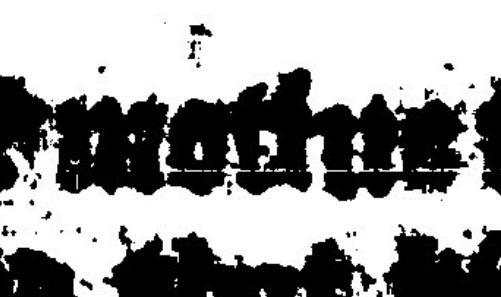
What word is this? Owing to some combination of over-inking, poor scanning, and/or substandard conservation, this word is one of many from the anonymous work which are almost illegible. I think it almost certainly reads “motiue” [i.e. “motive”], but one scholar who has studied the text thinks it’s actually “mothe” [i.e. “moth”].
Consider the difference this one word change would have on the surrounding sentence. The murdered miller has just been described as “in a manner miserable”, very financially unsparing, and generally unkind towards his household. The conclusion is that he and his selfish behaviour have “procured him the hatred of his servants and familie” and…
“…in conclusion was a great motive to his owne destruction.”
“…in conclusion was a great moth to his own destruction.”
Both interpretations are grammatically valid. The sentence can be legitimately read as “…in conclusion [this/he] was a great [motive/moth] to his own destruction”, depending on whether we’re talking about his behaviour, or the man himself.
But it would clearly be much more provocative, and sympathetic towards the miller’s killers, to refer to the murdered man as a “moth to his owne destruction”, which implies he essentially sought it out. If his behaviour is simply a “motive to his owne destruction”, then the author recognises the reasoning which the killers had but — as murder is still a mortal sin — does not go as far as suggesting the victim brought it upon himself.
Some history news
- It was a playwright who collaborated with Shakespeare who branded him an “Upstart Crow” in 1592, not Robert Greene — according to new stylometric analysis. Researchers at the University of Leeds have put forward Thomas Nashe, who likely co-authored Henry VI, Part I (c. 1591), as the pen behind the harsh bit of criticism. (Read more about it in The Times.)
- This is from last month, but the English Short-Title Catalogue (ESTC) is finally back online, 19 months after a cyberattack on the British Library shut it down (alongside many other services). It’s now available via the Consortium of European Research Libraries.
- A letter fragment the early 17th century suggests Shakespeare did not abandon his wife in Stratford, as scholars had long assumed. Professor Matthew Steggle, of Bristol University’s English department, says his fresh analysis indicates the Shakespeares referred to in the long-known-about correspondence are in fact the Bard and his wife, living together in London. (This is from late April so not very recent but fascinating nonetheless. Read the press release about it here.)


