All Articles
(For previous newsletters, visit the Newsletter Archive)
-

Why the Pickaxe Murder of a Wealthy Miller Sparked a Media Frenzy in 1614
When Edward Hall was killed by his own servants, one of England’s most prominent news publishers set to work capitalising on the public’s morbid curiosity.
-

Shop Signs in Early Modern England Were Much More Interesting Than You’d Think
The crude illustrations on wooden signposts which marked out pubs and shops often came to adopt identities of their own.
-

Why the Ghosts of Henry VIII and Cardinal Wolsey Haunted England’s Civil War
The Tudor monarch and Catholic statesman both appeared as restless spirits in revolutionary London, if polemical pamphlets of the time are to be believed.
-

The 17th-Century ‘Flying’ Ship Which Sailed Over a Church Tower
William Bush built a pinnace in 1607 which climbed a steeple in Berkshire, rode like a tricycle across the nearby countryside, and sailed down the Thames to London — all under the command of a single man.
-

Griffin Flood: The Murderous Snitch Who Terrorised Stuart London
A corrupt informer in early 17th-century England harassed, extorted, deceived, and persecuted those who stood in his way. It was only a matter of time until he took a life.
-

What Can a Crude Woodcut of a 17th Century Family Tell Us About Domestic Abuse in Early Modern England?
Adorning a ballad sold by a popular publisher in 1638, this wholesome picture of a family at the dinner table in is not all that it appears to be.
-

Why the Duke of Buckingham’s 1627 Siege of Saint-Martin-de-Ré was a Stuart PR Nightmare
When George Villiers’ siege of a French island didn’t go to plan, he turned to England’s printed news to salvage his image.
-

Corrupt Cooks and Troublesome Tapsters in Early Modern England
Two humorous 1641 pamphlets shed light on the deceptive practices of tapsters, cooks, butchers, and brewers.
-

Anthony Nixon: 17th Century Writer, Journalist, and Plagiarist
Anthony Nixon was one of England’s first professional writers. He was also a brazen plagiarist.
-

A Possible Author or Inspiration for Ralph Harford’s Widecombe-in-the-Moor Thunderstorm Pamphlets of 1638
A borrowed phrase may shed light on the origins of a fascinating series of pamphlets about a deadly thunderstorm which struck Devon in 1638.
-

Widecombe-in-the-Moor’s 1638 Thunderstorm: A Case Study in 17th-Century News Reporting
When a devastating and deadly thunderstorm struck Devon in 1638, it prompted a flurry of printed news reports.
-
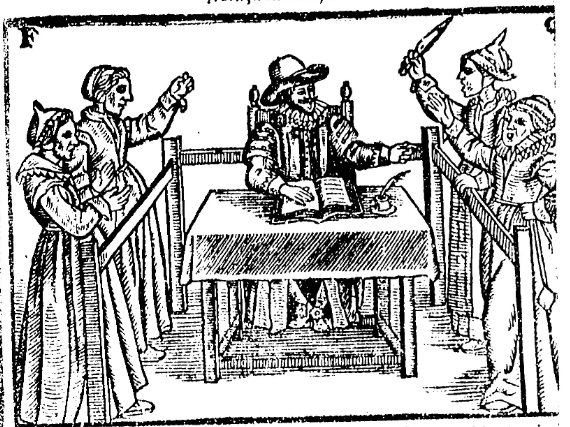
Joseph Swetnam and (Early) Modern Misogyny
A misogynistic pamphlet lambasting women became a best-seller and sparked a literary battle in early Stuart England.
-

Handguns in Early Modern England: Crime, Class, and Social Order
Firearms in Tudor and Stuart England not only posed a threat to life but also signified boundaries of class and gender.
-

Tracing the Seventeenth-Century Roots of ‘Journalism’
Audiences of today turn to the internet, social media, and news outlets to get their news. Things weren’t so different 400 years ago.
-

Radical Ideas in English Cheap Print
The early modern period is often seen as conservative and backwards — a place where gender hierarchy was rigid and dissenting voices were silenced. But two 17th-century pamphlets suggest more radical attitudes occasionally bubbled to the surface.
-

Windy Weather, Divine Providence, and Spire-Toppling Devils
Viewing storms as divine punishment for human wrongdoings is an unpopular view today, but 400 years ago it was the norm.
-

Three Christmassy Woodcuts
These three woodcut illustrations from early modern England show that joviality, danger, and snowball fights came hand-in-hand during the winter.
-

Rationalising a 17th-Century Ghost Story
How can we make a fantastical tale of the supernatural from Restoration England make sense?
-

Ostrich Inn: The Pub That (Never) Saw Dozens Boiled Alive
Dozens of rich travellers allegedly lost their lives in a Berkshire pub at the hands of a murderous medieval couple. The only problem is that every single death is made up.
-
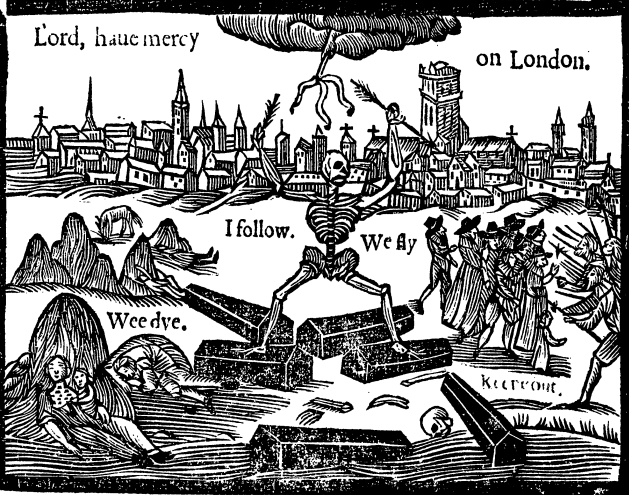
Plague, Trade, and Sin in Dekker’s ‘A Rod for Runaways’ (1625) and Other Works
For some writers of the early Stuart period, fears around illness and death were inseparable from commercial anxieties and the fragility of human goodwill.
-

Pamphlet Wars, Graphic Satire, and Metacommentary: Anti-Laudian Cheap Print, 1641-5
If there’s one mantra which remains as true today in the age of tabloids and social media as it did in a Civil War London dominated by cheap pamphlets and ballads, it’s that drama sells.
-

What Did Early Modern London Sound Like at Night?
Histories of sound can be difficult to research and reconstruct, but literary sources from the 16th and 17th centuries present an England that was far from quiet at night.
-

The Murder of Sir John Tindall
When a lawyer was murdered outside his London chambers in 1617, a couple of enterprising publishers quickly tried to secure a scoop.
-

Witchcraft, Demonism, and Agency in ‘The Witch of Edmonton’ (1621)
Staged in the same year it was set, this play’s selling point of supernatural horror acts as a veneer for a much more nuanced view on the nature of witches.
-

The Witch of Edmonton, Ballad-Mongers, and Early Modern Fake News
The term ‘Fake News’ may have been popularised by Donald Trump during his 2016 presidential campaign, but the deliberate spread of misinformation under the guise of ‘news’ has existed for much longer
-

Woods and Witches: Two Unexplained Deaths in 17th-Century London
Two pamphlets from the 1680s recount the discovery of two bodies in London. But how did they die?